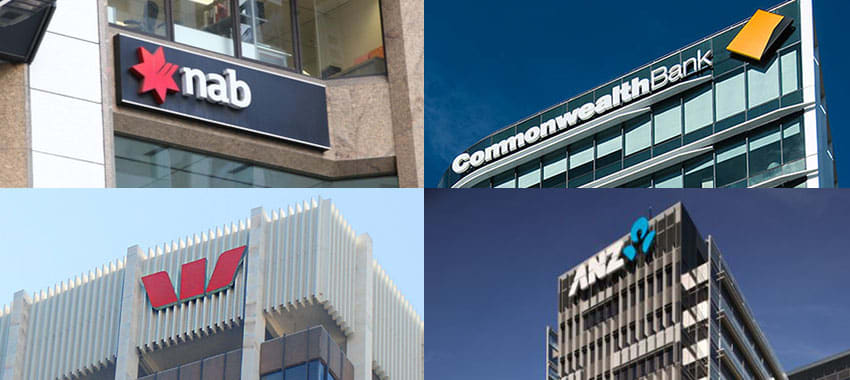
The Reserve Bank’s decision to hike the cash rate has left the big four starkly divided on what comes next, as mortgage demand begins to cool.
Australia’s major banks have drawn diverging conclusions about where the Reserve Bank of Australia (RBA) goes next after it opted to lift the cash rate from 4.10 to 4.35 per cent, as new Equifax data points to a noticeable cooling in mortgage demand.
NAB turns more hawkish after latest hike
National Australia Bank (NAB) has shifted to a more hawkish stance, with chief economist Sally Auld and head of Australian economics, Gareth Spence, ditching its forecast of a single May hike.
It now expects the RBA to back up May’s move with another 25-basis-point increase in June.
“Pre the conflict in the Middle East, the RBA was dealing with inflation that was too high and rising,” the two economists said.
“On top of that, the RBA is now facing into the first-round impact of higher oil and commodity prices, but also, the risk that second round price impacts related to the Middle East conflict are both broad and rapid in their dissemination.”
They pointed out that while governor Michele Bullock described a cash rate of 4.35 per cent as “a bit restrictive”, in their view, “we doubt that this policy setting will be sufficient to ensure that inflation returns to the target band”.
NAB acknowledged that under normal circumstances, delivering 75 bps of tightening in three months would argue for a pause, but it pointed to the governor’s post‑meeting remarks as evidence that the board was not inclined to sit on its hands.
“The governor explicitly called the ‘wait and watch’ strategy the ‘wrong term’ in her press conference, and so it doesn’t appear that the Board thinks it has time on its side,” the economists said.
“This, together with the board’s clear preference to prioritise the price stability aspect of its dual mandate given a broadly benign labour market forecast, suggests to us that the next rate rise will come in June.”
Over the longer horizon, NAB expects the RBA to begin easing only once it is comfortable that inflation is under control, adding that “we continue to pencil in two cuts in H2 2027”.
Westpac, CBA, and ANZ stick to existing paths
Westpac has not changed its view that the RBA is likely to tighten again in June and August, but chief economist Luci Ellis characterised the June move as a closer call.
“We still expect the RBA to tighten rates again this year. However, we think a June move now looks more finely balanced,” Ellis said.
“The governor’s language in the press conference was a bit more dovish than our read of the media release and the SMP or the implications of the RBA staff forecasts.”
She also highlighted how the RBA framed the three hikes, noting that governor Bullock stated the rises gave the board “space” to assess the ongoing global volatility.
“The governor said that the hikes ‘gives space’ for the MPB to see how the conflict played out. On a plain reading, this might suggest that the MPB is more inclined to pause in June,” Ellis said.
Commonwealth Bank of Australia, by contrast, has not revised its central scenario, believing that May was the last hike, followed by an extended hold period.
“From here though we do expect the RBA to remain on hold. Both the statement and the press conference affirmed this view,” CBA’s head of Australian economics, Belinda Allen, said.
However, Allen stressed that the chances of an additional hike could not be fully dismissed.
“A further rate hike cannot be ruled out. This is dependent on federal and state budget outcomes, wage outcomes, consumer activity and Q2 2026 CPI,” Allen outlined.
“Our base case forecasts see the RBA cutting the cash rate twice in 2027 but there is a high degree of uncertainty over the path from here.”
ANZ’s head of Australian economics, Adam Boyton, said the bank still expected a pause at the next meeting but noted that the balance of risks had shifted.
“By August – in the absence of a rapid resolution to the conflict in the Middle East and a resumption of oil flows – we expect the activity data in Australia to be looking sufficiently soft to keep the RBA on hold,” he outlined.
“That said, risks would now appear more skewed to a rate hike in August than prior to this meeting.”
Equifax flags cooling mortgage demand
Alongside the shifting rate calls from the major banks, fresh data from Equifax has shown that sustained higher interest rates are now weighing on mortgage activity.
Overall mortgage demand for Q1 2026 was up 7.5 per cent, down from 12.3 per cent in Q4 2025, while overall mortgage demand for March was up 3.5 per cent, down from 8.9 per cent in February.
Equifax also found that refinancing remained elevated but was losing some momentum.
Refinancing with the same lender was up 13.1 per cent for Q1 2026, down from 16.4 per cent, while refinancing with the same lender was up 7.8 per cent in March, down from 15.6 per cent in February.
By contrast, refinancing with a different lender was up 5.8 per cent in Q1 2026, down from 9.87 per cent, while refinancing with a different lender was up 1.5 per cent in March 2026, down from 7.2 per cent in February.
New lending is also slowing from earlier stronger growth rates, with new mortgages up 3.6 per cent in Q1 2026, down from 10.9 per cent in Q4 2025, while it lifted by just 0.2 per cent in March, down from 3.9 per cent in February.
Equifax executive general manager Moses Samaha said the data confirmed that higher rates were now acting as a drag on appetite for fresh borrowing.
“We are beginning to see the impact of sustained high rates acting as a slight handbrake on new demand,” Samaha said.
“In Victoria, we have already seen this trend turn negative and accelerate. While the state ended Q4 2025 in positive territory at +5.1 per cent YoY, the momentum shifted at the start of the year, falling to +2 per cent YoY in January and then -3.2 per cent YoY in February, before reaching -7.9 per cent YoY in March 2026.”
Within refinancing, Samaha said the composition of activity had changed markedly as borrowers focused on locking in better deals with existing providers.
“While there is still positive demand for refinancing in the market, March showed a significant cooling in comparison to the refinancing demand observed earlier in the quarter in January and February,” Samaha said.
“We’ve also observed increased demand among home owners refinancing with their existing lender in comparison to refi-switching since late last year.”
According to Samaha, many borrowers are now effectively front‑running the central bank.
“Refinancing hedge-betting has become a bit of a norm. Over the past few months, we’ve continued to see established home owners move to secure rates well ahead of the RBA announcements,” he explained.
[Related: Bullock admits cash rate hikes buy RBA ‘space']
Want to see more stories from trusted news sources?
Make The Adviser a preferred news source on Google.
Click here to add The Adviser as a preferred news source.