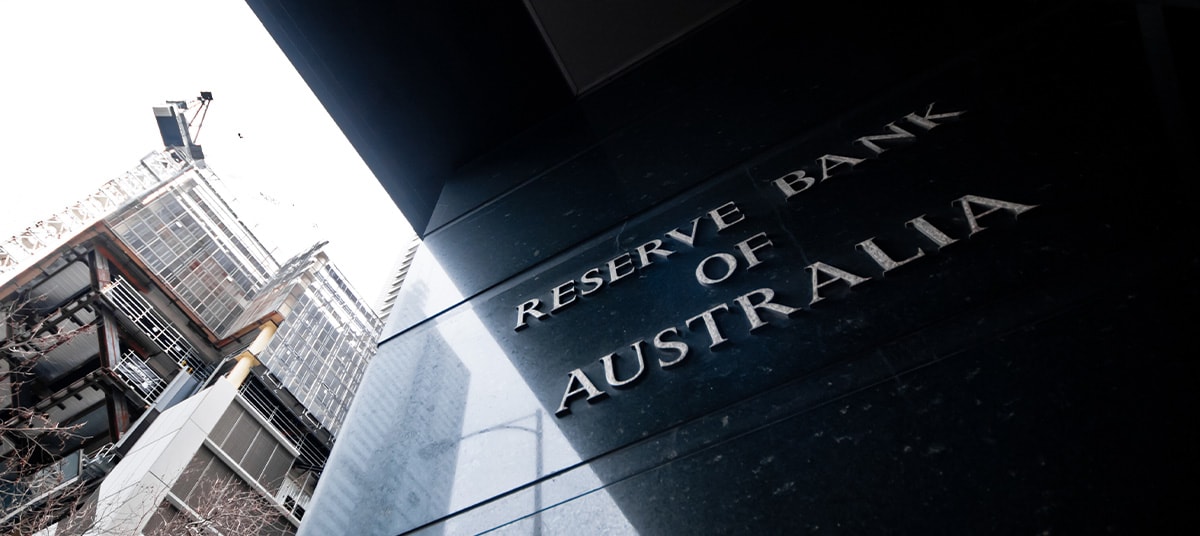
The Reserve Bank of Australia’s Monetary Policy Board has announced its May cash rate decision, as it responds to renewed inflationary pressures and a mounting global oil shock.
On Tuesday afternoon (5 May) the Reserve Bank of Australia (RBA) Monetary Policy Board announced that it had lifted the cash rate – delivering its third consecutive 25-basis-point hike for the year.
The RBA has increased the official cash rate by 0.25 per cent, continuing the tightening cycle that began in February when it first lifted interest rates as it confronts stubborn inflation.
This takes the cash rate from its current level of 4.10 per cent to 4.35 per cent.
The last time the official interest rate was at 4.35 per cent was from November 2023 to February 2025.
The decision was split, but only just, with eight members voting to increase the cash rate while one member voted to leave it unchanged.
The RBA outlined that the conflict in the Middle East and its impacts on inflation and costs were too great to ignore.
“As expected, developments in the Middle East are having an impact on inflation. Higher fuel prices are adding to inflation and there are indications that this is likely to have second-round effects on prices for goods and services more broadly. This inflation impulse is in addition to the high inflation recorded around the start of 2026, reflecting capacity pressures in the economy,” the statement read.
It noted that board members judged that inflation had remained persistently high and that the cash rate needed to be raised to drive it down.
“In light of these considerations, the Board assessed that inflation is likely to remain above target for some time and that the risks remain tilted to the upside, including to inflation expectations. It was therefore judged appropriate to increase the cash rate target,” the RBA said.
“Having raised the cash rate three times, monetary policy is well placed to respond to developments and the Board is focused on its mandate to deliver price stability and full employment. It will do what it considers necessary to achieve that outcome.”
Brokers brace for renewed repayment strain
Broker groups and aggregators have said the latest move would deepen the financial strain on many mortgage holders, with Connective executive director Mark Haron stating it would translate into tougher conversations.
“For borrowers, this will mean higher repayment pressure and closer scrutiny of household spending, with behaviour becoming more cautious as budgets are stretched,” he said.
“As borrowing capacity tightens, many will be seeking guidance not just on rates, but also on options, including loan structuring, lender comparisons and scenario modelling.”
He added that the onus was now on brokers to act proactively as lenders reprice.
“In this environment, brokers should move early and stay close to their clients. Revisit pre-approvals immediately and considering repricing or refinancing where appropriate,” Haron said.
Mortgage Choice chief executive Anthony Waldron said Mortgage Choice data showed more customers actively shopping around for sharper deals.
“Mortgage Choice home loan submission data reveals that borrowers are already responding to climbing rates and chasing a better deal on their mortgage,” he said.
Waldron noted that this shift was being accompanied by a renewed appetite for rate certainty.
“What’s most telling about our submission data is the uptick in demand for fixed-rate home loans, which tells us that borrowers are looking for certainty. In April, 6 per cent of loans submitted by our brokers included a fixed portion, up from just 3 per cent a year ago,” Waldron outlined.
He said anyone unsure whether their current product still suited their circumstances should seek professional guidance.
“I'd encourage you to chat with a mortgage broker. Understanding your options has never been more important.”
Similarly, Sam White, executive chairman and CEO of aggregation group Loan Market, said the cash rate increase would "put extra pressure on many current and aspiring homeowners".
"In these times, our role as brokers is more important than ever - helping Australians navigate their options to achieve their goals, be it home ownership, finding some breathing space in the household budget or even managing their business through cashflow challenges," he said.
Mortgage and Finance Association of Australia chief executive Anja Pannek said the third straight rate rise would be confronting news for households.
“Another rate rise is difficult news for borrowers already managing higher repayments and broader cost-of-living pressures," she said.
Pannek said brokers were well placed to step in quickly, stress‑test budgets, and run through alternative structures and lenders.
“For borrowers, the practical message is clear: reach out to your broker to get their assistance to review your loan and understand your options sooner rather than later,” she outlined.
“Mortgage brokers can assist borrowers to compare the market, negotiate with their current lender and consider whether their loan structure still suits their circumstances.”
Interim Finance Brokers Association of Australia chief executive Peter White said the rate rise, combined with broader policy settings affecting housing investors, risked compounding pressure in both the owner‑occupier and rental markets.
“Surely driving investors out of the market while at the same time increasing interest rates can only result in increased mortgage repayments and higher rental prices,” he said.
White warned that the burden of higher repayments and rents would not be evenly shared.
“I’m not an economist, but it’s not rocket science that this affects lower-income earners more than anyone else,” White said.
According to the comparison website Canstar, the rise is set to elevate average variable rates for owner-occupiers to roughly 6.26 per cent – a level not seen since January 2025 and effectively unwinding last year’s cuts.
The hike will increase monthly repayments by $91 for an owner-occupier $600,000 mortgage with 25 years remaining and $453 a month for a $1 million mortgage – and taking the total average rise across the three hikes to $272.
Where to from here?
Financial markets were generally expecting a 25-basis point increase to 4.35 per cent, with the ASX 30 Day Interbank Cash Rate Futures trading at 95.747 as of 1 May, indicating a 74 per cent probability of a hike.
The shift to a continuing tightening cycle has been driven by persistently high inflation, a firm labour market and a rapid surge in fuel costs sparked by the military conflict in the Middle East.
The Consumer Price Index indicator for March came in at 4.6 per cent, jumping from 3.7 per cent in February – marking the fiercest monthly increase since the ABS began the series in 2017.
The RBA’s preferred trimmed mean inflation held steady at 3.3 per cent – well above its 2–3 per cent band – yet it increased 0.8 per cent over the quarter, lower than widely expected.
All four major banks lined up behind a unified call that the cash rate would be raised in May.
Major bank economists said the combination of above-target inflation, relatively low unemployment and volatile oil prices left the RBA with little room to sit on its hands.
However, they have diverged on the cash rate outlook moving forward.
The Commonwealth Bank of Australia (CBA), Australia and New Zealand Banking Group (ANZ), and National Australia Bank (NAB) all predicted a single May hike followed by an extended period on hold, while Westpac is forecasting two more hikes in June and August.
The next cash rate decision will be announced on 16 June 2026.
[Related: RBA tipped to press ahead with third straight rate rise]
Want to see more stories from trusted news sources?
Make The Adviser a preferred news source on Google.
Click here to add The Adviser as a preferred news source.