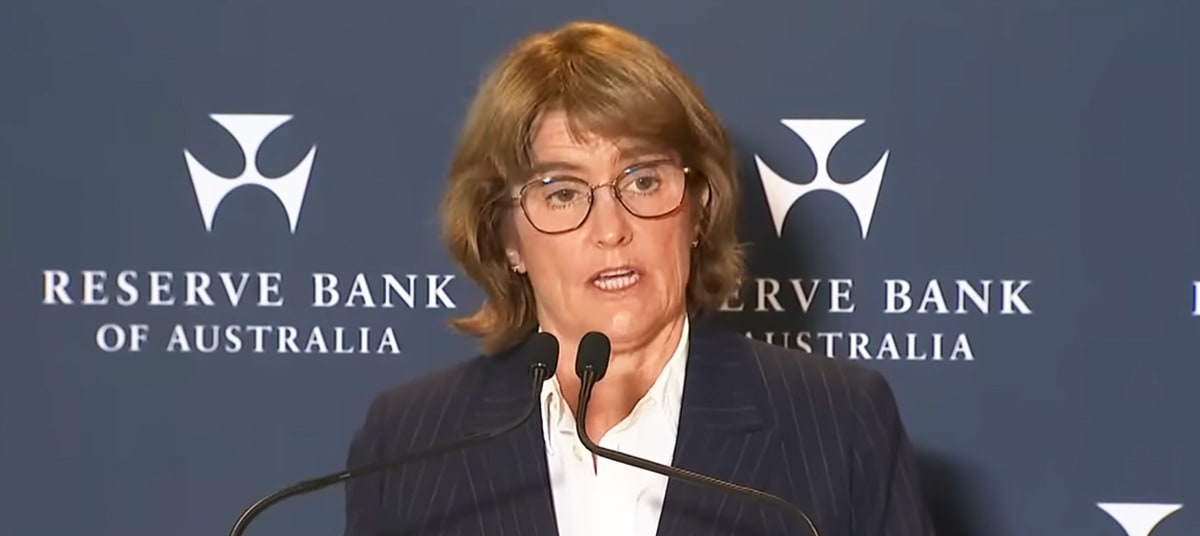
RBA governor Michele Bullock has apologised for a major payments system failure that delayed property settlement deals nationwide – pledging a full review.
The governor of the Reserve Bank of Australia (RBA), Michele Bullock, has issued a public apology for a "technical fault" that led to hundreds of property transcations being delayed and impacted wages being paid on time.
Fronting the House of Representatives standing committee on economics on Friday (6 February), the governor outlined how a technical fault on 27 January, disrupted some of the RBA's core settlement services, delaying file‑based payments and stalling hundreds of property transactions, which rely on central bank infrastructure to complete.
The RBA outlined that the issue emerged at around 10:30am, blocking certain batch and file payments from being processed, while its Fast Settlement service for real-time transactions continued to operate normally.
The underlying cause was identified, and systems were gradually brought back online, with payment file exchange services resuming from about 5:20pm on 27 January.
A second problem, however, affected property settlements feeding through platforms such as Property Exchange Australia (PEXA), prompting the RBA to extend its settlement window to 10:45pm, leaving around 500 transactions unfinished that night.
Governor apologises for ‘disruption caused’ by outage
RBA governor Bullock used her opening remarks to spotlight the outage and deliver a direct apology to MPs and impacted Australians.
"[O]n 27 January, the RBA experienced a system issue that disrupted some payment and property settlement services,” she said and set out the sequence of events.
She then outlined the path to recovery before stressing accountability for the incident.
“We restored settlement for these services in the afternoon, but a second issue for property settlements meant that full restoration was not achieved until the evening,” she continued.
“We apologise for the disruption caused by the incident.”
The governor underscored the gravity of the lapse and said a comprehensive review of the glitch was underway, with the findings set to be released publicly before the end of the month.
“We recognise the critical role we play in the payments system and are conducting a full review of the incident, which we plan to publish before the end of February,” Bullock assured MPs.
She said the outage underscored the importance of the RBA’s ongoing efforts to bolster the resilience of settlement systems, signalling that further technical and governance changes were likely.
“This incident reinforces the importance of the RBA’s active program of work to strengthen the operational stability of its critical settlement systems,” she said.
Settlements delayed, pay runs hit
While the RBA detailed the system failure and its remediation, industry accounts revealed the breadth of the interruption across both property and payroll flows.
The technical issue at the central bank, which slowed or halted property transactions booked through PEXA, left hundreds of buyers, sellers, and practitioners having to push back settlement dates and renegotiate logistics.
Property disruptions affected around 900 settlements in total, with about 100 in Victoria unresolved until Thursday morning.
Buyers and sellers faced rescheduling chaos, including rate adjustments and rushed moving changes, as conveyancers adapted.
PEXA said in a statement on 29 January that it was endeavouring to contact affected customers and stressed that its own platform remained available throughout, attributing the delays to the upstream problem at the RBA.
“PEXA appreciates that this issue is stressful for our customers and for people who experienced disruptions and we regret the inconvenience caused,” the statement read.
The company also reiterated its close co-operation with the RBA and other partners to keep the e‑conveyancing framework secure.
“We actively collaborate with our partners, including the RBA, on an ongoing basis to ensure that the e-conveyancing system remains resilient, secure and efficient,” PEXA said.
The disruption also flowed into wage payments, particularly for employers that process payroll through ANZ.
Workers expecting their salaries on Tuesday afternoon reported hours‑long delays as direct entry files failed to move through the system.
Bendigo Bank, including its digital offshoot Up, was among the institutions affected, as it relies on ANZ as a file courier for some payment streams.
According to the RBA, once settlement services were restored on Tuesday evening, financial institutions resumed exchanging payment files and cleared outstanding transactions over the following days.
The central bank has since confirmed that no further system issues have been detected and that banks are now managing any remaining customer‑level problems.
Inflation, technology and global factors in focus
While the outage was one factor raised during the hearing, the bulk of the committee hearing was focused on inflation and the reasoning behind the RBA's first Monetary Policy Decision of 2026 (held on 3 February 2026).
To address the resurgence of inflation and persistent excess demand, the Reserve Bank of Australia recently increased the cash rate to 3.85 per cent to help return inflation to its 2–3 per cent target range by mid-2027.
"The board judged that stronger-than-expected demand in aggregate was pushing up against the ability of the economy to supply all of the goods and services being demanded... It therefore judged that it was appropriate to raise the cash rate," Bullock told the committee, reiterating the thinking behind the updated statement of monetary policy,
Beyond monetary policy, the RBA is prioritising the stability and modernisation of the payments system, including a major review of merchant fees and efforts to ensure cash remains a viable and accessible payment method across the country.
Bullock said: "The RBA remains committed to supporting the Australian Government’s policy objective to ensure cash remains a viable means of payment for as long as Australians want or need to use it."
Additionally, the RBA noted that it has implemented significant structural reforms following the RBA Review, including the establishment of a new Governance Board to enhance transparency, accountability, and institutional excellence.
The RBA governor outlined: "The creation of the Governance Board has sharpened our focus, strengthened decision-making and improved accountability, supporting our commitment to modernising the RBA."
In her opening address, governor Bullock also detailed how global technology trends and internal operational hurdles are shaping the RBA’s current strategy.
The governor noted that resilience in the global economy—specifically in Asia—is being driven by a massive surge in artificial intelligence investment, which has indirectly bolstered the Australian economy.
"Strong US AI-related investment has also supported exports from east Asian economies... [it is] a consequence of the ongoing boom in AI investment, which has spilled over to a number of high-income Asian economies that supply chips and other key inputs," she said.
The RBA said it was also increasingly linking the need for higher interest rates to a lack of productivity growth, suggesting that without technological or efficiency gains, the economy remains "capacity constrained."
"Faster productivity growth allows for stronger growth in incomes and spending without the emergence of inflationary pressures... [but] if growth in the economy’s supply capacity remains limited, it is likely to add further to capacity pressures, and hence inflation persistence," Bullock concluded.
[Related: Bullock warns inflation ‘too strong’ as RBA lifts CPI forecast]
Want to see more stories from trusted news sources?
Make The Adviser a preferred news source on Google.
Click here to add The Adviser as a preferred news source.