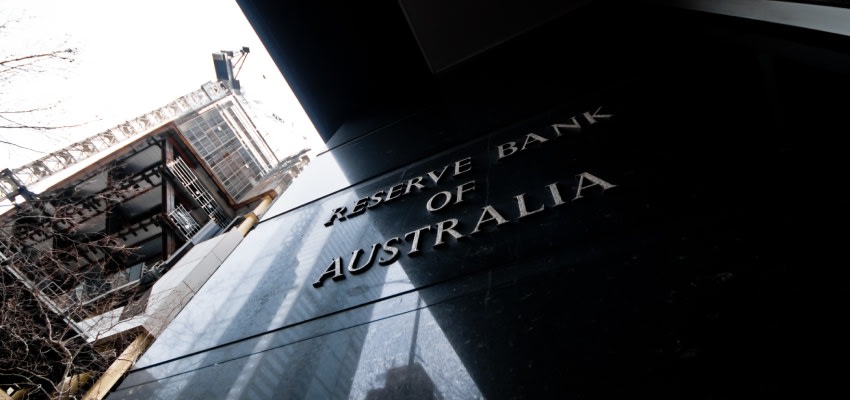
The Reserve Bank Monetary Policy Board has begun a new tightening cycle, increasing the cash rate for the first time in two years.
On Tuesday afternoon (3 February), the Reserve Bank of Australia (RBA) Monetary Policy Board announced that it was lifting the cash rate for the first time in over two years.
The RBA has increased the official cash rate by 0.25 per cent, marking a return to a tightening cycle.
This takes the cash rate from its current level of 3.60 per cent to 3.85 per cent.
The RBA last lifted interest rates in November 2023 when inflation was at 4.9 per cent, and unemployment sat at 3.9 per cent.
Interest rates have remained unchanged since August 2025, when the RBA delivered its third cut of the year, with markets and several banks believing that this would be the terminal rate for the rate-easing cycle.
Financial markets were generally expecting rates to increase, with the ASX 30 Day Interbank Cash Rate Futures Index trading at 96.24 as of 2 February, indicating a 72 per cent probability of a hike.
The shift to a tightening cycle has been driven by stickier‑than‑expected inflation and a labour market remaining tighter than many anticipated.
The RBA’s preferred quarter trimmed mean inflation for December came in at 0.9 per cent for the quarter, while headline inflation accelerated to 3.8 per cent in the 12 months to December 2025, clearing market expectations of 3.6 per cent and up from November’s 3.4 per cent annual reading.
Unemployment has also been low, edging down from 4.3 to 4.2 per cent in December in trend terms (or 4.1 per cent, seasonally adjusted), heightening concern that monetary policy may not have been as restrictive as previously assumed.
The policy decision was unanimous.
In its statement, the Monetary Policy Board said inflation had increased “materially” in the second half of 2025 and that it was “likely to remain above target for some time”.
Although outlining that the recent uptick in inflation was being fuelled by “temporary factors”, the RBA expressed concern that “private demand is growing more quickly than expected.”
The RBA said that numerous indicators suggested that labour market conditions remained “a little tight” and that the unemployment rate was sitting “a little lower than expected”.
The board also left the door open to further hikes if needed to temper inflation, with the bank stressing it would not hesitate to do what it deemed necessary.
“While part of the pick-up in inflation is assessed to reflect temporary factors, it is evident that private demand is growing more quickly than expected, capacity pressures are greater than previously assessed and labour market conditions are a little tight,” the statement reads.
“The Board is focused on its mandate to deliver price stability and full employment and will do what it considers necessary to achieve that outcome.”
Speaking of the decision, executive director at aggregator Connective, Mark Haron, said the rise would put millions of Australian borrowers under renewed financial pressure, forcing households to be conscious of their spending and outlay.
“Today’s rate increase adds further pressure for borrowers who have already absorbed a prolonged period of higher costs. Households are facing tougher decisions about spending, repayments, and cash flow,” he said.
“Home owners are more likely to pause upgrades, investors are approaching opportunities cautiously, and small business owners are prioritising essential commitments.”
However, Haron added that while the rate hike would likely “compress volumes” in the short term, it presented brokers with an opportunity to “strengthen their role as trusted financial intermediaries in a complex, volatile rate environment”.
“To remain competitive, brokers should focus on providing strategic advice in areas such as pre- approvals, running scenario planning, and helping borrowers assess whether rising property values create opportunities to restructure or upgrade,” Haron said.
Mortgage Choice CEO Anthony Waldron noted that the rate rise was “widely expected” given unemployment and the fact that the economy “is simply running hotter than the RBA would like”.
He suggested that borrowers should now “consider how prepared they are for their home loan interest rate to rise” and how larger repayments would impact their lifestyle, urging them to speak to a broker.
“They’ll help you understand whether you can save by switching to another home loan product or lender so you can get ahead of any further rate hikes,” he said.
Waldron also flagged that those buying a home – including those with pre-approval – may need to “sharpen” their strategy as a rate hike will “likely have an immediate impact on their borrowing power” and could reduce borrowing power from pre-approvals.
“My advice to anyone feeling uncertain is simple: don’t leave things up to chance. Let a broker do the legwork to find the lender that fits your unique needs,” he said.
Mortgage and Finance Association of Australia (MFAA) CEO Anja Pannek said the hike would make it more difficult for borrowers seeking to take advantage of the federal government’s 5 per cent Deposit Scheme.
“Higher rates can reduce borrowing capacity for those trying to enter the market,” Pannek said.
She said inflation would remain out of the RBA’s 2–3 per cent target for quite some time, yet stressed that borrowers were not “out of options”.
“The smartest step borrowers can take is to speak to their mortgage broker. Brokers can explore a range of options and that includes options to improve serviceability, securing a sharper rate with an existing lender, refinancing to a different lender or consolidating debt to improve cash flow,” she said.
The rise could push average variable rates for owner-occupiers to roughly 5.77 per cent and effectively eliminate home loan rates starting with a four from the market, according to comparison website Canstar.
This would increase mortgage repayments by approximately $75–$80 per month ($900–$960 annually) for every $500,000 borrowed.
For an average $693,802 home loan, this would equate to an extra $1,313 per year in interest costs, while someone with a $1 million mortgage would see an increase of about $150–$158 per month.
Where to from here?
The recent developments prompted the major banks to coalesce around predicting a rate rise, with Commonwealth Bank’s economic team stating on Monday (2 February) that “the game has changed – and quickly.”
CBA, ANZ, and Westpac believe the February rise is a one-and-done call, while NAB is the only major to flag two hikes this year, which would take the cash rate to 4.10 per cent.
Executive general manager at reporting agency Equifax, Moses Samaha, said that the rate increase could lead to a “short burst” in refinancing activity, similar to that seen post the 2022 tightening cycle.
“In 2022, the reaction to the first-rate hike was immediate. As soon as rates rose in May 2022, refinance volumes lifted 25 per cent compared to the previous month (April 2022),” he said.
Equifax analysis shows that there has already been a recent increase in refinancing inquiries, with a 9.6 per cent increase in Q4 2025 (compared to 4Q24).
The next cash rate decision will be announced on 17 March 2026.
[Related: Majors unite on RBA rate hike call after sticky CPI data]
Want to see more stories from trusted news sources?
Make The Adviser a preferred news source on Google.
Click here to add The Adviser as a preferred news source.