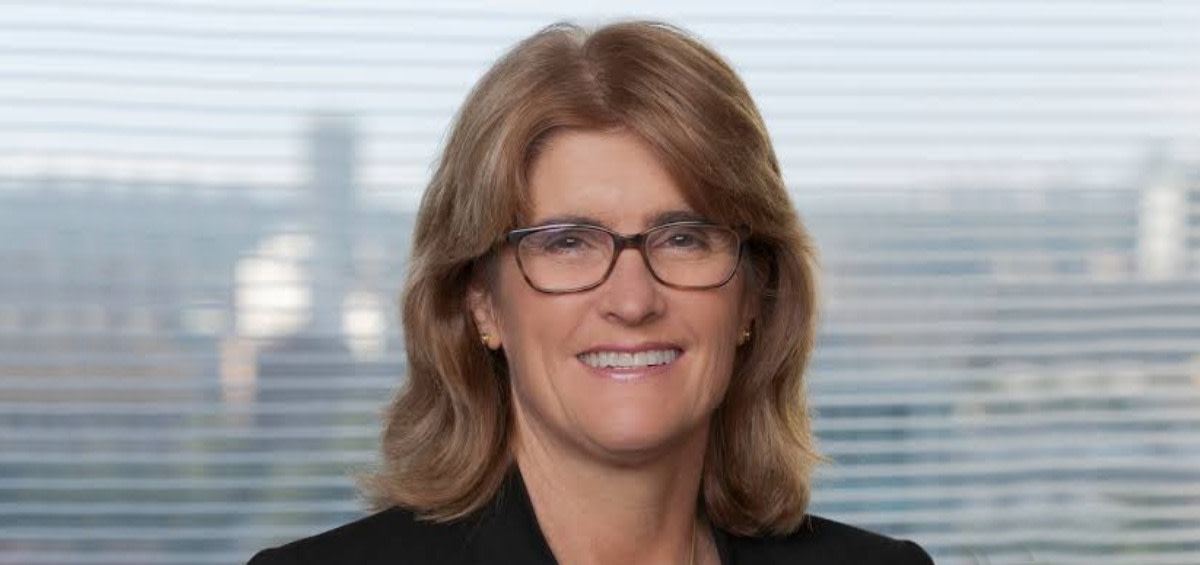
Reserve Bank governor Michele Bullock has said inflation is “too strong” for the RBA’s liking, as the central bank forecasts inflation to imminently tip into the low 4s.
Reserve Bank of Australia (RBA) governor Bullock has said the central bank’s move to lift the cash rate by 0.25 per cent to 3.85 per cent on Tuesday (3 February) was the “right thing for the economy.”
The RBA last lifted interest rates in November 2023 – when inflation was at 4.9 per cent, and unemployment sat at 3.9 per cent.
Financial markets and the major banks were generally expecting rates to increase, with a shift to a tightening cycle being driven by stickier-than-expected inflation and a labour market remaining tighter than many anticipated.
Speaking to the media in Sydney on Tuesday (3 February), RBA governor Bullock said she knew the rate hike was “not the news that Australians with mortgages want to hear”, but reiterated it was the “right thing for the economy.”
“Inflation is too strong. We have updated our assessment and outlook for the economy and concluded that the rate was no longer at the right level to get inflation back to target in a reasonable time frame,” she said.
“The board felt that if it didn’t raise the interest rate today, it would be signalling a tolerant inflation entrenched above target and that is not the message they want to give.”
Bullock admitted that the board had deduced it would take longer for inflation to fall to target levels – a development she described as “not acceptable.”
“We cannot allow inflation to get away from us again,” she stressed.
When pressed if households should interpret the increase as the start of an aggressive series of hikes, Bullock said she would not provide “forward guidance”, yet added she was “concerned that we don’t want this higher-level inflation entrenched.”
She said she did not know if monetary policy was in a tightening cycle and rather labelled it an “adjustment.”
“The board does not have a particular path in mind. What it has done is adjusted the interest rate up because they felt financial conditions weren’t quite firm enough,” she said.
Bullock, however, emphasised that the February hike was “not the same” as the tightening seen post-COVID-19.
When presented with markets pricing in an 80 per cent chance of a follow-up hike in May, Bullock said she did not “dismiss market expectations”, but was also “not driven by them.”
In justifying the board’s decision, she said a number of factors were driving inflation’s rise, including robust private sector demand – a point Treasurer Jim Chalmers has touted repeatedly in explaining inflation’s recent uptick.
“Demand was stronger-than-expected over the second half of 2025 and we think some of that strength is carried into 2026,” she said.
Amendments to inflation forecast reflect higher CPI
In its quarterly Statement on Monetary Policy, published separately from the rate decision, the RBA used the technical assumption of 60 basis points of rate rises this year – a significant reversal from November when markets were broadly expecting one more cut.
The assumption is largely based on what the market has been pricing in.
“The path for monetary policy assumed in the forecasts – with cash rate rises this year – is expected to restore balance between aggregate demand and potential supply,” the statement reads.
In terms of inflation, the bank is now forecasting CPI to peak at 4.2 per cent in the middle of 2026, up from 3.7 per cent in its November forecast.
The bank now believes trimmed mean inflation (its preferred measure of underlying inflation) will peak at 3.7 per cent in the middle of this year, up from its previous prediction of 3.2 per cent.
It then predicts inflation to drop to just above the midpoint of the RBA’s 2–3 per cent target range by June 2028 – the end of the forecast horizon.
Economic growth, meanwhile, is forecast to be stronger in the near term, yet weaker than expected by the middle of next year.
The central bank said it expected the unemployment rate to remain “broadly stable in the term” before rising to 4.6 per cent by mid-2028.
Mortgage payments decline as share of household disposable income
The statement found that scheduled mortgage payments had dropped as a share of household disposable income since late 2024, yet remained “noticeably” above the 20-year average.
“Scheduled mortgage payments declined over 2025, consistent with falls in variable mortgage rates, to a little below their historical peak in 2024,” the statement said.
Meanwhile, scheduled principal and interest payments on mortgages held steady at near 10 per cent of household disposable income.
Bank lending rates to households and businesses “declined broadly”, with average interest rates on variable-rate mortgages dropping by 75–80 bps.
“Rates on new fixed-rate mortgages also declined over 2025 but have increased slightly since the November Statement,” the RBA said.
Total credit continued to expand faster than nominal GDP over the December quarter, with the RBA stating this reflected “strong contributions from both housing and business credit”.
Housing credit growth also increased even further in the December quarter, driven largely by “strong” investor credit, which is at its highest level since 2015.
“Owner-occupier credit growth (which comprises two-thirds of overall housing credit) has also increased, but by much less than investor credit growth,” the statement reads.
“Housing loan commitments have also grown strongly over recent months, though declined slightly in December.”
The RBA said the surge in total housing credit growth since February 2025 was solid compared to recent easing phases.
House prices shot up “strongly” over the past year, with home values rising by 1 per cent in December to be 8.5 per cent higher over the year, yet the RBA said that monthly growth “may have stabilised in recent months.”
[Related: RBA hikes cash rate for first time in over 2 years]
Want to see more stories from trusted news sources?
Make The Adviser a preferred news source on Google.
Click here to add The Adviser as a preferred news source.