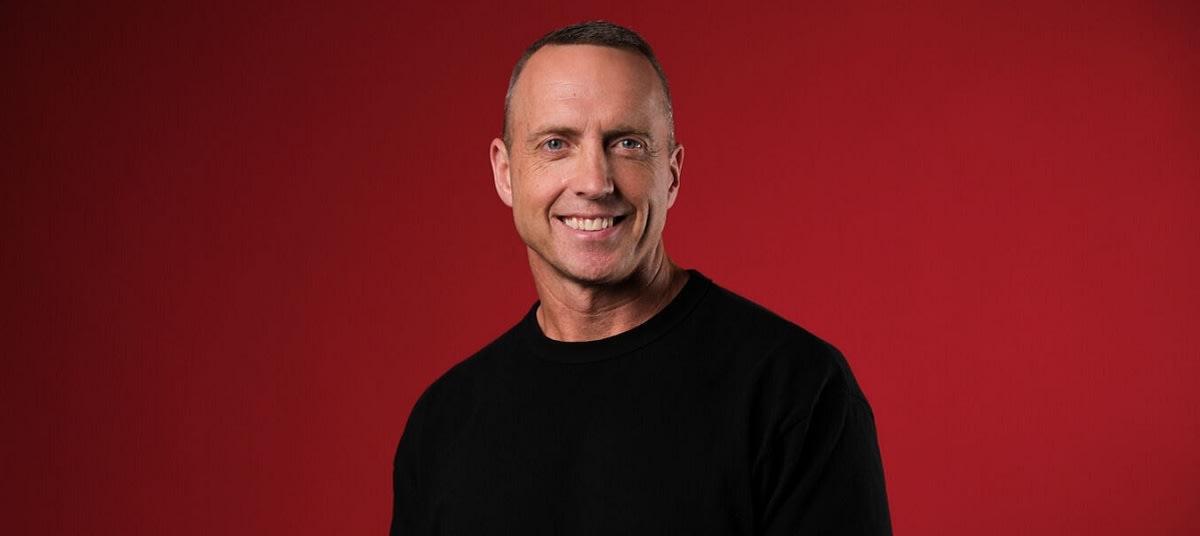
As the 2026 AFL season kicks off this week, we sit down with Sydney Swans chief operating officer Drew Arthurson to uncover what brokers can learn about running an elite team.
On Thursday (5 March), the first game of the 2026 Australian Football League Premiership season will commence – as Sydney Swans goes head-to-head with Carlton at the Sydney Cricket Ground.
For the players, the opening round comes after months of pre-season training, but – behind the scenes – the work carried out to ensure the clubs are running as smoothly and effectively as possible requires an ongoing effort.
Speaking to The Adviser ahead of his keynote speech at the Better Business Summit 2026, the Sydney Swans’ chief operating officer (COO), Drew Arthurson, revealed how Australia’s most-supported sports club unlocks elite performance across the business.
Despite having around 1.3 million supporters and a history spanning over 151 years, the Sydney Swans club is a medium-sized business, with around 180 people on the payroll: 80 athletes and 100 staff.
According to Arthurson, the key to success in running such a well-loved brand and team is the same across any business or industry – it’s all about unlocking the best in every single person behind the brand.
As such, the framework and strategies employed at Sydney Swans could be superimposed with success in the broking industry, too, he said.
The ‘club, team, self’ framework
“Our obsession is trying to unlock the best in every single person on our payroll, irrespective of role,” the Sydney Swans COO tells The Adviser.
“So we think about performance in terms of culture and performance. Culture is about the way things are done around here, and performance looks at whether people are executing on their core roles to the best of their abilities.”
For cultural alignment, Arthurson flagged the importance of a “unifying North Star” and then modelling the behaviours and standards it is striving for off the back of that.
For Sydney Swans, this rests on the model of: club, team, self.
The club element looks at establishing a clear goal that the whole team is striving towards and ensuring it is front of mind.
The team element ensures all teams – whether players, commercial teams, or technology teams – are clear on their goals and outcomes to achieve the overarching club goal.
And the self element looks at how each individual is empowered and supported to deliver to the best of their ability.
He explains: “So at a Self level, what am I on payroll to do? That’s my job, mission, clarity. At a Team level, how am I adding incremental value to my colleagues and working cross-functionally? And, at a Club level, how am I adding to the culture and performance of this football club…
“We’re trying to build a tribe mindset and thinking about how we can build a tribe mindset where people are thinking Club first and striving for something bigger than themselves.
“So we have the debate about how we can get better... but when we leave the room, we commit, and we commit because we’re unified around a common goal.”
As such, he said brokers wishing to adopt a similar club, team and self mantra should first identify what they are striving for (for example, scale, legacy, succession), then codify the ways of working to achieve that and then empower each member of staff to be able to do it.
The incomparable success of incremental improvement
On a performance level, Arthurson said that the number one focus is on “incremental improvement”.
This is achieved through “feedback improvement cycles” that enable all employees to pitch ideas on how the team can improve, whether for players on the ground or staff off the pitch, as well as providing positive feedback that reinforces good behaviours.
The review cycles ebb and flow depending on the speed of performance. In season, for example, rhythms are daily and weekly (as some games may only be 36 hours apart), with review sessions also booked in at the end of each quarter.
“In the business of footy, you’re playing week to week. So one of the benefits of that is that we have a weekly equivalent to end-of-financial-year every single week. Between our men’s and women’s teams, excluding finals, we’ll do that 35 weeks this year, as we’ll be playing a national game of football every weekend,” the Sydney Swans COO said.
“That gives us a real discipline and a chance to prepare, to execute and review frequently.
“So, we’re focused on incremental improvement. We believe that the science of performance is about the invisible consistency, and that visible discipline translates into visible results. So we really focus on maximising people’s performance and building out really clear road maps around how people can improve in their individual roles but also in their ability to contribute at a team level, whether that’s on or off the field.”
Arthurson suggested that, for brokers, this could translate to “real-time coaching loops”. Rather than waiting for an annual performance review, he said that successful businesses embed feedback that happens “on the go”, validating those who model the standards and challenging those who need to get better.
You can hear more from Drew Arthurson and how brokers can emulate the success of an elite performance team at the Better Business Summit 2026, run with the support of principal partner NAB.
The Sydney Swans COO will be speaking in Adelaide (12 March), Perth (19 March), Brisbane (26 March), and Melbourne (16 April).*
Click here to book your tickets and don’t miss out! Did you know The Adviser Premium Members go for free? Become a Premium Member here.
For more information, including agenda and speakers, click here.
*Richard Hopkins, former head of operations of the F1 Red Bull team, will be the keynote speaker on operational excellence at the Sydney event (9 April).
[Related: Better Business Summit 2026 launches]
Want to see more stories from trusted news sources?
Make The Adviser a preferred news source on Google.
Click here to add The Adviser as a preferred news source.