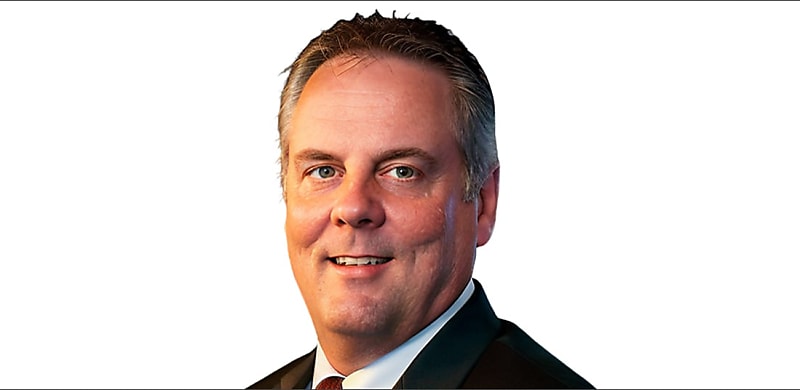
The blanket freezing of innocent brokers’ businesses undermines natural justice and destroys professional credibility, writes broker mentor Phil Rice.
The mortgage broking industry has a fraud problem to deal with. Nobody serious in this industry should pretend otherwise. If a broker, brokerage, or group has falsified documents, misled lenders, or placed consumers and banks at risk, the response should be swift, firm, and uncompromising.
But that is not the same as punishing every broker who happened to sit under the same banner.
The recent Hai Money situation should concern every broker, aggregator, lender, licence holder, and industry body in Australia. According to public reporting, around 211 brokers were affected after Finsure terminated its sub-aggregation agreement with Hai Money. The alleged misconduct was not across the whole group. Reports indicate that a smaller group of brokers had previously been removed following NAB accreditation concerns. Yet the commercial fallout has spread far wider than the alleged conduct itself.
That is the part the industry needs to confront.
When more than 200 brokers can suddenly lose the ability to write loans, support clients, settle deals, receive income, and maintain lender access, we are no longer just talking about fraud control. We are talking about career destruction by association.
I have been in finance for 30 years, including seven years as a bank manager. I am also a credit licence holder, broker, certified professional business adviser, and business coach. I fully understand why lenders and aggregators must act quickly where fraud risk exists. The lender cannot ignore it. The aggregator cannot look casual. The industry cannot be seen to protect bad actors.
But ethical risk management must be targeted. It must be evidence-based. It must distinguish between those who caused the problem and those who had nothing to do with it.
That distinction matters.
One broker I have been coaching through the FBAA New Broker Academy is a new-to-industry broker who was finally starting to build momentum. He had not been accused of fraud. He had compliance audits completed. He had CPD records. He had client outcomes. He had a young business, a family depending on him, and clients in progress. Then, almost overnight, he was unable to operate.
In one email, he was told applications not formally approved and merely pending settlement could not proceed. Approved applications would require checks before moving forward. In another, Hai Money referred to the impact on pipeline deals, commissions, and the ability of brokers to continue operating. That is not a minor inconvenience. That is a business being frozen.
This should trouble the industry.
If a law firm has one rogue solicitor, the entire profession does not blacklist every lawyer who once worked at that firm. If a financial planning group has a misconduct issue, every adviser is not automatically treated as contaminated. If a bank branch has internal fraud, every banker in the branch is not made unemployable.
So why should an innocent broker be treated as a commercial risk merely because of the licence structure they were operating under?
The uncomfortable answer is that broker accreditation is not only a compliance issue. It is also a commercial gateway. If lenders and aggregators refuse to re-accredit clean brokers because of brand association rather than individual conduct, the industry is allowing reputation management to override natural justice.
That is a dangerous precedent.
It tells brokers that no matter how clean their own files are, no matter how much CPD they complete, no matter how many audits they pass, their career can still be shut down because of someone else’s behaviour. That undermines confidence in the entire licensing and aggregation model.
It also creates a consumer problem.
Many of these brokers had clients mid-application, pre-approval, refinance, purchase, or settlement. Consumers do not care about aggregator politics. They care about whether their finance will settle, whether their deposit is at risk, whether their broker can still act, and whether they need to start again. When innocent brokers are cut off without a clear transition pathway, consumers become collateral damage as well.
There is also a broader reputation issue.
If mainstream media reports “200 brokers stood down after fraud concerns”, the public will not carefully separate alleged offenders from innocent brokers. The headline will stain the whole channel. That is exactly why the industry needs leadership now, not silence.
The FBAA and MFAA should be more visible on this issue. Not to defend fraud. Not to protect poor conduct. But to defend due process, proportionality, and the future credibility of the broker channel.
A practical solution is not difficult.
Affected brokers should be triaged. Those directly linked to suspected misconduct should remain suspended pending investigation. Those with clean audit outcomes, clean lender histories, verified CPD, no adverse findings, and satisfactory references should be given a fast-track re-accreditation pathway. Lenders can impose heightened monitoring, file sampling, probation periods, or temporary restrictions if needed. That is reasonable.
A blanket commercial freeze is not.
The broker channel has fought hard for professionalism. Brokers are now subject to best interests duty, responsible lending obligations, compliance audits, CPD, AFCA membership, PI insurance, aggregator oversight, and lender accreditation standards. If those systems are meant to mean anything, then passing them must also count for something.
Fraud must be removed from the industry. No argument.
But innocent brokers should not be removed with it.
The Hai Money matter should become a turning point. The industry must prove it can deal with misconduct without destroying clean operators in the process. If it cannot, every broker in Australia should be asking a very serious question:
If this happened under my licence group tomorrow, would my own record protect me – or would I be next?
Phil Rice is the founder of Business Advice Agency and chairman & founder of Emerald Group Holdings. He is a certified professional business adviser (CPBA) and ACL holder.
Want to see more stories from trusted news sources?
Make The Adviser a preferred news source on Google.
Click here to add The Adviser as a preferred news source.