Fresh minutes have revealed how inflation fears from the ensuing international oil shock outweighed mounting concerns on weakening demand.
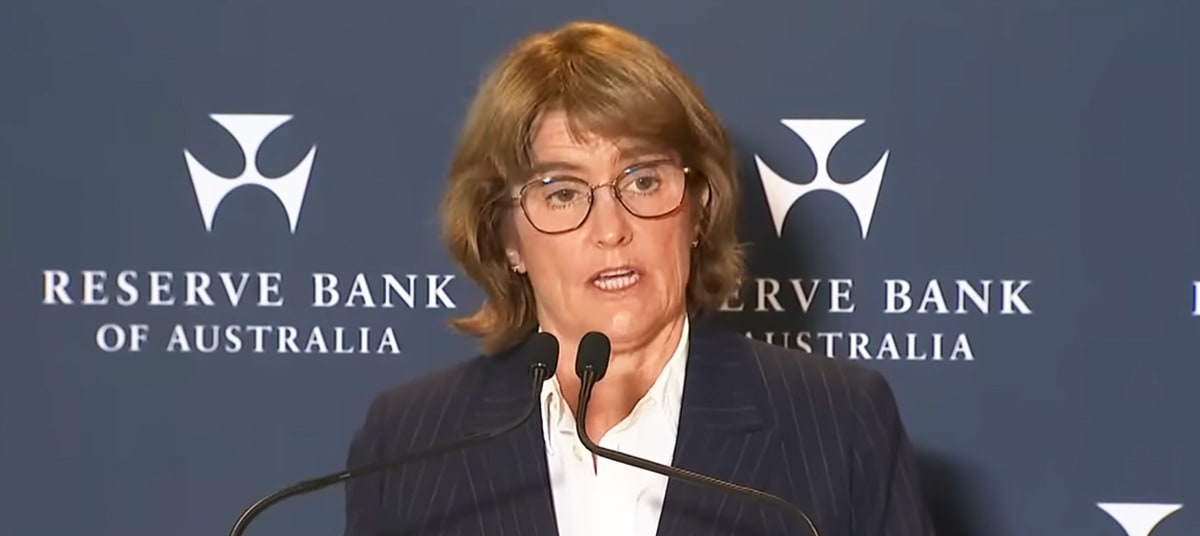
The Reserve Bank of Australia has set out why a majority of its Monetary Policy Board chose to push ahead with a March rate rise, with the minutes revealing a finely balanced judgement over how to respond to the escalating global oil shock.
The minutes revealed that the board deemed the 25-basis-point hike necessary as members ultimately judged that inflation was too high, demand was still running above the economy’s capacity, and the latest jump in fuel prices had changed the game.
The board set out how the Middle East conflict had quickly reshaped the financial backdrop, noting that “global prices for oil and other forms of energy had risen sharply, short-term inflation expectations had picked up and financial market volatility had increased”.
It added that the conflict was “likely to pose a material adverse supply shock to the global economy”, albeit with highly uncertain scale and duration.
Members then concluded that, although financial conditions had firmed in recent months, the starting point had been less restrictive than previously anticipated.
On domestic activity, the majority took comfort from the fact that the economy was still operating beyond its sustainable speed limit, giving them room to lean harder against price pressures.
The minutes showed that the latest data was broadly in line with the February Statement on Monetary Policy but that labour market conditions were “judged to be slightly tighter than expected”.
Staff presented estimates that showed that, if oil prices held at around US$100 a barrel, the direct petrol effect would push headline inflation to “around 5 per cent over the year to the June quarter, around three quarters of a per cent higher than had been expected in February”.
On that basis, the majority framed the March move as a pre‑emptive strike against more persistent inflation, rather than a reaction to a single data print.
The minutes noted that the board “agreed that further tightening in monetary policy would likely be required in the near term to bring inflation back to target within a reasonable time frame”.
Although members acknowledged that monetary policy could not prevent a “near‑term” spike in petrol prices, they said that a higher cash rate “could reduce the risk that this would flow into persistent inflationary pressures”.
The board also judged the decision to hike as “important to demonstrate a clear commitment to returning inflation to target”, warning that if medium‑ and long‑term expectations rose, it would “ultimately require significantly more contractionary monetary policy.”
Why 4 members wanted to hold
The four dissenting members – despite agreeing that inflation remained sticky and the conflict posed substantial economic impacts – put more weight on the risk of tightening causing a sharper downturn.
They said: “The case to keep the cash rate target unchanged at the current meeting centred on concerns about the effect of heightened uncertainty on the outlook for the economy,” particularly around the trajectory of domestic growth.
They highlighted that “the weaker-than-expected outcome for consumption in the December quarter, had suggested some downside risk to the level of household spending in the March quarter”.
They were also less convinced that labour conditions would remain at their current levels.
National Australia Bank senior economist Taylor Nugent characterised the minority’s stance as an argument for patience in the face of a highly uncertain shock.
“The minority case to hold pointed to uncertainty, stemming especially from the Middle East, meaning it could be beneficial to wait for a little more information which may help to calibrate the monetary policy reaction more effectively,” he said.
Big-4 economists rally around May hike
Despite the disagreement over timing, the minutes made clear that both camps believed at least one more increase would likely be needed.
Australia and New Zealand Banking Group’s (ANZ) head of Australian economics, Adam Boyton, said members’ language around the next meeting showed there was not an entrenched bloc against further tightening.
He said he took the minutes as “suggesting that the May meeting starts as a ‘clean-slate’, that is, there are not four members heading into that meeting opposed to a further rate hike.”
Nugent said he read the majority’s reasoning as a warning that the RBA was prepared to lean further against inflation if the oil shock proved persistent.
He said that “NAB continues to expect one additional increase to the cash rate in May to a peak of 4.35 per cent”.
The Commonwealth Bank of Australia (CBA), meanwhile, drew similar takeaways from the minutes for its own rate profile.
“The minutes note that the hike was driven by the heightened risk of inflation not returning to target within a reasonable time frame, which warranted an immediate response,” the bank said.
The bank reiterated that it still expected “the RBA to increase the cash rate by 25bps at its May meeting”, yet said the decision would once again be “a line ball”.
The cash rate insights come after Westpac announced on Monday (30 March) that it had shifted from expecting a single move in May to projecting hikes in May, June, and August, taking the cash rate to 4.85 per cent.
[Related: Westpac tips extended RBA hiking cycle after May rise]
Want to see more stories from trusted news sources?
Make The Adviser a preferred news source on Google.
Click here to add The Adviser as a preferred news source.