
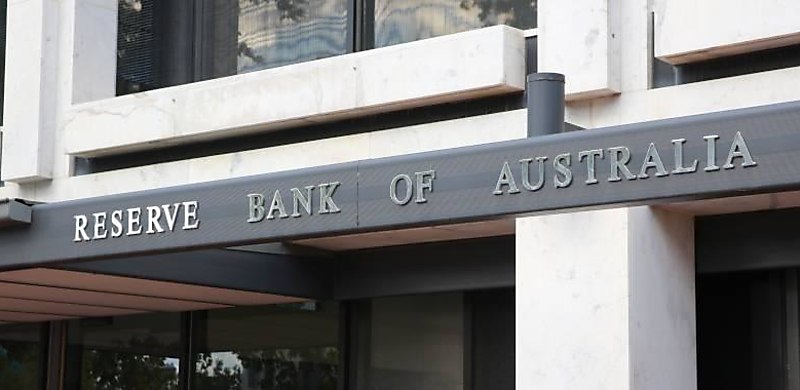
The Reserve Bank of Australia (RBA) has said that most borrowers can absorb rising repayments and cost pressures as rate hikes accumulate.
The Reserve Bank of Australia, which lifted the cash rate by 25 basis points at both its February and March meetings, has used its March 2026 Financial Stability Review to say that households and businesses are generally well placed to cope with higher interest payments.
In its latest assessment, the RBA stressed that the starting point for the household sector was strong, with the central bank stating that most mortgagors still carried buffers that would allow them to endure tougher conditions.
“Households and businesses are generally well placed to weather higher interest payments and cost pressures,” the RBA said.
“The strong financial position of most borrowers means that the household and business sectors are unlikely to be a source of systemic instability.”
The review noted that household cash flow pressures had eased relative to mid‑2024, reflecting the earlier decline in inflation and interest rates before this year’s renewed tightening cycle.
Yet the RBA acknowledged that some borrowers remained under budget pressure.
For mortgage holders, the bank highlighted a clear improvement in dire stress metrics, even if pockets of strain were persisting.
“The share of mortgagors in severe financial stress – where mortgage payments and spending on essentials exceed their income – has declined since mid-2024 and is small”, with loan arrears still “at low levels, supported by strength in the labour and housing markets”, the central bank said.
At the same time, the RBA was blunt in outlining that the next year would feel tougher for many households as the latest rate hikes and higher living costs bite.
“Cash flow pressures on household and business borrowers are expected to increase in the near term, but most appear well placed to manage these,” it said.
The bank also flagged geopolitics as an additional headwind for family budgets, noting that the escalation of conflict in the Middle East had added to cost strains.
Regulators watching high‑risk housing credit
Alongside its relatively upbeat assessment of borrower resilience, the RBA devoted considerable space to emerging risks from faster credit growth.
With domestic credit growth having accelerated over the past year and global stability risks “elevated”, it stressed that it was “important that lending standards remain prudent so that household and business resilience is not undermined”.
The bank said overall lending standards remained sound, yet that it was seeing “early evidence that some forms of riskier lending to certain household segments have ticked up recently alongside very strong investor housing credit growth.”
“High debt-to-income (DTI) lending to investors has increased, though remains well below new limits activated by the Australian Prudential Regulation Authority (APRA) on high DTI lending,” it said.
First home buyers with small deposits were also in focus, with the review noting a lift in high-LVR activity tied to government support schemes.
However, the RBA added that there was “little evidence” that this lending was threatening financial stability.
The central bank underlined that together with APRA and other agencies, it would be keeping a close watch on how these trends evolved as the tightening cycle progressed.
Business sector robust despite insolvency pressure
On the business side, the review deduced that resilience remained solid, yet that some sectors were under strain as higher costs and interest rates flowed in.
“Cost pressures remain a challenge for some Australian businesses, as evident from higher insolvency rates in some industries, but risks to the financial system from business lending appear low,” the report read.
The RBA noted that company failures had “stabilised at around longer run averages at an economy-wide level”, despite insolvencies remaining elevated in the hospitality and construction sectors.
For the banking system, the RBA said broader spillovers from these failures “had been contained due to these firms’ limited bank debt and small size”.
Looking ahead, the bank said it expected higher funding costs and geopolitical uncertainty to put additional pressure on some firms’ cash flows, particularly those with thin margins and limited buffers.
“Business credit growth remains strong and the RBA, in conjunction with other CFR agencies, continues to closely monitor for signs of a build-up in vulnerabilities,” the RBA said.
[Related: Bullock defends rate hike, insists demand drove call]
Want to see more stories from trusted news sources?
Make The Adviser a preferred news source on Google.
Click here to add The Adviser as a preferred news source.

