A judge has stepped in to pause Finsure’s attempt to sever its sub‑aggregation agreement with Hai Money.
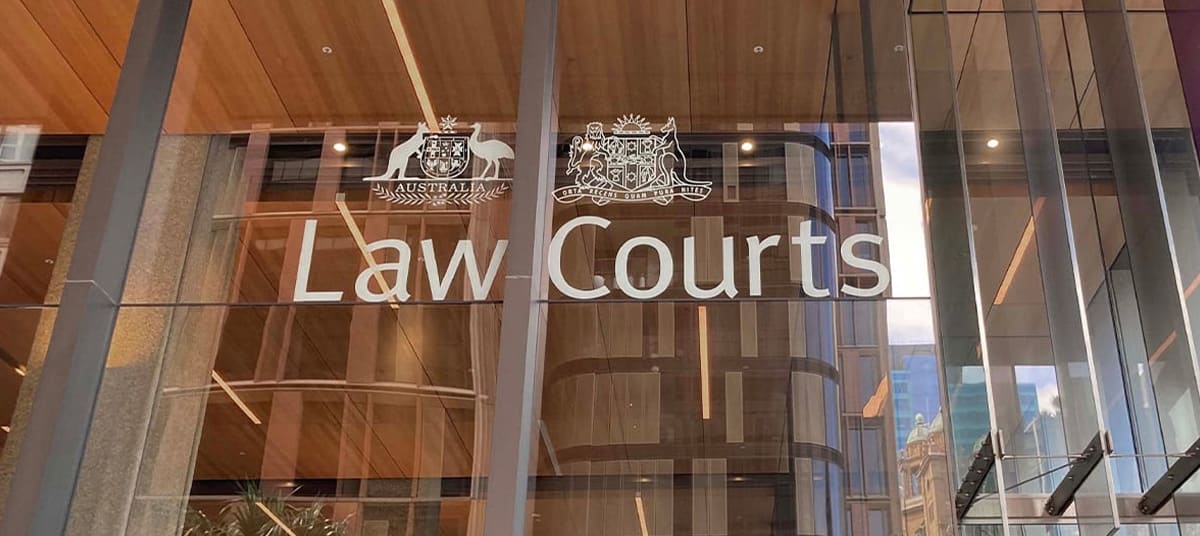
The decision, handed down by Justice Kate Williams on Friday (15 May), grants Hai Money an interim injunction, preventing Finsure from acting on its move to terminate the sub-aggregation agreement.
Finsure terminated the sub‑aggregation agreement in late April, after lenders raised red flags about potential broker misconduct within the Hai Money network.
The termination came after several brokers operating under Hai Money were terminated over concerns relating to alleged mortgage fraud.
Hai Money on Wednesday (13 May) turned to the NSW Supreme Court, seeking “a return to the status quo as it was before the service of the termination”.
Judge focuses on preserving status quo
Justice Williams explained that her task was only to decide whether the relationship should be frozen while the case was worked out.
“The purpose of an interim injunction is to preserve the status quo until the rights of the parties can be determined at a final hearing,” the judge said.
Justice Williams drilled into what evidence was before the court, stressing a key clause for termination required concrete evidence as opposed to allegations or media coverage.
“As senior counsel for Finsure candidly acknowledged, there is no evidence presently before the Court that Hai Money or any broker has committed or been ancillary to conduct of the kind described in the clause,” she said.
The judge said the evidence that had been tendered by Finsure was speculative.
“There is evidence of media reports of allegations that certain individual brokers have engaged in fraud, and there is evidence that certain lenders have taken action to suspend or terminate the accreditation of certain brokers, to suspend the accreditation of all Hai Money brokers (in the case of the Commonwealth Bank) and to terminate the accreditation of all Hai Money brokers (in the case of NAB),” she explained.
“There is no evidence of any findings made by those lenders (if any) in respect of any particular brokers.”
Justice Williams also said Finsure had deliberately chosen not to make its own findings about the brokers it cut in mid‑April.
“Finsure expressly disavowed making any findings against Hai Money brokers whose accreditation Finsure terminated on 14 April 2026,” she said.
The judge concluded that Hai Money’s challenge to the termination was far from conjectural.
“On the basis of the evidence presently before the Court, Hai Money has a strong case,” the judge outlined.
Justice Williams then turned to whether the practical balance of risk supported keeping the contract in place for now.
She focused on what would happen if she refused interim relief if Finsure’s move to terminate proved invalid.
The judge said in those circumstances, a cheque would be nowhere near enough.
“If the interim injunction is not granted, and Finsure is ultimately found to have invalidly terminated the Agreement, damages will be a wholly inadequate remedy,” she said.
“I accept Hai Money’s submission that damages would be difficult to quantify given that Hai Money is a relatively new business and was in an expansive phase of its development.”
Justice Williams said an injunction would not solve all of Hai Money’s issues – but would give the business room to trade with lenders that had not blacklisted its brokers.
“As things presently stand, this will afford Hai Money the opportunity to continue its business through members of its broker network (who have not yet moved to other sub‑aggregators and whose accreditation has not been suspended or terminated by Finsure) generating loan applications to lenders that have not suspended or terminated the accreditation of those brokers,” she said.
Judge slaps down Finsure’s claims
The judge then weighed those risks against what Finsure said it stood to lose if forced to keep the agreement in place in the interim.
“The prejudice to Hai Money described above far outweighs any prejudice that Finsure will suffer if the interim injunction is granted,” she said.
She added that the evidence did not support Finsure’s fears of brand damage.
“The evidence does not persuade me that Finsure’s reputation in the mortgage broking industry will be tainted if the agreement remains on foot,” she said.
Justice Williams then pointed out that Finsure’s narrative undercut its defence.
“The evidence presently before the court indicates that most lenders have not moved to terminate the accreditation of the majority of Hai Money’s brokers,” she outlined.
“[C]oncern that Finsure will be judged ‘guilty by association’ by the industry if it retains a relationship with any of Hai Money’s brokers is contradicted by Finsure’s own conduct.”
The judge noted that Finsure had hired a broker whose Macquarie Bank accreditation was terminated as a BDM and was also in the process of onboarding seven ex‑Hai Money brokers in late April, which she said undermined its defence.
Finsure also sought to frame the injunction as an attempt to compel an unwilling commercial relationship.
Yet retorting this, Justice Williams said: “I reject Finsure’s submissions that the claim for the interim injunction is effectively a claim to have the agreement reinstated.
“Hai Money does not seek to reinstate that relationship, but to restrain Finsure from acting on an allegedly invalid termination of the agreement and to maintain the status quo pending final determination.”
Damages, lender reaction, and undertakings
Finsure said that lenders might retaliate against it for keeping Hai Money on the platform.
However, the judge found this concern to be largely hypothetical.
“Finsure submits that there is a real risk that its own business will be shut down by lenders taking steps against Finsure if the interim injunction is granted. The evidence which I have summarised above does not establish any such risk,” she said.
She added that there was nothing to suggest lenders were turning on Finsure.
“There is no evidence that Finsure has engaged or is even suspected to have engaged in any conduct that might arguably cause any lender to take action against Finsure,” the judge stated.
“There is no evidence of a risk of Finsure losing the whole of its business, or of losing its business with one or more specific lenders.”
In closing, Justice Williams said the injunction was necessary to stop Hai Money’s contractual rights from being hollowed out before they were tested at trial.
“The interim injunction should be granted to prevent the practical destruction of the right that Hai Money seeks to vindicate in its claims for final relief pending the determination of those claims at trial,” she said.
[Related: Hai Money takes Finsure to court over contract axe]
Want to see more stories from trusted news sources?
Make The Adviser a preferred news source on Google.
Click here to add The Adviser as a preferred news source.