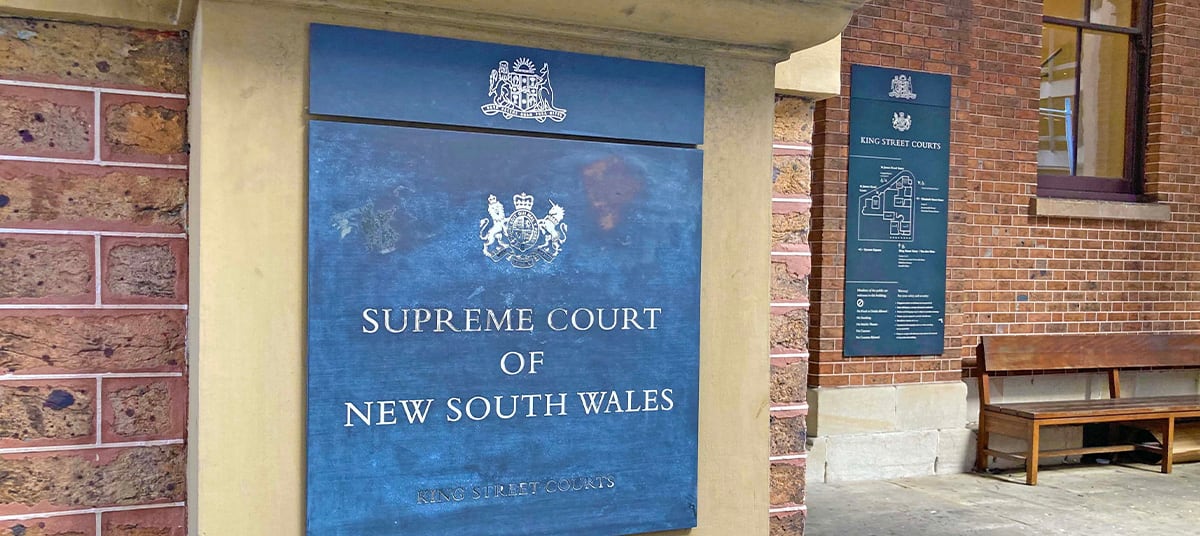
Hai Money has taken Finsure to court over its move to terminate its sub-aggregation agreement, with both sides trading contrasting accounts of broker misconduct.
Collapsed sub‑aggregator Hai Money has asked the NSW Supreme Court to reinstate its contract with Finsure, saying the aggregator unlawfully terminated the deal.
Finsure terminated the sub‑aggregation agreement in late April, after lenders raised red flags about potential broker misconduct within the Hai Money network.
The move has left more than 200 brokers effectively frozen out of major lender systems.
The termination came after several brokers operating under Hai Money were terminated over concerns relating to alleged mortgage fraud tied to the Penthouse Syndicate, a network police allege has used brokers, bankers, and other professionals to secure hundreds of millions of dollars in loans from criminal proceeds.
Hai Money asks court to ‘return to status quo’
Hai Money this week turned to the NSW Supreme Court, seeking “a return to the status quo as it was before the service of the termination”.
Opening for Hai Money, its counsel emphasised that the contract defined aggregators and sub‑aggregators as intermediaries between brokers and lenders – but said Finsure’s interpretation was too narrow and shifted all consequences of broker misconduct onto Hai Money.
It said Finsure had urged the court to see sub‑aggregators as “an intermediary” only, but counsel rejected that, saying that “in some sense there was also liability on the actions of brokers”.
“We say it would be wrong to interpret that as wrongdoing of a single broker as wrongdoing of Hai Money entirely,” the lawyer said.
In material read to the court, Hai Money’s lawyers pointed to an affidavit from Finsure CEO Simon Bednar outlining how National Australia Bank (NAB) moved to terminate all Hai Money-accredited brokers due to fraud concerns.
The Commonwealth Bank of Australia (CBA) also suspended all Hai Money brokers, with Macquarie Bank, AMP, and Suncorp suspending some brokers.
However, Hai Money’s central contention was that Finsure terminated its agreement despite there being no formal allegations of wrongdoing by Hai Money as an entity.
“There had been no allegations against Hai Money personally; they were all against the brokers,” the lawyer stated.
They said the loss of accreditation by some brokers did not automatically justify bringing down the agreement.
The court also heard that PwC was engaged to report on Hai Money’s involvement in alleged fraud, while Finsure commissioned its own independent assessment.
Hai Money’s lawyers summarised both reports as finding “no allegations Hai Money was involved in what appeared to be acts of wrongdoing with some of the brokers”.
Emails put Finsure’s shifting stance under spotlight
A substantial portion of Hai Money’s case focused on emails from Bednar, which its counsel said showed a shift from remediation to termination.
The court heard that, in one email to NAB, Bednar forwarded the PwC report and said Finsure was “in support” of its findings (i.e. that there was no systemic misconduct).
Hai Money said this indicated Finsure accepted that the issues could be addressed at the broker level.
Yet in an email dated 14 April 2026, Bednar told Hai Money: “The compliance team has now determined which brokers are high risk. You will shortly receive a letter confirming their termination from Finsure. In total, we have identified 97 brokers.
“These brokers will be voluntarily terminated by Finsure, not Hai Money... while we will not keep them as members, you can certainly decide internally if you want to keep them.”
The court heard evidence of emails dated 30 April in which Finsure sought reference checks to onboard seven former Hai Money brokers.
Hai Money’s team said this “undermined” Finsure’s defence. The lawyers also placed the spotlight on Andrew Hu, a former NAB and CBA banker who later operated as a broker under Hai Money’s credit licence, who has been charged with 89 offences in connection with the alleged Penthouse Syndicate fraud scheme.
They noted that Hu had first been onboarded on Finsure’s credit licence before joining Hai Money, adding that “if one is to criticise Hai Money’s processes, some weight should also be added to Finsure’s”.
Hai Money’s lawyers also told the court that notions of “unconscionability” were engaged.
Finsure defends termination on risk grounds
Responding for Finsure, the major aggregator’s counsel framed the dispute as about the right to terminate in the face of serious risk and reputational pressure.
The lawyer said it would only be necessary “to prove that one broker had engaged in wrongdoing” to justify termination.
They asserted there were “systemic failures within Hai Money” and a “failure to have systems in place to make sure this sort of thing doesn’t happen”.
When Justice Williams pressed for evidence, Finsure’s lawyer said: “At the moment the highest I can put it is evidence of media reports, relating to particular brokers engaging in fraud.”
The judge queried why she would treat media coverage as evidence, prompting a response that banks had acted on those reports and that Finsure was obligated to respond.
The counsel said Finsure’s priority was to protect itself from the risk of “having the business shut down”.
Finsure’s counsel referenced emails from CBA referring to an article about suspected fraud involving Hai Money‑linked brokers and the bank’s decision to suspend them while it investigated.
CBA also set out compliance steps it expected Finsure to take.
Finsure also relied on an affidavit from an “expert in the industry”, Peter White, who had been offered a board role at Hai Money to help it “get its house in order”.
In that affidavit, White referred to media articles and warned they would damage Finsure’s reputation unless it “took steps to distance itself”.
Council said independent industry voices stated there was a sound basis to expect lenders to “react strongly”, underpinning Finsure’s decision to terminate.
Justice Williams reserved her judgment on whether to grant the injunction, ordering time before issuing a ruling.
Hai Money founder Bruce Li attended the hearing but declined to comment, while Finsure representatives were not present.
[Related: Finsure terminates sub-aggregation agreement with Hai Money]
Want to see more stories from trusted news sources?
Make The Adviser a preferred news source on Google.
Click here to add The Adviser as a preferred news source.