The ensuing fuel supply shock has shifted more motorists towards electric vehicles, with new figures revealing a sharp jump in demand for EV finance.
The Commonwealth Bank of Australia (CBA) has reported a steep rise in loans, inquiries, and online product traffic linked to electric vehicles (EVs) since early March, as the conflict in the Middle East reshapes household and business budgets.
CBA’s latest data has revealed average weekly loans for new EVs since the start of March were up 161.5 per cent on the February weekly average.
On the bank’s cars for CommBank portal (its car‑buying assistance service operated with Vyro and AutoGrab), EV purchase inquiries leapt by 136 per cent in March.
Interest is also flowing through to the bank’s product pages, with average daily visits to CBA’s EV car loan page up 75 per cent this month compared with February.
Tim Burdon, CBA’s product owner for car buying and lending, said the bank had been deliberately building a broad suite of offers for low‑emissions vehicles and that the products were already gaining traction before the oil spike.
“Our finance options tailored for energy-efficient and electric vehicles have been gaining in popularity since we first launched them in 2024,” Burdon said.
More models, sharper price points
Burdon stressed that the shift in the available model mix was also crucial, with more mass‑market EV and hybrid options arriving in local showrooms.
Setting out how the change was reshaping buyer behaviour, he said customers were now able to choose from a broader range of price points rather than a handful of premium imports.
“But there are now more affordable EV and hybrid models available in Australia, giving customers even more choice and range, and the surge in interest we’ve seen in March is very significant,” he said.
The demand upswing is landing in a market that already notched a record year in 2025.
Data from the Electric Vehicle Council showed EVs, including battery electric vehicles and hybrids, accounted for 13.1 per cent of all new car and light commercial vehicle sales last year, up from 9.6 per cent in 2024, with December alone hitting a 16.7 per cent monthly share.
Separate Federal Chamber of Automotive Industries figures revealed that EVs on their own made up 8.3 per cent of total sales in 2025.
Commercial buyers and policy tailwinds
CommBank’s numbers showed commercial buyers were also responding to mounting fuel costs.
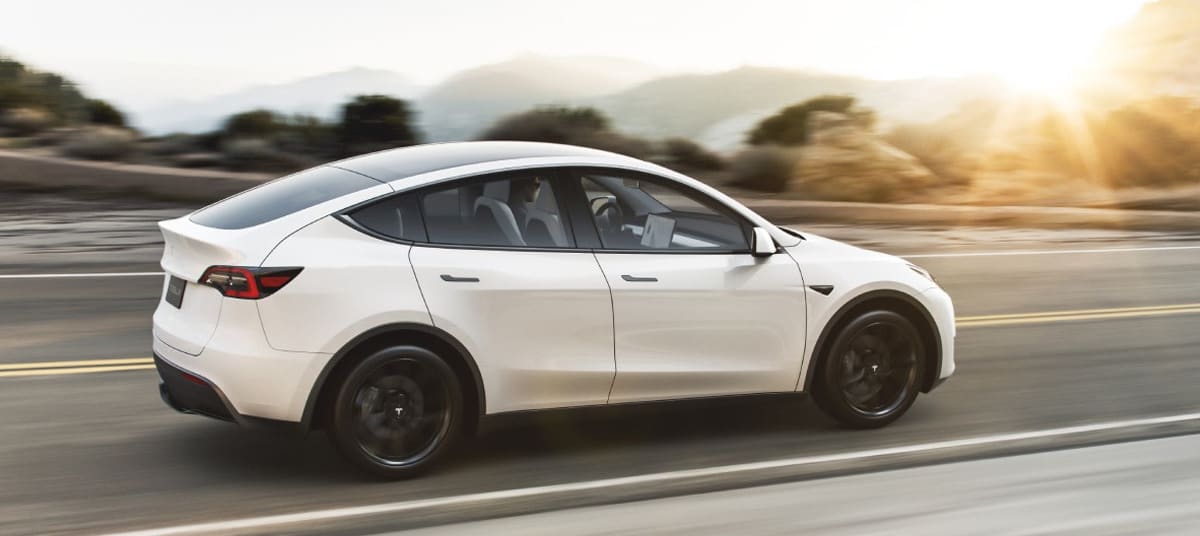
Business loan applications for Tesla vehicles were 268 per cent higher in March than at the same point in 2025, suggesting small enterprises were reassessing whole‑of‑life running costs as fuel prices increased.
The bank said it expected the elevated interest to persist, while energy markets remained unsettled, stating that fuel price shocks were now a central factor in vehicle purchase decisions.
Yet policy changes have added another layer.
Under the recently finalised Australia–European Union free trade agreement, the 5 per cent tariff on European vehicle imports will be removed, and the luxury car tax threshold for zero‑emission vehicles will be lifted to $120,000.
Industry groups have said these changes should further reduce prices for a range of European‑sourced EVs once implemented.
[Related: EV demand driving novated leasing surge: LMG]
Want to see more stories from trusted news sources?
Make The Adviser a preferred news source on Google.
Click here to add The Adviser as a preferred news source.