New figures have found mid-sized capitals are racing ahead, while the nation’s two largest cities continue to lose momentum.
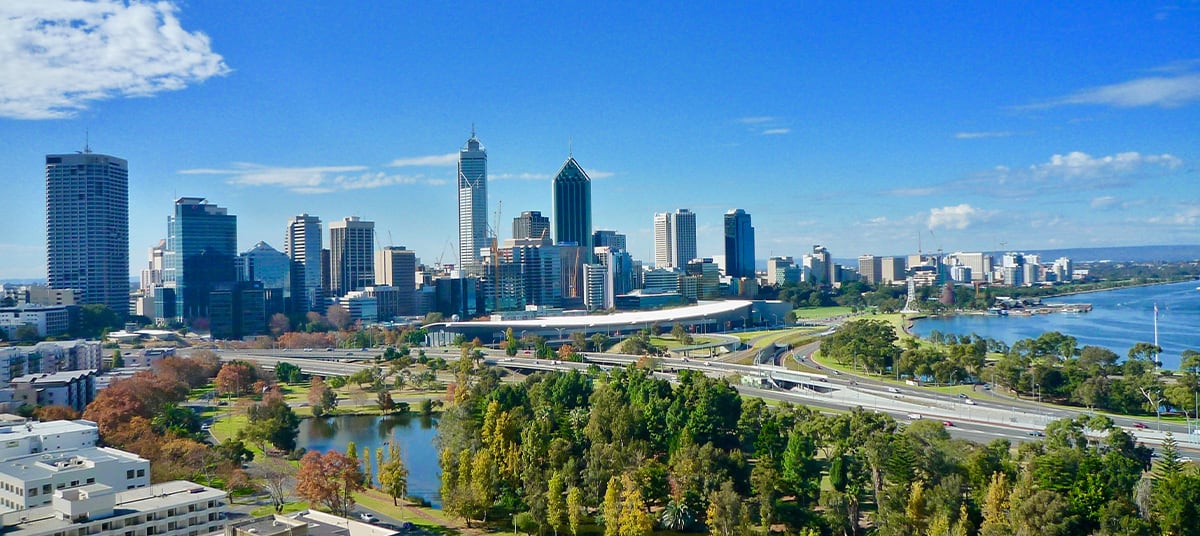
Australia’s housing market has entered a two‑speed phase, with Perth, Brisbane, and Adelaide powering as Sydney and Melbourne flatten out, according to National Australia Bank’s (NAB) March 2026 Housing Monitor.
Across the combined capitals, dwelling values are up about 9.6 per cent over the past year, with the median dwelling sitting at around $900,000.
Perth, Brisbane, and Adelaide are doing majority of the heavy lifting.
Prices rose 2.3 per cent month on month in Perth and 1.6 per cent in Brisbane, while Darwin also posted solid gains.
By contrast, Sydney and Melbourne were flat in February, with dwelling values in both cities unchanged over the month and now edging lower on a three‑month annualised basis.
Sydney is down 0.3 per cent and Melbourne 1.8 per cent on the measure.
Yet Sydney still holds the nation’s highest median house price at about $1.61 million, while Darwin remains the cheapest at around $710,000.
NAB linked much of the outperformance in the mid-sized capitals to demographic tailwinds.
“Population growth has been strongest in Perth, Adelaide and Brisbane,” it said.
Yet stronger inflows into these relatively cheaper markets are colliding with tight stock levels, pushing prices higher at a rapid pace.
Lending lifts, but risk metrics stay contained
The monitor underscored that the upswing was not being driven by an obvious blowout in risky credit.
New housing loan commitments jumped sharply over the second half of 2025, with investors leading the early charge before owner‑occupier activity picked up late in the year.
Even with that rebound, the composition of new lending remains relatively conservative.
“Only a small share of new housing lending is at high debt to income or loan to valuation ratios,” it said.
At the same time, housing loan arrears are hovering near 1 per cent of outstanding loans.
NAB noted that arrears were “highest for low-doc lending”, yet stressed that overall levels remain low by historic standards.
This combination of strong volumes, constrained high‑risk segments, and contained arrears points to a market where higher prices are centred on competition for scarce stock as opposed to an uncontrolled credit boom.
Supply bottlenecks and construction constraints
On the supply side, NAB said the construction sector was still struggling to respond to rising demand.
“Dwelling supply growth remains weak, with net additions to the dwelling stock well below the 2015 peak. Approvals have risen since early 2024 but are flowing into an already large pipeline,” the report reads.
Apartments are a particular pressure point, with NAB highlighting that “apartment starts are exceeding completions, keeping the pipeline of dwellings under construction elevated, particularly in NSW and Victoria.”
While build times for detached houses and town houses have shortened slightly, completion times for apartments continue to lengthen.
Cost and capacity pressures are also central to the logjam.
NAB reported that “building output price and material cost growth have eased from their mid-2022 highs, though house output prices have edged higher.”
“Construction input cost pressures have eased although remain elevated, yet labour constraints continue to limit construction capacity,” it said.
“Construction costs and permit delays are the main barriers to starting new housing developments according to our residential property survey.”
[Related: Supply crunch locks out new wave of first home buyers]
Want to see more stories from trusted news sources?
Make The Adviser a preferred news source on Google.
Click here to add The Adviser as a preferred news source.