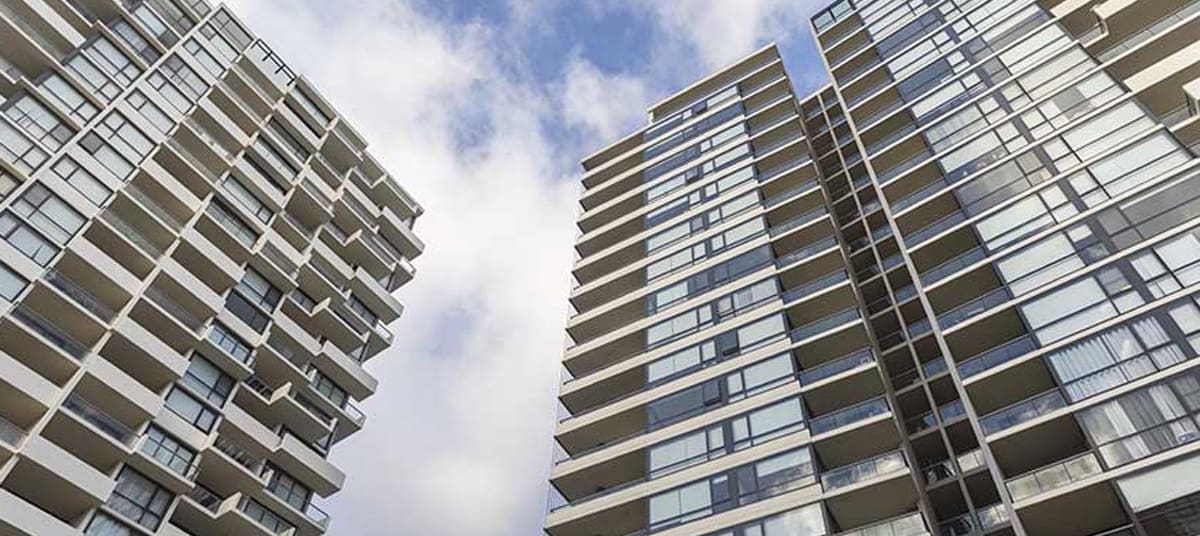
Building approvals jumped 15.2 per cent in November, with economists noting that a surge in apartment projects has pushed the monthly figure to its highest level since early 2022.
Australia’s housing pipeline rebounded in November, with total dwelling approvals up 15.2 per cent over the month or 20.2 per cent in a year, led by a sharp rise in apartment projects in Queensland and Victoria.
New data from the Australian Bureau of Statistics (ABS) released on Wednesday (7 January) has revealed that 18,406 dwellings were approved in November (in seasonally adjusted terms), following a 6.1 per cent decline in October.
The rise in total dwellings was driven by a 34.1 per cent increase in private dwellings excluding houses (i.e. semidetached, row, or terrace houses; town houses; and apartments). This followed a 13.5 per cent fall in this series in October.
Indeed, multi-density dwelling approvals were up by 55.3 per cent on the previous year in seasonally adjusted terms.
In original terms, the volatile apartment series rose 63.6 per cent to 5,558 dwellings, which is 44.8 per cent higher than the average over the past 12 months.
Private sector houses also rose, up 1.3 per cent, to 9,458 dwellings. This came after a 1.3 per cent drop in the month prior and remains 3.2 per cent higher than one year ago.
For November, private housing approvals were driven by growth in NSW (up 4.3 per cent) and Queensland (up 3.9 per cent).
Daniel Rossi, ABS head of construction statistics, noted that November 2025 had the highest number of multi-density dwellings (i.e. private sector dwellings, excluding houses) approved since June 2018.
He added that NSW and Queensland saw the largest rises, up 4.3 per cent and 3.9 per cent, respectively. In contrast, South Australia fell 3.7 per cent.
The value of total residential building hit a record high of $11.34 billion, up 26.3 per cent from October. This was supported by a 30.4 per cent rise in new residential building value, while alterations and additions remained flat, down 0.1 per cent.
In contrast, the value of non-residential buildings fell 3.9 per cent to $7.04 billion. Despite the drop, the result is 15.1 per cent higher than one year ago.
Overall, the total value of buildings approved rose in November by 12.8 per cent, to $18.34 billion, following a 1.8 per cent drop in October.
Reflecting on the figures, the federal Minister for Housing, Homelessness & Cities, Clare O’Neil MP, stated: “Having housing approvals hit a 4‑year high is a great way to kick off 2026, but we know there’s still more to do.
“These home approval figures show that the housing reforms we’re making are starting to bear fruit.
“Housing pressures built up over generations won’t ease overnight, but the direction of travel is clear and Labor’s turning our ambition into action – getting more homes built, more quickly.”
The government has been investing in initiatives to boost supply (targeting 1.2 million homes by 2029), such as the delivery of 55,000 social and affordable homes, including through the Housing Australia Future Fund, and tax concessions for build-to-rent developments to support delivery of up to 80,000 new rental homes with long-term leases.
Potential rate hikes could cool growth
Westpac economist Neha Sharma said total approvals “surprised materially to the upside”, noting that the 184,000 approvals recorded in the month marked the highest level since early 2022.
“Recent gains have been concentrated in high-rise projects (42 per cent of total approvals), which have long lead times and typically respond slowly to macro shifts, such as interest rate changes,” she said.
“That said, government initiatives to boost housing density, along with recent first home buyer (FHB) measures, may provide some near-term support for units, which serve as an entry point for FHBs.”
CreditorWatch chief economist Ivan Colhoun also noted the “clear recovery” in residential construction activity, though he flagged that the strength is centred almost entirely in the multi-dwelling apartment category, which is typically less desirable to Australian home buyers.
“The apartment approvals category continues to drive the monthly volatility in the overall series... there is a clear trend recovery occurring in apartment construction, with November marking the highest number of apartment approvals since June 2018,” he said.
Timothy Hibbert, head of property & building forecasting for Oxford Economics Australia, noted that while the result was the “best result since February 2022,” headwinds remain.
“Strong inquiry leads for new dwellings over the back half of 2025 point to a positive near-term outlook for residential construction,” he said.
“There are headwinds that will challenge the recovery, most notably capacity constraints around skilled trade labour. Support from interest rates may soon subside.”
Despite the monthly surge, industry bodies have warned that the current pace remains insufficient to meet the National Housing Accord target of 1.2 million homes by 2029.
Master Builders Australia (MBA) chief economist Shane Garrett noted that 195,523 new homes were approved over the year to November, but highlighted the growing deficit.
“As we have previously reported, during the Accord’s first year, Australia suffered a 60,000-home shortfall meaning that 255,000 new homes are required per year over the remaining four years of the Accord,” he said.
MBA CEO Denita Wawn added that productivity remains a major hurdle: “Right now, we are grappling with skilled workforce shortages while our abysmal productivity performance is slowing down work and preventing many new home building projects from proceeding at all.”
HIA senior economist Tom Devitt echoed the warning on the 1.2 million home target, stating that “the biggest challenge in driving these home building volumes towards the government’s 1.2 million homes target is going to be the price of shovel-ready land”, and noted that while there were rate cuts in November, “lower interest rates alone will not be sufficient to produce 1.2 million new home builds over the government’s target five-year period.”
He flagged that there is growing concern that the rate-easing cycle has now ended, with some bank economists expecting more than one rate increase this year.
“But without further easing in borrowing costs, the recovery in home building will be more gradual than Australia needs, given the scale of the housing shortfall,” Devitt said.
“It is particularly counterproductive that the shortage of housing supply is putting pressure on inflation and interest rates, further impeding new home building.”
[Related: Help to Buy launches in WA]
Want to see more stories from trusted news sources?
Make The Adviser a preferred news source on Google.
Click here to add The Adviser as a preferred news source.