Australia’s two mortgage broking associations have cautioned major banks against attributing mortgage fraud to the broker channel without evidence establishing individual wrongdoing or accounting for the volume of applications brokers handle.
The Finance Brokers Association of Australia (FBAA) and the Mortgage and Finance Association of Australia (MFAA) have called for greater care in interpreting fraud findings following comments by bank chief executives at parliamentary hearings in Canberra last week.
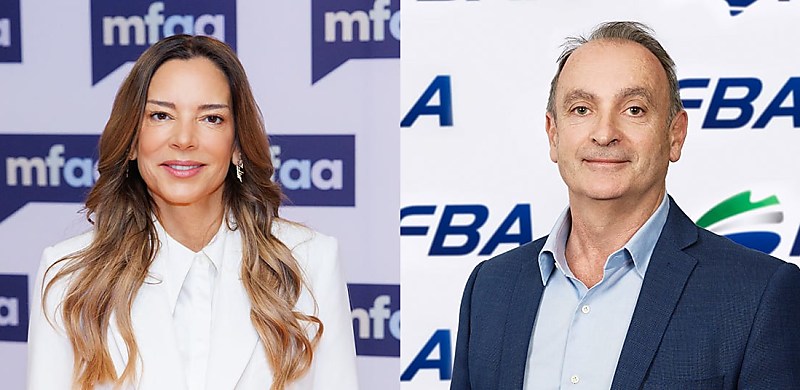
FBAA chief executive Leo Gagic questioned whether raw fraud numbers adequately reflected the relative size of lending channels, while MFAA chief executive Anja Pannek warned that an application’s passage through a broker did not establish the broker’s involvement in deception.
FBAA challenges conclusions drawn from channel size
Responding to comments from bank chiefs at the parliamentary hearings, Gagic called for greater context around fraud figures and backed a proposed professional conduct register as part of the response.
Gagic said taking misconduct seriously meant holding deliberate participants accountable, regardless of their position in the lending process.
“Fraud has no place in our industry, and anyone deliberately participating in fraudulent activity should face the full consequences, whether they’re a broker, customer, banker or another participant in the lending process,” Gagic said.
However, he warned that the number of suspect applications originating through brokers could not, in isolation, establish the channel’s relative exposure to fraud.
“We need to be careful about drawing conclusions from absolute numbers without understanding the relative size of each origination channel,” he said.
“Mortgage brokers now facilitate a major proportion of Australia’s new residential home loans. The real question is not simply how many suspected fraudulent applications came through the broker channel, but what proportion of applications within each channel actually involve fraud?
“Without that intelligence, we risk confusing channel size with channel risk.”
The channel’s expanding footprint provides context for that distinction, with Cotality data commissioned by the MFAA putting brokers’ share of new residential home loans at a record 81.6 per cent in the June quarter, representing $139.08 billion in lending.
MFAA draws line between loan origin and individual wrongdoing
Pannek similarly called for an evidence-based approach, arguing that discussions of mortgage fraud needed to distinguish the route an application took from the actions of the people involved.
“A loan being submitted through a mortgage broker is not, in itself, evidence that the broker committed or knowingly facilitated fraud,” Pannek said.
“These are serious matters, and any allegations of wrongdoing must be supported by evidence of individual conduct, rather than assumptions about how a loan was originated.
“There is no place in our industry for anyone who knowingly commits or facilitates fraud. Where there is evidence of misconduct, we fully support appropriate investigation and decisive action.”
However, she cautioned against allowing individual cases to damage confidence in the wider profession.
“Individuals must be held accountable for misconduct. At the same time, their actions should not unfairly undermine confidence in the mortgage broking industry as a whole,” Pannek said.
“Fraud prevention is a shared responsibility. Brokers and aggregators have important obligations to identify and respond to warning signs, just as lenders are accountable for their verification processes, credit assessment systems and lending decisions.”
She added that scrutiny should extend to other pathways through which borrowers were referred to lenders.
“This responsibility also extends to lenders’ own introducer and referrer networks, which can equally present opportunities for fraud to enter the lending system,” she said.
“Banks ultimately make the decision to approve a loan, and their responsibilities for verifying information and maintaining effective fraud detection controls remain important regardless of how an application is submitted.”
She said public discussion needed to recognise those separate obligations without substituting channel-wide assumptions for evidence.
“Accountability needs to be based on evidence and reflect the responsibilities of everyone involved. Commentary about suspected fraud cannot lead to broad generalisations about brokers or overlook the responsibilities of other participants,” Pannek said.
Bank chiefs take different positions on broker involvement
Gagic’s intervention follows evidence to the House of Representatives standing committee on economics, where Australia and New Zealand Banking Group (ANZ) and Westpac raised concerns about broker-originated lending, while the Commonwealth Bank of Australia (CBA) declined to frame the issue around brokers specifically.
ANZ chief executive Nuno Matos said most mortgage fraud uncovered in the bank’s review had arrived through brokers, while acknowledging the bank needed stronger information protection within that channel.
“It’s fair to say that the majority of fraud was coming from broker channels, which means that we also have to do a better job in protecting good information in that channel,” Matos said.
However, Matos also acknowledged during the hearing that ANZ often could not establish whether a broker, customer, or another party had falsified the documentation.
Westpac chief executive Anthony Miller linked broker involvement to greater sophistication in borrower misrepresentation, while recognising that misleading loan applications were not a new problem.
“Again, the idea that someone misrepresents so that they can get a loan or a larger loan has been a challenge for the banks forever, and it is a bit more sophisticated now with the brokers,” Miller said.
“The other risk that has emerged over the last few years is clearly with the broker having such a more significant role in the ecosystem, brokers facilitating or colluding with that kind of activity is something that we are cautious of.”
Meanwhile, CBA chief executive Matt Comyn, by contrast, resisted narrowing the discussion to mortgage brokers, pointing instead to different patterns of suspicious activity.
“I wouldn’t narrow it in the way that you did to mortgage brokers; I think there are, at any time, there are different, perhaps typologies or cohorts of customers where the one that was inevitably, or was reported externally, was where we detected a pattern,” Comyn said.
Conduct register proposed to connect fragmented information
Alongside their calls for more measured commentary, the associations outlined measures intended to strengthen fraud detection and reduce gaps in information across the lending system.
Gagic pointed to the FBAA’s proposed professional conduct register as a means of strengthening oversight through verified information held across lenders, aggregators and industry associations.
The association submitted its proposal to the Australian Securities and Investments Commission (ASIC) ahead of an industry roundtable on 16 November.
It envisages an independent, centralised system for checking conduct histories, rather than leaving relevant information scattered across separate organisations.
Gagic said greater visibility of wrongdoing could support accountability without undermining confidence in brokers who maintained professional standards.
“This would not only build trust in the industry but ensure that anyone caught doing the wrong thing would have a record and the vast majority of brokers acting professionally and ethically would continue to enjoy the trust of lenders,” Gagic said.
Gagic also called for banks, aggregators, regulators and industry associations to work more closely on identifying patterns and sharing intelligence.
“Fraud is not a broker-only issue. It is a lending ecosystem issue, and the response needs to reflect that, protecting the integrity of Australia’s lending system is everyone’s responsibility,” Gagic said.
The MFAA meanwhile said it brought practical proposals to ASIC’s mortgage fraud roundtable, focused on improving the industry’s capacity to identify, detect and prevent fraud.
Its proposals included better information sharing so lenders, aggregators and other participants could recognise emerging risks and act on credible intelligence.
The association also advocated an ASIC-administered portable unique identifier, with appropriate safeguards, to improve transparency when individuals moved between organisations.
A further priority was access to reliable information directly from its source, including relevant Australian Taxation Office (ATO) income data through the Consumer Data Right (CDR), subject to consumer consent and appropriate safeguards.
[Related: New home loans suffer largest drop on record]
Want to see more stories from trusted news sources?
Make The Adviser a preferred news source on Google.
Click here to add The Adviser as a preferred news source.