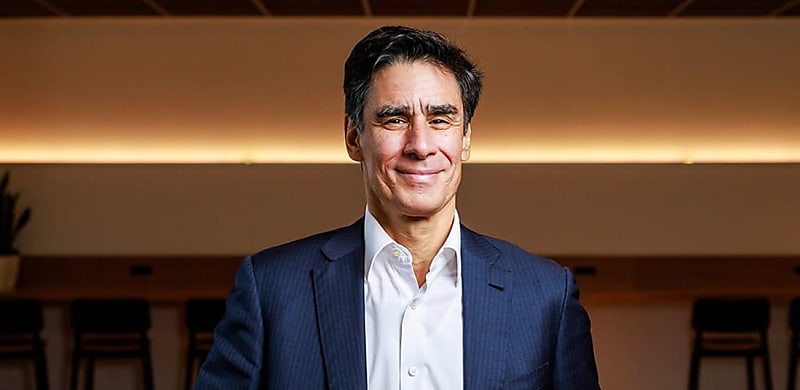
ANZ chief executive Nuno Matos has told a parliamentary hearing that most mortgage fraud identified in the bank’s review came through the broker channel.
Australia and New Zealand Banking Group (ANZ) chief executive Nuno Matos has told a parliamentary hearing that most mortgage fraud identified in the bank’s review came through broker channels, while conceding it often could not determine who falsified the documents.
Appearing before the House of Representatives standing committee on economics in Canberra on Thursday (12 November), Matos also acknowledged that sophisticated document manipulation had evaded ANZ’s controls.
His comments come as major lenders face scrutiny over suspected fraudulent lending and the safeguards applied across broker, introducer and proprietary channels.
“It’s fair to say that the majority of fraud was coming from broker channels, which means that we also have to do a better job in protecting good information in that channel,” Matos said.
However, when responding to a question about fraud perpetrated by either brokers or bank employees, he conceded that identifying the channel through which an application arrived did not necessarily reveal who created the false documents.
“We had very few cases; in a nutshell, the internal fraud component of the problem is basically non-existing, maybe two, I think we had two cases where we spotted some connection, so the vast majority were external agents,” he said.
“In many cases, we can’t say if the documentation was faked by the broker or by the customer or by someone else. It’s not possible to say.”
Sophisticated documents slipped through ANZ’s checks
Matos defended the bank’s screening arrangements but said advances in artificial intelligence (AI) had enabled applicants to present income information that its controls failed to identify as false.
“It’s also fair to say that ANZ has very strong controls for fraud in mortgages; there is not a single application that does not go through fraud controls,” he said.
“What has become obvious is that with the AI, the capacity to forge documents, to simulate a different income really was at the level which our controls were not spotting. For the most part, these were customers trying to have access to a house, and they didn’t have income, and they forged their documentation in a very good way that escaped our controls.
“We did a review of our book, and we shared with the regulators and the other banks.”
Despite those deficiencies, Matos said the review had not identified a corresponding deterioration in repayment performance among the affected mortgages.
“It’s also fair to say that the credit quality, the behaviour of those loans is exactly the same as the other loans, so in that regard, we don’t have an issue, which is I think it’s positive. So yeah, that’s what we observed in our extensive fraud review,” he said.
The broader mortgage fraud saga emerged in February after the Commonwealth Bank of Australia (CBA) reported approximately $1 billion in potentially fraudulent mortgages to authorities, with concerns encompassing broker and introducer lending.
Subsequent reporting has put suspected exposure across Australia’s five largest banks at around $4 billion.
Fraud investigations extend beyond the broker channel
Findings from AUSTRAC’s Operation Claw pointed to vulnerabilities involving several professions, rather than a single distribution channel.
Operation Claw analysed information from 10 banks and identified potentially hundreds of millions of dollars in suspected fraudulent loans, predominantly connected to Sydney properties.
Recurring indicators included misleading documents and the repeated involvement of brokers, accountants and law firms.
AUSTRAC referred 200 brokers, accountants, solicitors and other professionals to law enforcement and regulatory agencies, including the Australian Securities and Investments Commission (ASIC), the Australian Taxation Office (ATO) and the Tax Practitioners Board, for intelligence purposes.
The financial crimes agency also revealed that certain accounting firms offered document fabrication “as a service”, creating fake payslips, tax returns, and shell companies to substantiate inflated incomes.
For example, Australian Federal Police arrested and charged Melbourne accountant Qi Gao in April 2026 over alleged irregular loan activity.
While Matos downplayed internal wrongdoing at ANZ, police and banks have also uncovered insider collusion elsewhere.
In May, NSW Police arrested a former bank business development manager for allegedly using insider knowledge of bank fraud-detection systems to push tens of millions of dollars in sham loans for an organised crime syndicate.
The Finance Brokers Association of Australia (FBAA) has also urged banks to scrap introducer programs entirely, warning that they serve as unmonitored entry points for document fraud and money laundering.
Broker growth continues alongside proprietary ambitions
The committee also challenged Matos on whether banks’ increasing emphasis on proprietary distribution could weaken the role of brokers and reduce consumer choice.
A member cited broker usage above 80 per cent and questioned whether ANZ intended to obtain substantially fewer mortgages through intermediaries and more through its own network.
Matos rejected the suggestion that ANZ had communicated a strategy to reduce broker dependency, saying the bank wanted to expand both channels without imposing a predetermined distribution split.
“The answer is no, we have not communicated any specific strategy to reduce dependency on brokers. Our strategy on mortgages is we want to continue to grow our business with brokers, and we also want to continue to increase our business by our own originators,” Matos said.
“So we don’t set any goal of mix between one or the other exactly to avoid this idea that they are competing one with the other, and we don’t like one or the other.”
He pointed to brokers’ increasing contribution to ANZ’s annual originations as evidence of their continuing importance, while maintaining that the two channels presented different risk profiles.
“In fact, in 2026, our percentage of mortgage origination went up, so we are the highest among the major banks for third-party originations. We have originated 71 per cent of our business through brokers, last year was 68,” Matos said.
“So we would like to continue to develop both channels. They are different. I think they both work very well for customers, yet they present different risks.”
ANZ has identified building out proprietary origination as a core strategic priority, despite its own channels contributing a declining proportion of new lending.
ANZ’s ambitions place it alongside Westpac, National Australia Bank (NAB), and the Commonwealth Bank of Australia (CBA), which have also prioritised lending through their own channels.
The discussion also unfolded against what Matos described as sustained pressure on mortgage returns, with the chief executive stating that home lending was increasingly becoming less profitable.
“The mortgage business is one of the least profitable business in banking in Australia, and it has reduced its profitability year after year, at least since the last 20 years, and in the case of ANZ, the profitability of the last of the mortgage business in the last five years went down every single year,” he said.
Investor demand weakens as hardship edges higher
Away from fraud and distribution, the hearing revealed softer application volumes and expectations of increasing repayment stress.
Matos said households were becoming increasingly cautious as financial conditions deteriorated.
“My interpretation is that Australians are buckling up because times are tough, and they prefer to be on the safe side at this point in time,” he said.
“Five in 1,000 customers are in hardship at this point in time, and that number increased roughly 10 per cent in the last six months.”
On mortgage demand, Matos described a pronounced divergence between owner-occupiers and investors, with the latter accounting for the sharper contraction.
“In our case, in the last six months, our applications went down 12 per cent, and within that, owner-occupied is roughly flat, 1 per cent up, and investors is 27 per cent down. This is very much in line with the markets. I think the market is around 15 per cent, but we are not an outlier,” he said.
Westpac chief executive Anthony Miller, appearing before the committee that afternoon, also discussed a year-on-year application decline and added that the government’s tax changes had probably contributed to the pullback.
“Housing mortgage applications are 15 per cent year on year. So, has the government’s tax changes contributed to that fall, I think it’s probably had some contribution to it yes,” he said.
Miller also forecast a gradual increase in mortgages falling substantially behind on repayments, from Westpac’s September 90-day delinquency rate of 0.67 per cent.
“We are expecting a rise in the increase in 90-day delinquency, so the number is currently there, 0.67 per cent at the end of September; we think it’s likely to increase anywhere between 1 or 2 basis points per month over the course of the next 12 months,” Miller said.
[Related: Broker mortgage share rising at CBA despite proprietary push]
Want to see more stories from trusted news sources?
Make The Adviser a preferred news source on Google.
Click here to add The Adviser as a preferred news source.