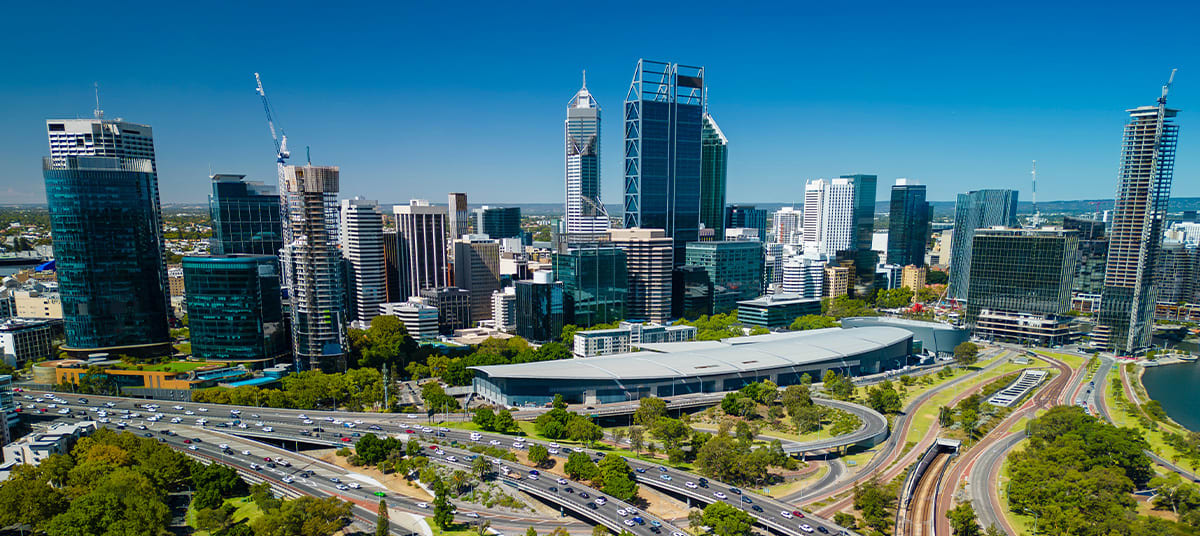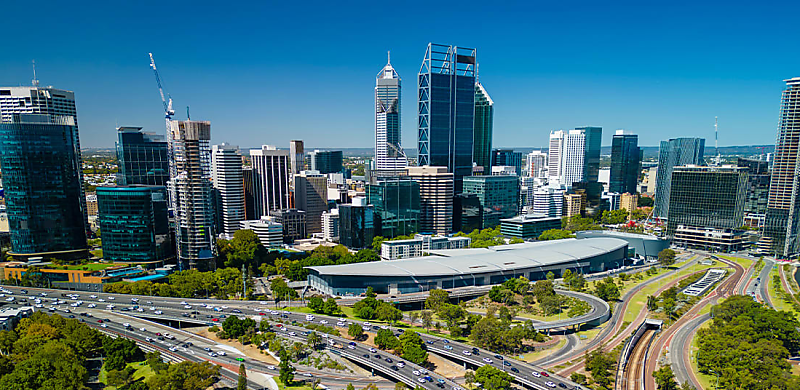
Western Australia’s capital city has become the sixth capital city to see median house prices break million-dollar mark.
Domain’s latest Quarterly House Price Report, released on Wednesday (21 January), has shown Australia’s housing market reaching record heights, with Perth achieving a landmark after its median house price pushed above $1 million for the first time.
The report revealed that every capital city had seen house prices rise over the final three months of 2025 (4Q25), extending national house price growth to 12 consecutive quarters – the most sustained run since the 2012–15 period.
Across combined capitals, unit prices also reached new highs, marking their strongest quarterly advance in more than eight years.
Perth powers ahead with historic gains
Perth took centre stage in the report, recording the quarter’s most dramatic house price increase of 9.9 per cent to reach a median of $1.09 million, according to Domain’s figures.
This means it is now the sixth capital city to enter the million-dollar club alongside Sydney, Melbourne, Canberra, Brisbane, and Adelaide.
The performance represents the largest quarterly jump in any capital since 2006 and capped a 13-quarter streak of uninterrupted rises.
Further, the growth rate was more than triple that of the previous period and far exceeded the same quarter a year earlier.
On an annual basis, prices climbed 18.4 per cent, solidifying Perth’s position among the nation’s fastest-growing markets.
The surge builds amid longstanding supply constraints, coupled with a thriving local economy driven by resources and population growth.
In the unit segment, prices rose 7.4 per cent to a record median of $608,520, extending an 11-quarter growth sequence and delivering the best quarterly result in 18 months.
This lifted annual unit growth to 17.8 per cent, allowing Perth to surpass Melbourne and claim fifth place as the most expensive capital for units since 2018.
Houses significantly outpaced units, widening the price differential to 79 per cent and highlighting sustained preference for detached properties in the ever-expanding market.
Domain’s chief of research and economics, Dr Nicola Powell, emphasised the changing pace of home values and said “smaller capitals like Perth and Adelaide are leading the charge on house price growth”.
The milestone comes after new analysis from the economics team at Westpac predicted that Perth was on track to overtake Melbourne to become the third most expensive capital city by the end of 2027.
Other capitals show mixed, but steady strength
The Domain report also found that Melbourne house prices advanced 2.9 per cent or $31,614 to a median of $1.11 million, establishing a new record after a four-year hiatus from the top.
This marked the fifth straight quarter of increases and the fastest pace in four years, while annual growth reached 7.4 per cent, almost twice the rate of the previous year.
Units also performed solidly, gaining 3.8 per cent or $21,833 to $601,184 – their strongest quarterly lift in six years.
This lift positions them just 0.4 per cent shy of previous highs, making Melbourne the third most affordable capital for unit purchases.
In Sydney, house prices edged up 2 per cent or $34,177 to a record $1.76 million, continuing a three-quarter run despite a slowdown from earlier momentum.
Annual gains stood at 6.4 per cent, while units outperformed with a 2.1 per cent rise or $17,370 to $844,390 – the best quarterly result in two and a half years.
Brisbane maintained its upward trajectory with house prices increasing by 4.5 per cent or $50,248 to $1.17 million over a 12-quarter streak.
Units led the way, surging 8.1 per cent or $57,952 to a record $770,471 across 19 straight quarters – the quickest pace since 2007, yielding 19.3 per cent annual growth.
This in turn narrowed the house premium to a five-year low of 52 per cent.
Houses in Adelaide rose 5 per cent or $52,200 to $1.09 million, the strongest quarterly advance in nearly four years during a 12-quarter sequence.
Annual increases stood at 11.9 per cent, while units grew 2 per cent or $12,387 to $634,366 over 11 quarters.
Although at a nine-month low, unit prices still grew 12.9 per cent over the year, as houses took back the advantage with a 73 per cent gap.
Canberra houses climbed 3.6 per cent or $39,309 to a two-year peak of $1.14 million, with annual growth standing at 6.1 per cent.
Units, however, bucked the trend, falling 1.3 per cent to $611,466.
Hobart houses jumped 6.1 per cent or $44,310 to $767,451 – a four-year quarterly high over six quarters.
Units meanwhile held steady at $526,980, remaining 7.3 per cent below 2022 levels.
Darwin houses gained 3.3 per cent or $21,761 to $690,896, with 22.4 per cent annual growth.
Units advanced 6.9 per cent or $26,834 to $414,438 – the best quarterly result in four years, with annual gains lifting by 12 per cent.
Capturing the evolving national landscape, Powell said the housing market was “clearly in an upswing.”
“The pace of growth is no longer one-speed. While prices are still pushing higher and new milestones are being reached, affordability pressures are increasingly dictating where buyers can compete and which markets are moving fastest,” she said.
“We’re seeing buyers gravitate towards units in Sydney, Melbourne, and Brisbane in search of relative value.
“This momentum continues to be supported by improved borrowing capacity following the three interest rate cuts delivered in 2025, alongside tight housing supply, a resilient labour market and solid wage growth.”
Affordability reshapes growth patterns
Units now surpass houses in markets facing the sharpest affordability challenges (Sydney, Melbourne, Brisbane, and Darwin), while houses continue to dominate in Adelaide, Canberra, Perth, and Hobart.
Smaller capitals are now setting the pace, challenging the traditional supremacy of larger eastern cities.
Nationally, houses recorded a 3.9 per cent quarterly rise, the fastest in four years, while units across the country advanced by 1.5 per cent.
[Related: Perth to become Australia’s third most expensive capital by 2027]
Want to see more stories from trusted news sources?
Make The Adviser a preferred news source on Google.
Click here to add The Adviser as a preferred news source.