
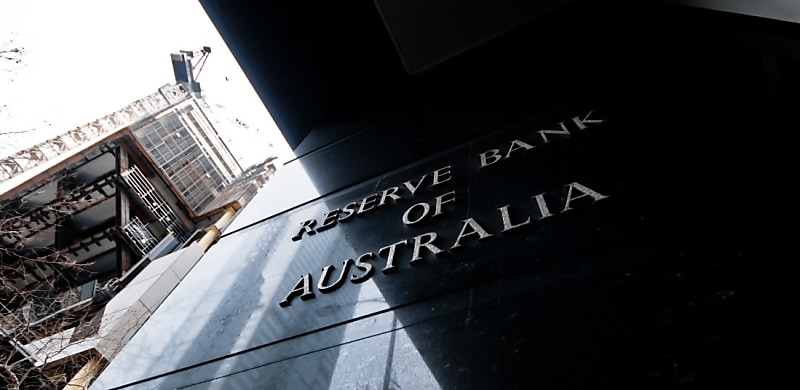
The Reserve Bank Monetary Policy Board has revealed its June cash rate decision, as it works to tackle rising inflation and a slowing economy.
The Monetary Policy Board of the Reserve Bank of Australia (RBA) has announced that it will hold the official cash rate steady at its current level of 4.35 per cent.
The decision, announced on Tuesday afternoon (16 June), was broadly forecast by major bank economists and financial markets and pauses the current tightening cycle, which first began in February 2026.
The central bank’s decision to maintain the cash rate at its current setting suggests it is prioritising a wait-and-see approach to ensure inflationary pressures are sustained and to assess the economic impacts of the three consecutive cash rate hikes between February and May.
The decision will provide temporary relief for Australia’s 3.8 million mortgagors, with Australian households already facing mounting financial strain.
The policy decision was unanimous.
In its post-meeting statement, the board said that it remained “focused on ensuring that inflation does not become embedded once the impulse from higher oil prices has passed through”.
“To achieve this, growth in demand needs to slow to reduce capacity pressures and help bring inflation back to target. Following the three increases in the cash rate target since the beginning of the year, financial conditions are now tighter than they were, and there are signs that the economy is slowing as expected,” it said.
“But inflation is still too high and the Board judged that it was appropriate to leave the cash rate target unchanged while it assesses the response to previous interest rate rises and the impact of the oil supply disruption.”
Industry welcomes pause, but urges action
CEO of major brokerage Mortgage Choice, Anthony Waldron, said that the decision was “not unsurprising” and that the Monetary Policy Board was “likely waiting for more data to come in to allow them to fully assess what impact the three consecutive rate hikes this year are having on inflation”.
“While inflation remains above the RBA’s 2–3 per cent target band, today’s pause will be a relief for borrowers and give households some breathing room,” he said, noting that refinancing activity had risen since rates started rising earlier this year.
Waldron said that the combination of government measures and softer housing conditions could open a “window” for some would‑be buyers, particularly if interest rates remain steady, investor demand is low, and home prices remain flat.
“Buyers should look to get their finances in order so they’re ready when the right property comes along,” he said, flagging the value of an experienced mortgage broker.
However, Mark Haron, executive director of major aggregator Connective, said that a single pause did not translate into meaningful relief for households still adapting to a much higher repayment base.
“Today’s hold will be welcomed by borrowers, but it won’t necessarily feel like relief. Many households are still adjusting to a higher-rate environment and ongoing cost-of-living pressures,” he said.
“Across our broker network, we’re seeing borrowers become more focused on planning ahead and making informed long-term financial decisions, rather than simply reacting to rate movements.”
He said that the June decision should be seen as part of a longer adjustment phase, not an indication that the cycle had turned in borrowers’ favour.
“This isn’t a turning point for borrowers. It’s another step in a prolonged adjustment period to navigate the path ahead, and brokers continue to play a crucial role in helping clients understand their options and make confident financial decisions,” Haron said.
Loan Market executive chairman and CEO Sam White welcomed the decision and said improving conditions in the Middle East and expected further clarity in relation to the budget changes could help ease rising uncertainty in the lending market.
“Today’s announcement will hopefully help to bring stability to what is a challenging environment for mortgage holders and prospective buyers,” he said.
“The proposed de-escalation in the Middle East could help put a cap on inflation and within weeks we should understand what the final federal budget looks like. Following weeks of decreased movement in the residential property market, we may begin to see some more confidence come back.”
MFAA says pause is a chance to reassess
Mortgage and Finance Association of Australia (MFAA) CEO Anja Pannek said the RBA’s decision to hold the cash rate steady provided borrowers a valuable moment to take stock after several months of volatility.
“Following significant interest rate movements over recent years, today’s decision provides borrowers with an opportunity to assess their financial position and consider whether their current loan remains competitive,” Pannek said.
“While the cash rate has remained unchanged, competition among lenders remains strong and there may still be opportunities for borrowers to secure a better outcome through refinancing or repricing.”
Pannek said that the current pause was an ideal time for Australians to touch base with their broker, regardless of where they were in their property journey.
“This is a good time for borrowers to speak with their mortgage and finance broker about their current lending arrangements and future plans, whether they are buying their first home, refinancing, investing in property or simply seeking a better deal,” she said.
“Mortgage and finance brokers are committed to acting in their clients’ best interests and helping Australians achieve their property and financial goals regardless of the interest rate environment.”
FBAA warns against ‘rate creep’
Outgoing Finance Brokers Association of Australia CEO Peter White said that while the cash rate is holding firm, “borrowers should be proactive and not complacent”.
“After multiple rate rises, it’s the perfect time for mortgage holders to pause and review their current situation,” he said.
“Many Australians are unknowing victims of ‘rate creep’, where lenders raise rates for existing customers while offering discounted rates to new borrowers. This means they could be paying more in repayments than they should be,” he said, highlighting that brokers could help customers assess alternatives and switch where appropriate.
“It’s a competitive lending market and many borrowers are unaware they can approach their lender and ask for a rate reduction.
“If the lender won’t do this – and many will not as they assume you won’t leave – ask a mortgage broker to look at the market and assess your situation and the options available.”
Where to from here?
Financial markets were pricing in a 0 per cent expectation of an interest rate change for the June cash rate meeting, with the 30-Day Interbank Cash Rate Futures trading with an implied yield that reflected a 100 per cent chance of a hold.
The decision marks the first rate pause of 2026, following three consecutive 25-basis-point hikes in February, March, and May.
Several economists have said that the central bank may now move to an extended ‘hold’ period, driven by weakening economic momentum (Australia’s gross domestic product grew by just 0.3 per cent quarter on quarter in Q1) and emerging slack in the labour market (the national jobless rate increased from 4.3 to 4.5 per cent in April).
Evaporating consumer and business confidence, plummeting expectations, and stabilising geopolitical and global tensions have also been listed as key factors for the RBA pumping the brakes.
However, the RBA is also grappling with persistent pressures, with trimmed mean inflation (the RBA’s preferred gauge) ticking upward from 3.3 to 3.4 per cent in April, well above the central bank’s target band of 2–3 per cent.
All four major banks lined up behind a unified call that the cash rate would remain unchanged in June, yet have offered strikingly different blueprints for what happens over the rest of 2026 and into 2027.
National Australia Bank (NAB) last week abandoned its expectation of a further 25-bp increase, recasting 4.35 per cent as the height of the tightening cycle and forecasting the next move to be a cut in 2Q27.
The Commonwealth Bank of Australia (CBA) and Australia and New Zealand Banking Group (ANZ) have been predicting an extended hold period since the May meeting, with both banks forecasting cash rate reductions to commence in the second half of 2027.
Westpac, which was anticipating a hold result in June, remains the outlier among the major banks and believes the RBA will hike the cash rate at its August and September meetings due to stubbornly high inflation.
[Related: Major banks deliver verdict for June cash rate call]
Want to see more stories from trusted news sources?
Make The Adviser a preferred news source on Google.
Click here to add The Adviser as a preferred news source.

