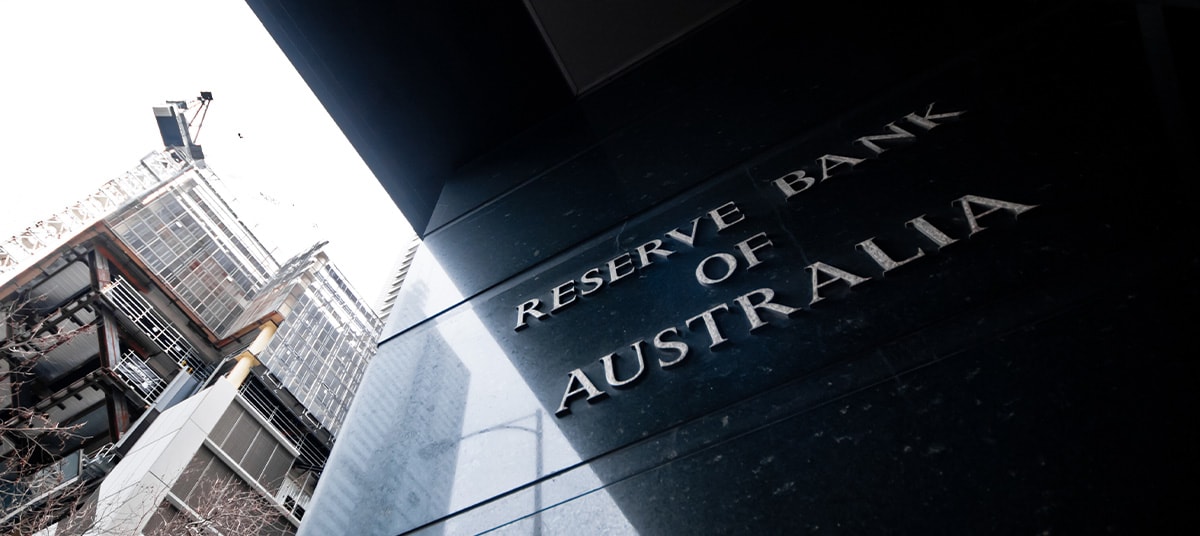
Australia’s largest banks have firmed their views on the June cash rate decision, yet their roadmaps sharply diverge for the remainder of the year.
The economics teams of Australia’s big four lenders now broadly agree that the Reserve Bank of Australia’s (RBA) Monetary Policy Board will keep the cash rate at 4.35 per cent at its June meeting (15-16 June), while offering strikingly different blueprints for what happens over the rest of 2026 and into 2027.
Australia and New Zealand Banking Group (ANZ) has shifted to a higher-for-longer stance, viewing the current rate as restrictive, yet expecting the RBA to sit on its hands for an extended period.
“We expect the RBA to leave the cash rate at 4.35 per cent following its Monetary Policy Board meeting [in June]. But, in a change in call, we now forecast two 25bp rate cuts in the second half of 2027,” ANZ said, flagging that the language in the RBA governor’s post-meeting press conference in May and its repetition in the minutes of that meeting "point to a pause”.
The bank said that incoming activity data would make the board wary of further raising rates.
“For August, we continue to think a soft activity backdrop will give the board enough comfort to keep the cash rate at 4.35 per cent,” ANZ said.
Looking further out, ANZ said it believed the RBA would cut rates sooner than it previously expected.
“With the broader signs of an economic slowdown and interest rates restrictive, rate cuts are likely to be the next sequence of rate moves. We have pencilled these for the second half of 2027 (August and November),” ANZ said.
Westpac: June breather before another tightening push
Westpac is also forecasting a June hold, but the bank remains hawkish about the remainder of this year.
“We affirm our existing expectation that the RBA Monetary Policy Board (MPB) will hold the cash rate steady at its June meeting,” Westpac said.
The bank then laid out the competing forces the RBA is juggling; softer growth indicators and persistent inflation.
“The RBA faces a difficult set of trade-offs in its near-term monetary policy decisions. As well as the more benign developments in energy prices and the conflict more broadly, some domestic data releases have been softer than generally expected,” it said.
“Consumer spending looks to have stalled; tax changes have induced uncertainty in the housing market, and sentiment surveys have weakened. Weak GDP reads are likely in coming quarters.”
Yet Westpac believes the inflation problem is not yet contained, with the bank upholding its forecast of two more hikes in 2026.
“We retain our view that further rate hikes will occur in the following meetings (August and September). This is consistent with the RBA’s priority to get inflation down,” it said.
CBA: Softer data argues for a prolonged hold
The Commonwealth Bank of Australia’s (CBA) economists are also expecting a hold in June, saying that the backdrop is more fragile than it was earlier in the year.
“The June meeting will be held under slightly different circumstances. There have been renewed hostilities in the Middle East, market pricing has shifted lower and the news flow on the Australian economy has been on the softer side,” it said.
The bank then laid out the domestic indicators it believed would weigh heavily on the board’s discussion.
“April labour force data was soft, with a fall in employment of 18.6k and a lift in the unemployment rate to 4.5 per cent. Business and consumer confidence surveys remain in pessimistic territory with weak readings in the business survey across employment, profitability and trading,” it said.
“Consumer spending data is slowing while higher interest rates, housing affordability constraints and now the proposed policy changes to negative gearing and capital gains tax have collided.”
Even so, CBA expects the board to formally weigh up another hike before ultimately deciding it is not warranted at the June meeting.
“We expect there will still be a discussion between a hike and a hold in June. But with little impetus to actually hike rates at this meeting, we expect the discussion will turn quickly to an on-hold decision,” CBA said.
From there, CBA’s central scenario is for the cash rate to remain unchanged for an extended period before the first cuts arrive in 2027.
“We continue to expect the RBA [to] remain on hold from here. We have held that call since March, based on our view of slower growth being evident as the year moves on. We maintain this view and continue to flag our call of two rate cuts in 2027,” CBA said.
NAB revises official cash rate forecast to extended hold
National Australia Bank’s (NAB) economists on Tuesday (9 June) abandoned their expectation of a further 25‑basis‑point increase in August, recasting 4.35 per cent as the height of the tightening cycle and sketching out a gentler track moving forward.
“We no longer expect the Reserve Bank of Australia to hike by 25 basis points in August, and now see the cash rate peaking at the current rate of 4.35 per cent for the cycle,” NAB said.
“The next move in the cash rate is likely to be down, but the timing is uncertain. To highlight shifting risks to the RBA outlook, we have brought forward our expected easing from H2 2027 to Q2 2027 – which now sees the cash rate end 2027 at 3.6 per cent.”
Yet NAB said that it had more conviction about the general direction of rates than the exact timetable.
“While we are confident that the RBA is now on hold and that the next move in rates is down, we are less certain on the timing. Indeed, there are reasonably large uncertainties on both the activity and prices outlook at present,” NAB said.
The RBA Monetary Board will deliver its cash rate decision for June at 2.30pm on Tuesday (16 June).
[Related: Next cash rate movement will be a rate cut: NAB]
Want to see more stories from trusted news sources?
Make The Adviser a preferred news source on Google.
Click here to add The Adviser as a preferred news source.