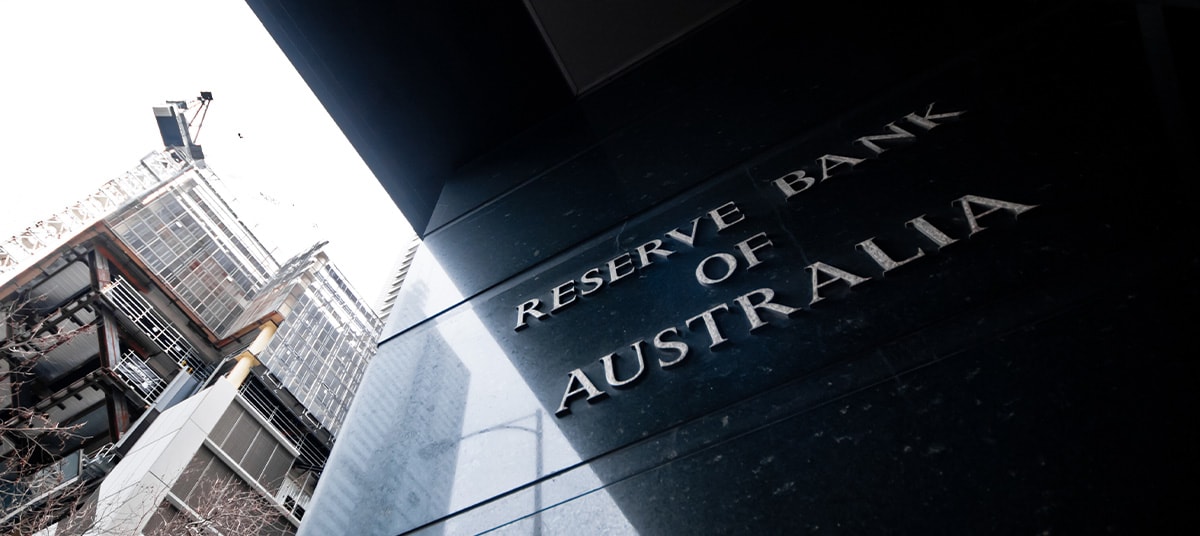
Fresh minutes have shown inflation and war‑driven cost shocks tipped the balance towards a May cash rate hike, with the major banks split on what comes next.
The Reserve Bank of Australia (RBA) has revealed why it pushed ahead with a 25‑basis‑point cash rate hike in May, with new minutes showing that the Monetary Policy Board backed the move to head off stubborn inflation and ongoing Middle East war-related cost shocks.
In their discussion, members noted that inflation was already sitting “well above target” before tensions in the Middle East flared.
The RBA stated that the impacts of the Middle East conflict had changed the game, with the minutes describing a “pronounced effect on the economic outlook”, consequently pushing inflation higher in March and likely again in the June quarter.
Yet the board also pointed to a steep drop in consumer confidence and tighter financial conditions, following the February and March hikes.
The argument for another 25‑bp rise “centred on the outlook for inflation” and whether policy was tight enough to keep that outlook under control.
Members highlighted internal staff advice that capacity pressures “remain tight” and that financial conditions “may not be sufficiently restrictive to return inflation sustainably to target if the cash rate was held at its present level”, suggesting a concern that 4.10 per cent risked leaving the RBA behind the curve.
The minutes stressed that the RBA did not expect higher interest rates to stop petrol prices from rising further in the short term.
A split decision and a tougher trade‑off
The case to hold the cash rate rested on arguments that emphasised uncertainty over the true extent of capacity pressures, the possibility that financial conditions were already restrictive, and the risk that a prolonged conflict could weigh more heavily on household spending than on prices.
The single board member who voted for a pause judged that pre‑war capacity pressures were “somewhat less than the staff had assessed” and that the downside risks to demand from the conflict were significant.
Yet the vast majority ultimately agreed that underlying inflation was projected to sit above the 2–3 per cent band “for an extended period” and that members were “not confident that, at 4.1 per cent, the cash rate would be sufficient to mitigate risks”.
Members also acknowledged that the central bank’s dual mandate had become harder to balance in the short term.
The board noted that financial conditions would “probably be somewhat restrictive” but stressed uncertainty around how the economy would respond.
They concurred that May’s move gave them space to watch how the conflict developed and how households and businesses would adjust before deciding whether further action was needed.
CBA: Hike buys insurance, yet risks still tilted higher
Commonwealth Bank (CBA) senior economist Ashwin Clarke said the minutes spelt out why the majority felt they had to act.
In his view, the RBA felt its decision to hike “would provide ‘greater confidence’ that underlying inflation would return to target within the forecast period”.
Clarke also highlighted the board’s concern that the Iran war‑related spike in fuel costs could seep into broader price‑setting behaviour if left unchecked.
Looking ahead, CBA reiterated its view that May represented the final hike of the tightening cycle.
“These statements affirm our expectation that the board is intending to hold in June to see how the economy responds to three cash rate rises and the impact of the war,” Clarke said.
“Beyond that, we still expect the RBA to remain on hold over the next year, but the risks to the cash rate path are tilted to the upside.”
ANZ: Minutes reveal tightening buys RBA time
ANZ senior rates strategist Jack Chambers read the minutes as a sign that the RBA believed it had done enough, for the moment, to justify a wait‑and‑see approach.
“This supports the idea that a June hike seems less likely. We continue to expect the RBA to leave the cash rate unchanged at 4.35 per cent for a prolonged period,” he said.
NAB says minutes still consistent with another hike
National Australia Bank took a more hawkish read, saying that the risks around inflation remained too high to rule out further tightening.
On that basis, NAB believes the RBA is not yet in a “comfortable” holding pattern.
“NAB Economics expects the RBA to increase interest rates in June,” it said, saying that the minutes “suggest that the RBA Board should not feel comfortable that policy is sufficiently restrictive”.
CBA and ANZ believe that May was the last hike of the cycle and that rates will remain on hold for the foreseeable future, while NAB is flagging one last hike in June followed by an extended pause period.
Westpac is the hawkish outlier of the pack, with the bank forecasting two more rate hikes in August and September.
[Related: Westpac and Bendigo Bank announce changes to rate forecasts]
Want to see more stories from trusted news sources?
Make The Adviser a preferred news source on Google.
Click here to add The Adviser as a preferred news source.