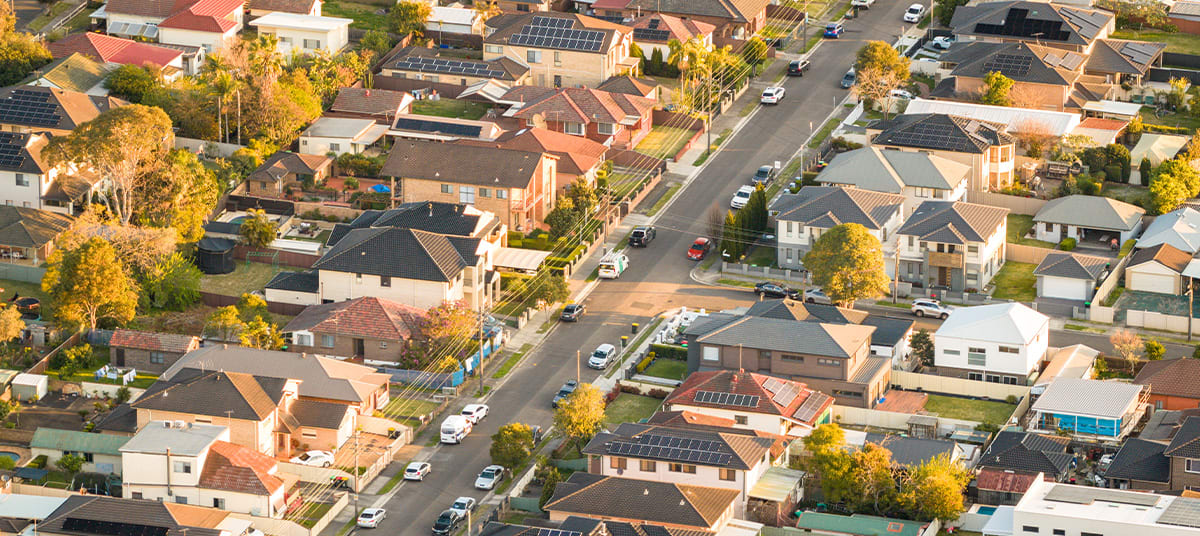
As the federal government’s 5 per cent Deposit Scheme pulls more first home buyers into the market, S&P Global Ratings has warned that the surge in demand could negatively impact affordability.
S&P Global Ratings has cautioned that Australia’s expanded support for first home buyers (FHB) via the 5 per cent Deposit Scheme is pushing up entry‑level house prices, diluting banks’ protection against losses and transferring more mortgage risk to the Commonwealth.
In a new report titled Australia’s Expanded Support For Homebuyers Could Backfire, S&P said the scheme was fuelling intense demand among FHB and lifting prices at the bottom of the market.
The ratings house noted that roughly 40 per cent of FHBs used the scheme in 2025 and said it expected that share to rise to around 50 per cent in 2026 after October’s expansion removed income caps and raised property price thresholds.
It said that the extra demand was eroding the very affordability gains the program was designed to deliver.
“An expanded scheme in Australia fuelling demand among first home buyers will make house prices unaffordable for many of them. Further, such aid could price out the first home buyers it aims to help,” it read.
The agency said higher price caps meant more dwellings now qualified, concentrating competition in the lower‑priced segments that sat under those thresholds.
S&P said it expected entry‑level values to keep climbing before hitting a ceiling, as borrowing capacity eventually slowed, and the initial wave of demand from the expanded eligibility washed through.
“Property prices at the lower end of the market may rise and plateau because of borrower capacity constraints,” the report noted.
Less protection for banks than LMI
Alongside its affordability concerns, S&P flagged a significant shift in how mortgage risk was shared between banks, insurers, and government.
While the scheme allows borrowers to avoid lenders mortgage insurance (LMI) by obtaining a government guarantee, S&P stressed that the guarantee was thinner than traditional LMI cover.
“The 5 per cent deposit scheme can expose banks to shortfalls. For example, if a mortgage has a loan-to-value ratio of 90 per cent, the scheme will only cover the amount above 80 per cent. This translates to a maximum of 10 per cent coverage,” it read.
“In comparison, lenders’ mortgage insurance fully covers the shortfall. In other words, the banks’ tail risk is materially greater under the scheme.”
S&P credit analyst Angela Zhou warned that the program was effectively replacing private insurer protection with sovereign backing – but without matching the depth of coverage.
“The Australian Government 5 per cent Deposit Scheme effectively undercuts insurers and gives away credit protection,” Zhou said.
She emphasised that on paper, the guarantee swapped weaker private credit quality for the Commonwealth’s stronger standing, yet left the banks bearing more of the extreme‑loss scenario.
“We believe banks will receive less protection against credit losses under the scheme, compared with what they receive under lenders’ mortgage insurance,” she said.
“However, it only provides protection against credit losses of up to 15 per cent of the mortgage; lenders’ mortgage insurance provides 100 per cent cover.”
LMI industry squeezed as sovereign share grows
It also highlighted the competitive pressure on the LMI sector as more FHBs opt into the government guarantee.
The report noted that “the 5 per cent deposit scheme will pressure the lenders’ mortgage insurance industry by taking a greater portion of first home buyers” and predicted that new LMI business would “continue to decline over the next 12 months”.
Even so, S&P said it did not see the LMI market taking a substantial hit, pointing out that many lenders, particularly mutuals, still relied on mortgage insurance as a key risk and capital management tool.
According to the agency, banks were also retaining about half of their high loan‑to‑value mortgages on balance sheet, with the remainder still being insured through LMI, which it said helped sustain ongoing demand for cover.
At the same time, the government’s share of the risk pool is rising as the number and size of guaranteed loans increase.
Drawing on Housing Australia figures, S&P noted that of about 230,000 guaranteed loans since inception, 118,936 guarantees remained in place, with a value of $8.2 billion as at 30 June 2025, and estimated that government exposure could climb to around $62 billion by 2030.
Sovereign risk still seen as manageable
Despite warning that “the 5 per cent deposit scheme is shifting risk to the government’s balance sheet from private providers,” S&P concluded that the resulting contingent liability remained manageable for now.
The agency said that only three claims had been paid under the scheme to date and that strong house-price growth and full‑recourse loan structures reduced the likelihood of widespread default.
Zhou said the government was taking business from mortgage insurers, but that it was not shouldering disproportionate exposure.
“With rising property prices and borrowers assuming personal liability for all debt, widespread defaults and foreclosures are unlikely in our base case,” she said.
S&P said it expected the Australian Prudential Regulation Authority (APRA) to “cautiously monitor the effects of the scheme”.
[Related: 5% Deposit Scheme tops 300k buyers]
Want to see more stories from trusted news sources?
Make The Adviser a preferred news source on Google.
Click here to add The Adviser as a preferred news source.