
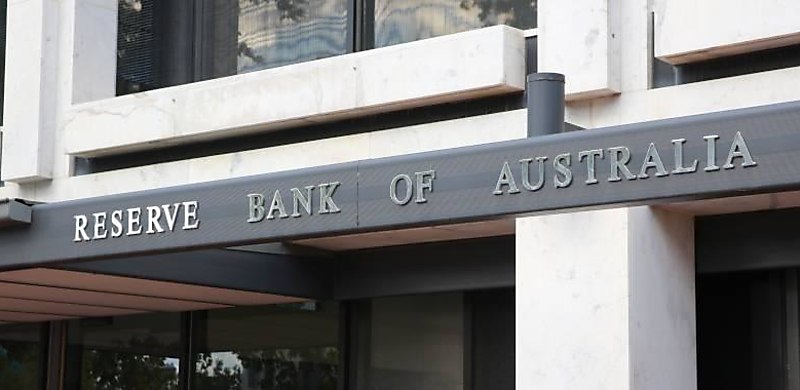
Fresh minutes have revealed the Reserve Bank doubted how “restrictive” existing policy was, with the major banks largely reaffirming their forecasts of at least one more rate hike this year.
The Reserve Bank of Australia (RBA) has signalled it may need to push interest rates higher after its February board minutes revealed a clear rethink on existing monetary policy, prompting the major banks to broadly reiterate their predictions of another hike at the May meeting.
The Monetary Policy Board minutes from the 2–3 February meeting, released on Tuesday (17 February), showed the RBA extensively debated the restrictiveness of its existing position.
Members noted that “several indicators suggested that monetary policy was no longer restrictive”, pointing to a noticeable pick-up in housing credit driven by investors and that business debt had grown at its fastest pace since the global financial crisis, outpacing GDP.
They also observed that “low risk premia in capital markets were contributing to favourable financing conditions for large firms, financial institutions and governments”, while the recent pick-up in inflation and a steadier labour market suggested “monetary policy was not restrictive overall”.
At the same time, the board acknowledged that current policy was impacting households around the nation.
The minutes showed that members discussed that required mortgage repayments as a share of disposable income were now “above the historical average” and that many borrowers were continuing to make larger voluntary payments into redraw and offset accounts, alongside a still‑elevated saving rate.
Members debated whether this behaviour showed policy was “still being somewhat restrictive” or instead reflected unexpectedly strong income growth that could later be spent and add further fuel to demand.
Inflation, labour, and demand running hot
On economic conditions, the board began by confronting a run of stronger‑than‑expected inflation outcomes in the second half of 2025.
Headline and underlying measures both overshot the RBA’s November forecasts in the September and December quarters, with the minutes noting that inflation had “clearly now exceeded the 2–3 per cent target range”.
Members highlighted that the share of CPI items rising at an annualised pace above 2.5 per cent had “increased sharply” and was high by historical standards, reinforcing the sense that price pressures were broad‑based.
The board also deemed that labour‑market conditions were tighter than the RBA previously assumed, with the minutes pointing to “ongoing strength in unit labour costs”, a lower‑than‑expected unemployment rate, and historically low underemployment.
The board linked these developments to a “progressive pick‑up in underlying inflationary pressure in the economy over the preceding six months”.
Stronger‑than‑expected demand was also a key part of the story.
Members outlined that domestic private demand was “significantly stronger than expected” in the September quarter across most categories and that more recent indicators pointed to robust consumption in the December quarter.
Board weighed up a hold before opting to hike
The minutes reveal that the board actively considered holding the cash rate steady at 3.60 per cent in February, while it gathered more evidence.
Leaving rates unchanged would have been appropriate, members said, if the latest lift in inflation was judged to be “overwhelmingly temporary and likely to dissipate quickly.”
However, the board ultimately agreed there was a stronger case to raise the cash rate target by 25 basis points.
This rested on their view that the rise in inflation would persist “reflecting greater capacity pressure” and that “financial conditions were currently not restrictive enough to bring inflation back to target within a reasonable period”.
CBA, NAB, and Westpac see another hike in May
The hawkish tone of the minutes has reinforced expectations among several major banks that at least one more rate hike is likely this year.
Commonwealth Bank head of Australian economics, Belinda Allen, said the minutes “highlight the fundamental reassessment that has taken place over recent months at the RBA”, pointing to the RBA’s updated view that inflation was proving overly sticky.
She said that the data “continued to indicate a higher cash rate is needed to bring the economy back into balance”.
CBA’s central call is for another 25‑bp hike in May.
NAB head of Australian economics, Gareth Spence, also read the minutes as consistent with further tightening.
“The minutes highlight that growth had picked up more strongly than expected and is currently running above trend, the labour market remains a little tight, and that while some of the recent pick-up in inflation will be temporary, capacity pressures had contributed to the re‑acceleration in inflation in H2 2025,” Spence said.
“At face value, the RBA’s forecasts and updated assessment of financial conditions imply they likely need to do more than our current expectations of one more increase this year.”
NAB still believes a “modest re‑calibration of policy” – a single additional hike in May – will prove sufficient even if inflation undershoots the bank’s current projections.
Meanwhile, Westpac’s chief economist, Luci Ellis, said the RBA’s fine‑tuning language added weight to the risk of another move.
“Its policy decisions are better characterised as fine-tuning the setting of policy in light of what the Board sees as shifting risks,” Ellis wrote.
“This adds weight to our base-case view that the next increase in the cash rate is coming in May, not March.”
She also cautioned that a second hike as early as March “cannot be ruled out” if near‑term data came in hotter than expected.
ANZ renews support for extended pause
ANZ, meanwhile, took a more dovish read, saying that the minutes underlined uncertainty as opposed to a locked‑in path to higher rates.
ANZ’s head of Australian economics, Adam Boyton, said the board’s discussion showed that “while the Board was unanimous in its decision to increase the cash rate, future rate increases are not a foregone conclusion.”
He said this was the case due to the explicit acknowledgement that members did not have “a high degree of confidence in any particular path for the cash rate”.
“Our own view remains that the RBA is likely to end up (marginally) pleasantly surprised on the inflation front”, with ANZ predicting that the cash rate would remain on hold over 2026, implying February’s move could mark the peak of the cycle.
[Related: 2 more majors back another rate hike this year]
Want to see more stories from trusted news sources?
Make The Adviser a preferred news source on Google.
Click here to add The Adviser as a preferred news source.

