
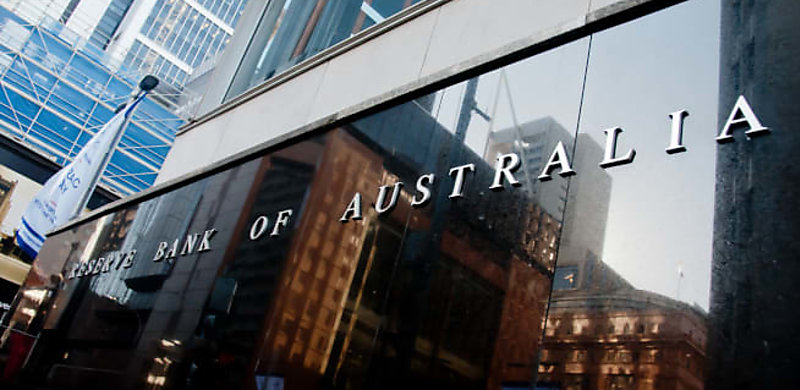
Financial markets and the major banks are broadly expecting the RBA to hike interest rates, yet are split on the bank’s thinking moving forward.
All four major banks expect the Reserve Bank of Australia (RBA) to raise the cash rate from its current 3.60 per cent level – unchanged since August 2025 – by 25 basis points to 3.85 per cent when the Monetary Policy Board hands down its decision today (3 February) at 2:30pm AEDT.
Markets are also generally expecting rates to increase, with the ASX 30 Day Interbank Cash Rate Futures Index as of 30 January trading at 96.24, indicating a 72 per cent probability of an interest rate increase to 3.85 per cent.
The indicator on 22 January jumped from 25 to 60 per cent after December 2025 jobs figures saw unemployment fall month on month and lifted even further following the release of December quarterly CPI data.
The shift toward a February hike has been driven by stickier‑than‑expected inflation and a labour market remaining tighter than many anticipated.
December quarter trimmed mean inflation came in around 0.9 per cent for the quarter, while headline inflation accelerated to 3.8 per cent in the 12 months to December 2025, clearing market expectations of 3.6 per cent and up from November’s 3.4 per cent annual reading.
At the same time, unemployment edged down month on month from 4.3 to 4.2 per cent in trend terms, heightening concern that monetary policy may not be as restrictive as previously assumed.
The RBA has held the cash rate at 3.60 per cent since August 2025, with markets and several banks treating the level as a possible terminal rate for this phase of the cycle.
The central bank itself has recently questioned whether current settings are appropriate, with deputy governor Andrew Hauser stating, “inflation above 3 per cent – let’s be clear, it’s too high”.
Banks coalesce around February hike
The Commonwealth Bank of Australia (CBA) has emerged as the most vocal advocate for immediate action, saying the RBA must recognise how rapidly economic conditions have shifted.
In comments issued on Monday (2 February), CBA’s economics team stated that “the game has now changed – and quickly”.
“Failure to hike rates in February risks letting the inflation genie back out of the bottle, raising the risk of steeper rate hikes later in the year,” CBA said.
“On the flip side, a timely 25bp hike is highly unlikely to derail the broader economic recovery, but instead could stem inflation risks early.”
Its base case remains a single hike to 3.85 per cent, which it described as “fine-tuning”, sufficient to guide inflation back toward target levels without triggering a fresh tightening cycle.
ANZ abandoned its prior expectation of an extended pause, now backing what it describes as a single “insurance” rate rise.
In comments released on Monday (2 February), head of Australian economics, Adam Boyton, said the combination of trimmed mean inflation’s rise above the RBA’s November forecast of 3.2 per cent and unemployment ending 2025 at 4.1 per cent had tilted the balance.
“With trimmed mean inflation in Q4 of 3.35 per cent y/y (to two decimal places) above the RBA’s forecast from the November SMP of 3.2 per cent, and the unemployment rate ending 2025 at 4.1 per cent, we now expect the RBA to raise interest rates by 25bp on 3 February,” he said.
He added that the move would likely soften leading indicators like auction clearance rates and consumer sentiment, making further hikes unnecessary.
Westpac similarly now expects a 25-bp lift to 3.85 per cent and credited December’s inflation data as the chief culprit.
Westpac’s chief economist, Luci Ellis, said: “December quarter inflation had the casting vote and voted ‘Yes, hike.”
In their morning report released on Monday, the bank also reiterated that swaps markets were pricing roughly a 70 per cent chance of a hike.
Westpac’s forecast remains a one-and-done increase, though it cautions further hikes could follow if inflation stays uncomfortably high.
National Australia Bank (NAB), meanwhile, has adopted the most hawkish position, sticking with its longstanding call for consecutive moves.
Following the December CPI figures release on 28 January, senior economist Taylor Nugent said: “Q4 CPI confirms inflation stronger than RBA forecast.”
He said this reinforced the bank’s view that policy must “lean against” emerging pressures as spare capacity evaporates.
NAB continues to project 25-bp hikes in both February and May, which would lift the cash rate to 4.10 per cent – a position it has held since late 2025.
“NAB continues to expect the RBA will recalibrate policy to lean against inflation, seeing hikes in February and May,” he said.
What remains uncertain and will be closely parsed in today’s statement and press conference is how explicitly the RBA signals any appetite for further tightening if inflation proves more persistent than hoped.
The RBA’s Monetary Policy Board will hand down its February cash rate decision at 2:30pm AEDT.
The next rate decision will not be until 17 March 2026.
[Related: Majors unite on RBA rate hike call after sticky CPI data]
Want to see more stories from trusted news sources?
Make The Adviser a preferred news source on Google.
Click here to add The Adviser as a preferred news source.

