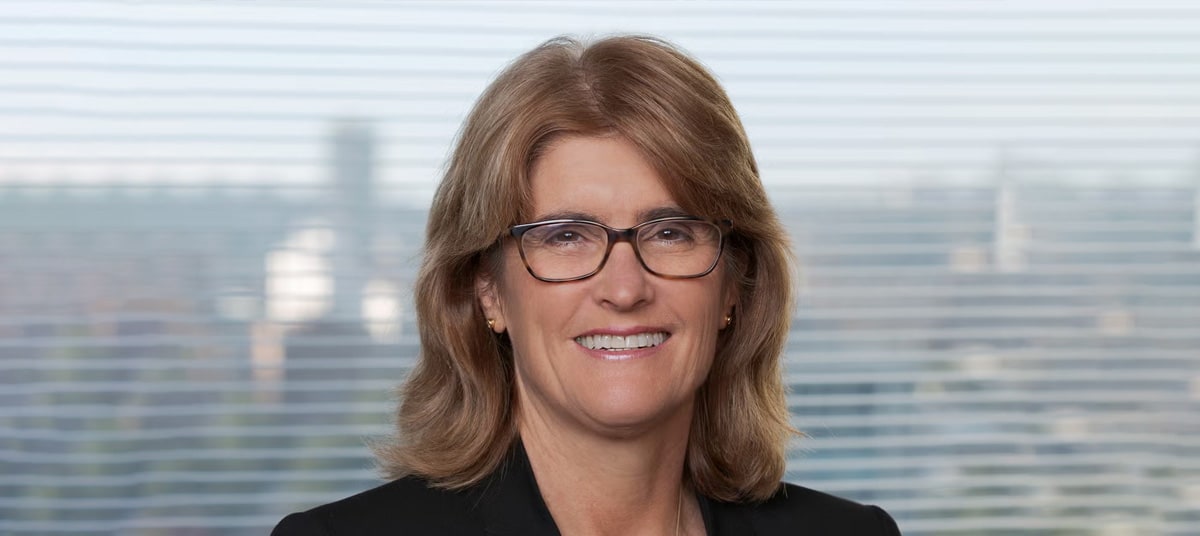
Hopes of further easing have been quashed by the governor of the central bank, who has confirmed that “additional cuts are not needed”.
The governor of the Reserve Bank of Australia (RBA) has told journalists that another rate cut would be unlikely if the underlying economics in Australia remain the same.
After announcing the December/January rate decision on Tuesday afternoon (9 December), the governor of the central bank, Michele Bullock, told journalists that the decision had been unanimous, that there was “no cut on the table”, and that the monetary policy board did not think additional cuts would be necessary.
Bullock said: “We didn’t consider the case for a rate cut at all. We didn’t explicitly consider the case for a rate rise, but we did consider and discuss quite a lot of circumstances and what might need to happen if we were to decide interest rates had to rise again next year.
“At this moment, given what’s happening with underlying momentum in the economy… additional cuts are not needed.
“If inflation pressures look to be more persistent, then that does raise some questions.”
Reiterating that the central bank is targeting an inflationary band of 2.5 per cent, Bullock said “we’re still quite a way from it”, adding that the RBA does not believe inflation will “come down below three for another 12 months” and was “uncomfortable where it is” at the moment.
When asked whether there would be an extended hold or a potential rate rise in 2026, Bullock said: “I couldn’t put a possibility on those, but I think they’re the two things that the board will be looking closely at coming into the new year.
“What we know at the moment, I don’t think there are cuts for the foreseeable future.
“We’re data-driven. If you look back six or seven months ago, things looked to be travelling in the right direction. Data changed, circumstances changed. When things change, you have to change your view.”
‘A giant leap’ into hawkish territory
Economists have voiced surprise that the monetary policy statement this much was much shorter than usual and not as “hawkish” as had been expected.
For example, the statement reads: “The recent data suggest the risks to inflation have tilted to the upside, but it will take a little longer to assess the persistence of inflationary pressures.”
As such, it seems the RBA is still assessing the underlying inflation drivers and would likely be looking to the December quarter inflation print (due on 28 January) to firm up its outlook.
However, Belinda Allen at CBA commented that the press conference “took a giant leap into hawkish territory”, with the governor effectively ruling out rate cuts in 2026 and instead flagging the discussion today was between a prolonged period of on hold or the possibility of higher rates next year.
With discussions moving towards what could see the RBA hike interest rates in 2026, Allen said the February meeting is ‘live’.
Allen said there was “a clear message from the Governor” that rates could rise under certain conditions, but that the major bank still expects the cash rate to remain on hold from here.
She added, however, that CBA thinks “risks clearly sit to higher rates in 2026”.
“December quarter inflation data will be crucial, if another material miss occurs and/or if the components highlight more persistence to inflation in various components the door has been opened for a rate hike as early as February based on the press conference,” Allen said.
Similarly, ANZ’s head of Australian economics, Adam Boyton, said it “appears clear that the board is keeping its options open”.
He flagged that a more hawkish tone could have referenced concerns that demand might be above supply, with the labour market tight and the economy growing around potential. Instead, the RBA noted that labour market conditions are expected to ease modestly.
“Risks around the outlook appear skewed to the upside for both activity and inflation,” he said.
Boyton added that the monetary policy appears inclined not to place too much weight on the new monthly CPI, but added that the board “doesn’t yet seem ready to view policy as ‘neutral’ or ‘not restrictive’”.
“Looking forward, we expect the RBA Board will remain data dependent given the high degree of uncertainty around the policy stance and the extent to which the recent lift in inflation may persist,” Boyton said.
ANZ held firm its expectation for the cash rate to remain at 3.60 per cent “for an extended period”. However, the economist said that while the “risks of a rate hike in the first half of 2026 are rising”, there are “encouraging” signs of inflation trending lower over 2026, particularly given business survey-based measures of price and cost pressures are not moving higher.
CEO of non-bank lender Banjo Loans, Guy Callaghan, also noted the changing commentary that suggests the central bank may lift rates next year, warning that even the smallest rate increase could damage the slight improvement in SME confidence, which has only recently begun to recover.
“A lot of business owners have only just lifted their heads above the parapet,” he said.
“However, as the discussion has now changed to concern about the possible rate rises, the slight rise in confidence SMEs built up over the past year could disappear overnight. It will affect business expansion plans, investment in growth and the appetite for borrowing,” he said and could further hurt industries like transport and logistics businesses.
“If borrowing costs rise again, these sectors will feel it first. That will then restrict the movement of goods across the economy, placing additional pressure on supply chains.
“It appears we are heading to a world where money is no longer as cheap as it was for the past decade.”
Nevertheless, he suggested that “there will be pockets of optimism and stretches of pessimism” over next year.
“SMEs will remain cautious. The golden period of easy growth is behind us for now. If we do see rate rises, I expect them to be small and measured to avoid shocking the economy,” Callaghan said.
Callaghan said he hoped the RBA would consider the “uneven” conditions for SMEs across the country.
“There are pockets of the economy that are doing very well and pockets that are really struggling. It’s a multi-speed environment. Any decision on rates needs to recognise that diversity. The RBA has been transparent and careful and I expect it will continue to take those differences into account,” Callaghan said.
He suggested that small businesses should therefore continue to plan carefully, structure their finances well, and hit their financial milestones before they commit to the next step of expenditure.
[Related: RBA makes final rate call of the year]
Want to see more stories from trusted news sources?
Make The Adviser a preferred news source on Google.
Click here to add The Adviser as a preferred news source.