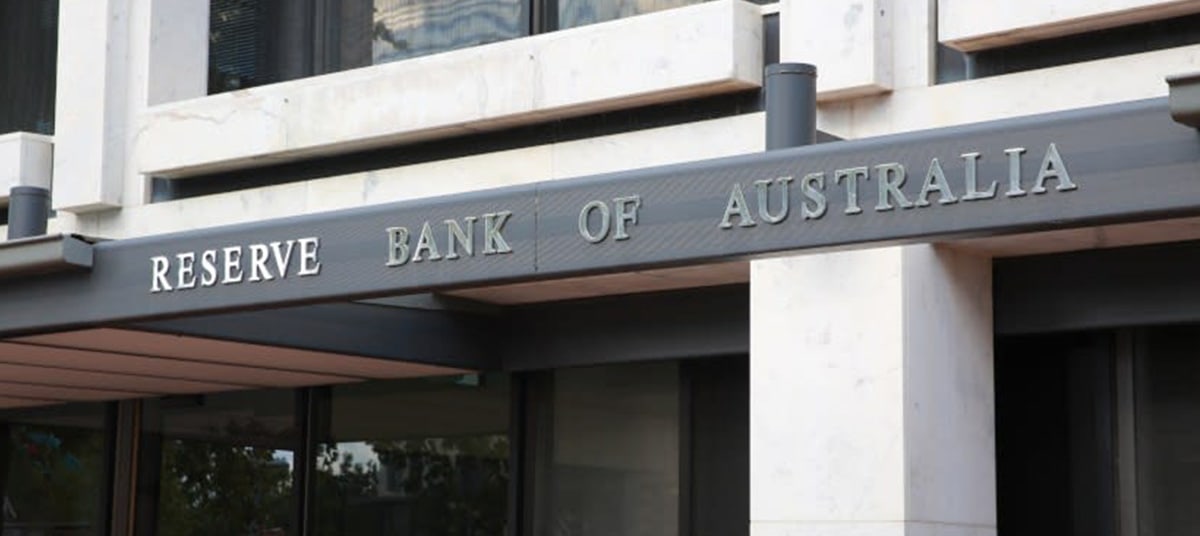
The Reserve Bank of Australia has taken the bit between its teeth as it moves to rein in galloping inflation.
The Monetary Policy Board of the Reserve Bank of Australia (RBA) has been spurred into action for its Melbourne Cup day decision, today (3 November) lifting the official cash rate by 25 basis points from 4.60 per cent to 4.85 per cent.
The decision pushes borrowing costs to an 18-year high, marking the highest cash rate level seen since November 2008 (when it was 5.25 per cent), in the shadow of the global financial crisis.
It also marks the RBA’s fifth rate hike of 2026, as the central bank grapples with stubborn inflation.
The rate hike was widely expected by the market, and comes after September-quarter inflation came in significantly hotter than expected.
Australian Bureau of Statistics (ABS) data released last week revealed trimmed mean inflation (the RBA’s preferred core gauge) accelerated to 3.7 per cent annually, blowing past both the previous quarter’s 3.6 per cent reading and the central bank’s own 3.4 per cent forecast.
Headline inflation also surged to 4.3 per cent, propelled by a 9.4 per cent spike in fuel prices.
According to the RBA, the resilience of inflation and persistent demand confirmed that economic momentum was running hotter than anticipated, leaving the central bank with little choice but to apply the whip on Cup Day.
In its post-meeting statement, the RBA Monetary Policy Board said: “Since the previous meeting, the data have confirmed that underlying inflation remains broadly based. Capacity pressures appear a little tighter than previously estimated and there are indications that higher fuel prices are being passed through to prices of other goods and services. Inflation is now expected to remain above 3 per cent for the coming year and there is an increasing risk that higher inflation expectations will become embedded.
“The Board is conscious of the period in which inflation has been too high. Given the revised inflation outlook and the continuing upside risks, the Board judged that a further tightening in financial conditions is warranted to support the return of inflation to target.
“The Board will continue to do what it considers necessary to bring inflation sustainably back to target. Accordingly, the Board will be attentive to the data and the evolving assessment of the outlook and risks to guide its decisions. Monetary policy is well placed to respond to developments, and the Board is focused on its mandate to deliver price stability and full employment.”
Today’s policy decision was by majority: six members voted to increase the cash rate target by 25 bps to 4.85 per cent; three members voted to leave the cash rate target unchanged at 4.60 per cent.
Why increase the cash rate?
The inflation data was an upset to the form guide and prompted all four major banks to redraw their rate forecasts. The Commonwealth Bank (CBA), National Australia Bank (NAB), Westpac, and ANZ all correctly predicted that the central bank would increase the cash rate today.
Similarly, as at 2 November, the ASX 30-day interbank cash rate futures contract was trading at 95.22, indicating an 80 per cent expectation of an interest rate increase to 4.85 per cent.
Indeed, in the lead-up to the decision, RBA governor Michele Bullock signalled to a Senate estimates committee that domestic capacity constraints, a tighter-than-expected jobs market, and offshore shocks, including escalating Middle East conflict and surging energy prices, had caused earlier upside inflation risks to materialise.
Deputy governor Andrew Hauser similarly warned last month that inflation prints were running “too high”.
The decision to lift the cash rate by 25 bps leaves monetary policy in restrictive territory, sitting roughly 145 bps above the RBA’s estimated neutral rate of around 3.4 per cent.
For mortgagors, the compounding effect of five rate rises in 2026 adds substantial pressure.
Analysis based on Canstar figures suggests that this 25-bp increase adds roughly $107 a month to repayments on a typical $700,000 home loan, bringing the cumulative increase across 2026 to approximately $537 per month, or nearly $6,450 a year.
Further modelling from REA Group indicates mortgage repayments on a median-priced home now absorb roughly 37.4 per cent of typical household income, a repayment burden not seen since the late 1980s.
Where to from here?
As the dust settles on the November rate hike, some economists have already suggested that the rate hiking cycle is yet to conclude – with further tightening expected in the coming months.
ANZ has explicitly stated that rates could rise higher than 4.85 per cent, identifying a “material risk that the cash rate reaches 5.10 per cent in either December or February”.
Westpac has similarly flagged that “the risks of another hike – most likely in February – have increased”, but has not yet banked that into its official rate forecast.
However, NAB and CBA do not expect rates to rise higher; NAB explicitly expects the RBA will “likely pause post November” but has warned that the economy will grow more slowly than projected moving forward.
In an economic update on Monday, NAB’s head of Australian economics, Gareth Spence, revised down NAB’s gross domestic product (GDP) growth forecast to just 1 per cent for 2027 and revised up its projected unemployment rate to 5.4 per cent, noting slower labour demand growth being outpaced by population growth.
NAB has suggested that weaker domestic conditions will mean that the core target of 2.5 per cent inflation will not be reached until 2028.
Similarly, CBA has also readjusted its economic forecasts (also signalling a 1 per cent rise in GDP in 2027 but an unemployment rate of 5.1 per cent) and has not ruled out the risk of further hikes.
In an economic update on Monday, CBA’s economics team said: “Overall though we think the RBA will remain on edge as we enter 2027. Inflation has remained above target for too long, inflation expectations are being watched closely, and offshore and domestic forces are shifting the inflation/growth nexus.
“The risk remains the need for further tightening of monetary policy in 2027 before inflation and growth open the door for lower rates later in 2027 … We see high uncertainty over the timing of these cuts given the shifts in the backdrop. We leave them pencilled in for August and November 2027 but keep only 50bp of cuts despite the higher starting point.”
Meanwhile, Judo Bank’s chief economic adviser, Warren Hogan, has forecast Australia’s cash rate could reach 5.35 per cent, warning that persistent inflation and rising government spending could trigger a damaging interest rate shock.
The Monetary Policy Board will next meet on 6–7 December 2026.
[Related: ‘Dangerous situation’: Economist warns cash rate could reach 5.35%]
Want to see more stories from trusted news sources?
Make The Adviser a preferred news source on Google.
Click here to add The Adviser as a preferred news source.