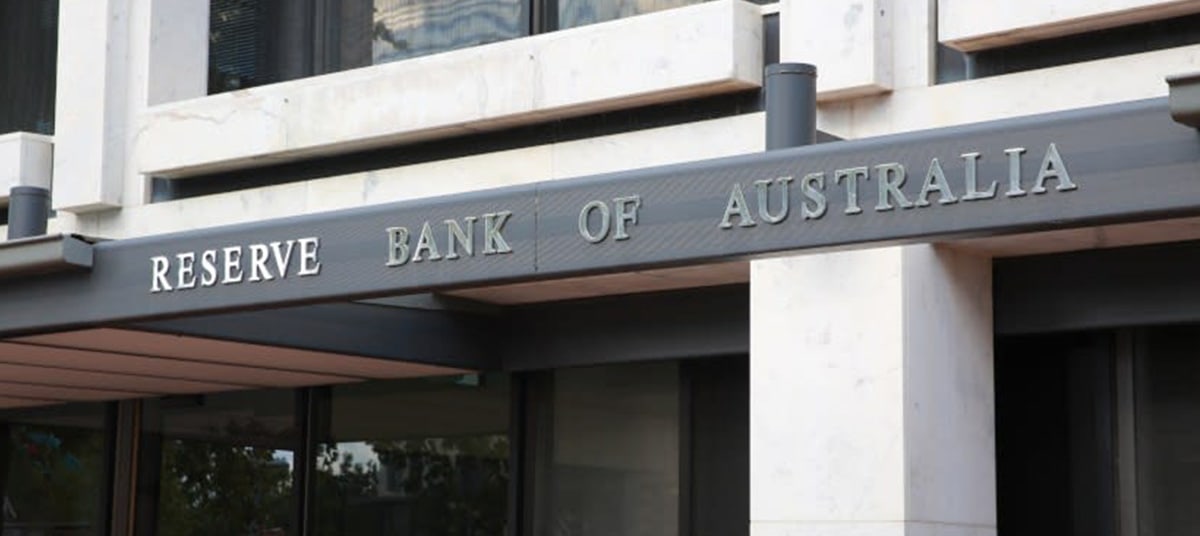
Another rate rise looms as stubborn inflation threatens to deepen the squeeze on Australian borrowers.
The Reserve Bank of Australia (RBA) is widely expected to lift the official cash rate to 4.85 per cent on Tuesday (3 November), taking its benchmark to the highest level since 2008.
A quarter-percentage-point increase would mark the fifth rise of 2026, adding to mortgage costs as households contend with an inflation outlook that has unsettled economists and sharpened expectations of further tightening.
All four major banks are predicting an increase after the Commonwealth Bank of Australia (CBA) and the National Australia Bank (NAB) abandoned their forecasts for a hold following last week’s inflation release, joining Australia and New Zealand Banking Group (ANZ) and Westpac.
Inflation strengthens the case for another increase
The change in forecasts followed the Australian Bureau of Statistics’ (ABS) release of the September quarterly inflation figures, which showed that annual trimmed mean inflation, the RBA’s preferred underlying measure, had increased to 3.7 per cent in September from 3.6 per cent in June.
The result exceeded expectations for an unchanged reading and came in above the RBA’s 3.4 per cent forecast.
Headline inflation also accelerated, reaching 4.3 per cent from 4 per cent in August, with a 9.4 per cent increase in petrol prices contributing heavily to the rise.
CBA described its revised November call as a precaution against persisting inflation pressures, arguing that responding promptly could reduce the risk of a more prolonged inflation problem.
“As a result, we see the hike in November as an insurance hike to protect against these forces. Acting early and acting decisively should manage the risk of inflation being higher for even longer,” CBA said.
“We expect the tone of the meeting to still talk tough on inflation amid these pressures from offshore and domestic capacity concerns. Five rate hikes in 2026 will also have a clear impact on the economy.”
NAB’s reassessment similarly reflected concerns that inflation was being sustained by several forces at once, with international energy prices compounding domestic pressures.
“The broader inflationary backdrop continues to present challenges for the RBA. Both oil and refined product prices are elevated, cost push inflation is evident in domestic inflationary dynamics and Bank officials have stressed of late that global forces appear to be supporting higher inflation outcomes too,” the bank said.
“Moreover, they remain concerned about the potential for inflation expectations to move higher the longer inflation remains above target.”
November consensus masks uncertainty over further tightening
Despite those concerns, NAB said that a November increase would take the cash rate sufficiently above the RBA’s estimated neutral setting to leave monetary policy firmly restrictive.
“A 25bp hike in November will see the cash rate at 4.85 per cent in November, 150bps above the RBA’s estimate of neutral (~3.4 per cent) and 50bps above the previous peak,” NAB said.
“Based on historical experience, a gap of this magnitude should be consistent with restrictive monetary policy and thus leave the balance of risks to domestic monetary policy more balanced from here.”
Nevertheless, NAB cautioned against interpreting an ensuing pause as the end of the inflation challenge.
“Still, powerful structural forces are at play, and all of these are working in the direction of higher short- and long-end rates. As such, we expect that the RBA will likely pause post November but will nonetheless remain a long way from declaring victory on inflation and the end of the tightening cycle,” it said.
ANZ meanwhile took a stronger position on Friday, rejecting the insurance-hike description and calling November’s anticipated move “a necessary increase to ensure inflation does return to the target over the next few years”.
The bank also flagged the possibility that the cash rate would need to reach 5.1 per cent to bring inflation back to 2.5 per cent by mid-2028.
“There is therefore a material risk that the cash rate reaches 5.10 per cent in either December or February,” ANZ said.
Westpac chief economist Luci Ellis also acknowledged that the inflation outlook had increased the possibility of additional tightening, identifying February as the most likely timing if the RBA needed to move again.
“Clearly, though, the risks of another hike – most likely in February – have increased,” she said.
Money-market pricing ahead of the meeting put the probability of a November increase at 88 per cent, compared with 69 per cent before the inflation figures.
Repayment pressures deepen as households face another squeeze
Over the weekend, Prime Minister Anthony Albanese described official rate increases as a “blunt instrument” that squeezes household borrowers, while acknowledging that families faced an extended period of financial strain.
Analysis based on Canstar data estimates that each quarter-percentage-point increase adds about $107 to monthly repayments on a typical new $700,000 mortgage.
Five increases this year would add approximately $537 to monthly repayments, equivalent to about $6,450 annually.
Further, REA Group found that if the RBA increased the cash rate on Tuesday, repayments on a median-priced home would absorb 37.4 per cent of a typical household’s income.
That would take the repayment burden to a level not experienced since the late 1980s, when interest rates exceeded 15 per cent.
Mortgage and Finance Association of Australia (MFAA) chief executive Anja Pannek said the anticipated cash rate setting would introduce some newer mortgage brokers to conditions they had not encountered during their careers.
“If the RBA lifts the cash rate by another quarter of a percentage point it would reach its highest level since 2008. For newer brokers, supporting clients through these conditions may be unfamiliar territory,” Pannek said.
“My message is to focus on the fundamentals: understand your clients’ circumstances, act in their best interests and explain their options clearly. Ask what has changed in their income, expenses and plans, and show them what higher repayments would mean for their household budget.”
She also cautioned against assessing potential solutions solely by the reduction in monthly repayments, noting that changes to loan terms or debt structures could carry additional costs and risks over time.
“Any recommendation needs to consider the full cost and the client’s longer-term interests,” she said.
“Extending a loan term or consolidating debts may reduce monthly repayments but increase total interest costs. Securing other debts against the home also brings additional risk. Explain those trade-offs, document your rationale and make sure the client understands why the recommendation is in their best interests.”
For households already experiencing financial difficulty, Pannek said an empathetic response and early access to assistance were important, while also reminding brokers that support is available.
“When someone is struggling, approach the conversation with empathy and help them seek support early. That may mean helping them contact their lender’s hardship team or connecting them with a free financial counsellor,” she said.
“It’s also important to remember you are not alone – work with your mentor, aggregator and experienced colleagues. Learning from those who have worked through different rate cycles will help build your judgement and confidence.”
[Related: Mortgage growth flatlines at Australia’s biggest banks]
Want to see more stories from trusted news sources?
Make The Adviser a preferred news source on Google.
Click here to add The Adviser as a preferred news source.