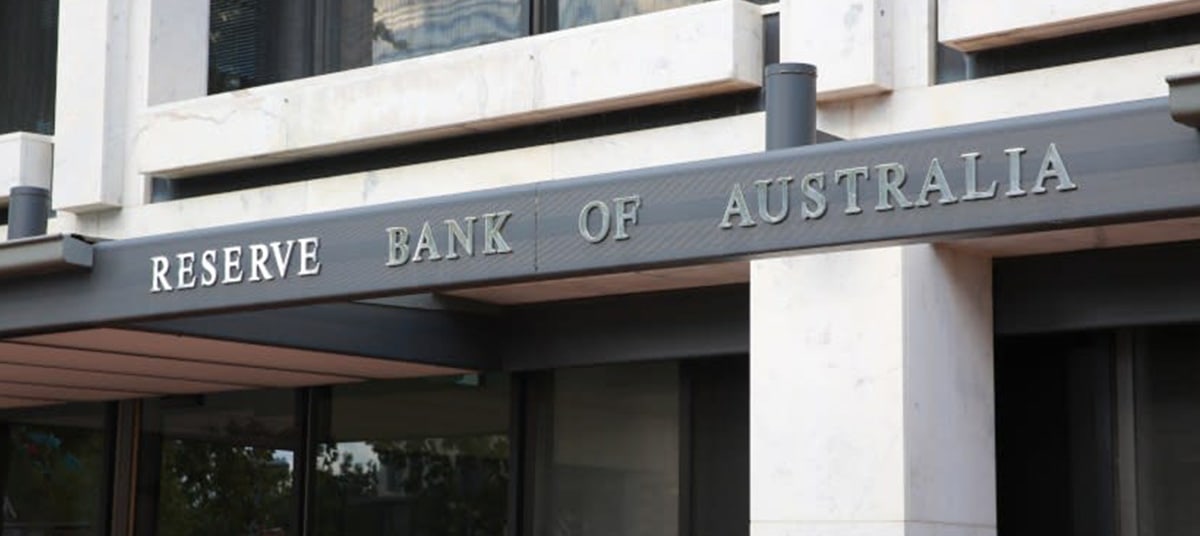
Economists at the major banks have read the June RBA minutes as hawkish, with the central bank pointing to persistently above-target inflation.
The Reserve Bank of Australia’s (RBA) June meeting minutes have revealed that the Monetary Policy Board (MPB) believes policy must remain restrictive while inflation remains “materially” above target.
In the minutes, the board set out why it believed the current cash rate level (4.35 per cent) was appropriate for the time being, with members also pointing to evidence that the economy was still running with excess demand, broad-based price pressures, and weaker sentiment.
“Members noted that information received since the previous meeting had supported the view that the economy was operating with excess demand and widespread inflationary pressures,” the minutes said.
“Inflation was still materially above the board’s target and the staff’s expectation remained for underlying inflation to increase in the June quarter.
“Labour and non-labour cost pressures remained widespread. Consumer and business sentiment remained very weak but members agreed that the overall data on activity implied that economic growth was easing broadly as expected.”
The board also acknowledged the global backdrop, including early signs of a possible path to resolving the conflict in the Middle East.
It said the three consecutive cash rate hikes in February, March, and May were beginning to make an impact but added that the full effect of the recent tightening was still working its way through the economy.
“Members judged that Australian financial conditions were now somewhat restrictive, although this remained uncertain,” the minutes said.
“It would take some time to assess the ultimate impact on the economy of the tightening in monetary policy since February but, at this stage, it appeared to be having broadly the expected effect.”
Why the board kept the cash rate on hold
The minutes outlined that given the mix of high inflation and slowing growth, the board decided the best course of action was to hold the cash rate steady.
“Members agreed that leaving the cash rate target unchanged at this meeting would best balance the board’s inflation and employment objectives,” the RBA said.
“Inflation remained materially above the board’s target, and members noted that the staff’s May forecasts envisaged that it would be a further two years before inflation returned sustainably to target.
“Against that backdrop, members agreed that monetary policy needed to remain restrictive to unwind current excess demand through a period of below-trend growth.”
The minutes also confirmed that the board was seeking to utilise the “space” provided by earlier hikes to observe how the economy responded.
“Taking these considerations together, members judged that there was merit in using the space provided by the board’s earlier decisions to raise the cash rate target to assess how the economy was adjusting and the impact of disruptions to oil supply,” the RBA said.
NAB: Minutes reaffirm extended hold
National Australia Bank (NAB) senior economist Taylor Nugent read the minutes as confirmation that the cash rate had likely peaked, despite the RBA taking a more hawkish tone.
“We see nothing in the Minutes to shift views on the outlook,” Nugent said.
Nugent said that the board’s discussion supported NAB’s view that further tightening was exceedingly unlikely.
“The minutes are consistent with the view the balance of risks had been shifting a bit, away from upside risk to (already elevated) inflation, and towards downside risk to growth.
“We expect the board will remain on hold, needing a more emphatic case in the data to deliver some further insurance tightening,” he said.
CBA, ANZ point to hawkish language, flag extended ‘wait and watch’
The Commonwealth Bank of Australia’s (CBA) head of Australian economics, Belinda Allen, also described the minutes as hawkish in tone but added they were not pointing to an imminent move.
Allen highlighted the repeated references to capacity constraints and excess demand as evidence the RBA was seeking to keep pressure on inflation, even while holding rates steady.
“A hawkish bias was retained in general through the talk of capacity pressures, excess demand and widespread inflation pressures,” Allen said.
“A further rate hike does not appear imminent.”
Allen said that CBA still expected the RBA to sit tight for the remainder of 2026, yet she said that view would be tested if inflation proved stickier than expected.
“There were no new developments in either the data or the board’s language to suggest a departure from its current wait and watch approach. We continue to expect the RBA to remain on hold through 2026, although the risk of further tightening later in the year remains if activity does not slow as expected and inflation proves more persistent,” she said.
ANZ head of Australian economics, Adam Boyton, reached a similar conclusion, saying that the minutes reinforced the risk of another hike while leaving his core rate call unchanged.
“Our RBA views are unchanged on account of these minutes (we expect the cash rate to remain at 4.35 per cent for the next year or so), notwithstanding that the minutes underscore the board’s hawkishness and hence the risk of a further rate hike,” he said.
[Related: Bullock keeps hikes on table, says inflation too high]
Want to see more stories from trusted news sources?
Make The Adviser a preferred news source on Google.
Click here to add The Adviser as a preferred news source.