ASIC has warned that AI is accelerating financial fraud and could have a “chilling effect” on consumers.
Australian Securities and Investments Commission (ASIC) chair Sarah Court has warned that AI is accelerating financial fraud and could have a “chilling effect” on consumers, as Australia’s financial intelligence agency confirms the technology is already being widely used to exploit mortgage lending systems.
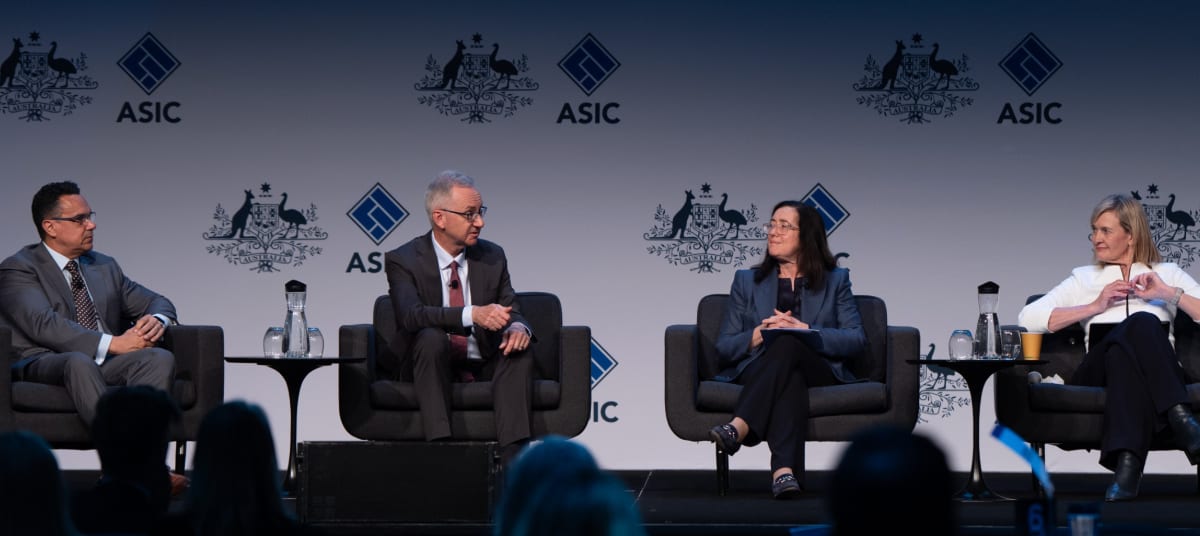
Speaking at ASIC’s annual forum in Sydney this week, Court expressed concern that technology was compounding an already uncertain economic environment, with increasingly sophisticated scams and fraudulent activity threatening confidence in financial services.
The corporate regulator’s chair warned that risks were “escalating in a variety of ways”, suggesting Australia may be underestimating the “speed at which things are changing”.
She identified scams and fraud as particularly concerning examples of AI’s capacity to amplify existing threats, cautioning that the consequences could extend beyond financial losses to have a “chilling effect” on consumers.
Meanwhile, AUSTRAC chief executive Brendan Thomas offered a more direct illustration of those risks, revealing that the agency had already encountered AI being used by criminals during its investigations into Australia’s sprawling mortgage fraud scandal.
Thomas said the technology was enabling increasingly sophisticated identity and document fraud, with similar activity also troubling banking authorities overseas.
“But we certainly are seeing AI being used across the criminal network, particularly in the creation of synthetic identities, documentation fraud. We certainly saw it in the work we’ve done earlier in the year around mortgage fraud, where people are using artificial intelligence to defraud systems,” he said.
“I know some of our overseas counterparts in Europe in the banking sector are seeing that incredibly significantly.”
Mortgage fraud exposes growing vulnerabilities
Thomas’ comments follow months of investigations into suspected mortgage fraud across Australia’s banking system, which have raised serious questions about the authenticity of loan documentation and the ability of lenders to identify co-ordinated criminal activity.
The scandal emerged in February when the Commonwealth Bank of Australia (CBA) referred about $1 billion in potentially fraudulent home loans to authorities, amid concerns involving applications submitted through mortgage broking and referral channels.
Subsequent reporting placed the suspected exposure across Australia’s five largest banks at about $4 billion.
The investigations have also raised concerns that fraudulently obtained mortgages could provide a pathway for criminals seeking to move illicit funds into Australian property.
In August, AUSTRAC’s Fintel Alliance revealed that Operation Claw, a major investigation launched in February, had uncovered potentially hundreds of millions of dollars in suspected fraudulent mortgages after examining information supplied by 10 major Australian banks.
The suspicious activity, concentrated largely in Sydney’s property market, involved borrowers allegedly inflating their incomes, misrepresenting employment arrangements and providing fabricated or unverifiable business information to support loan applications.
Investigators also identified instances where offshore or third-party funds were used to complete property settlements or make mortgage repayments, alongside recurring links between suspicious applications and particular brokers, accountants, and law firms.
The financial intelligence agency subsequently referred about 200 mortgage brokers, legal and accounting professionals, and companies to law enforcement, taxation and regulatory authorities over suspected involvement in the activity or associated questionable conduct.
The revelations have intensified scrutiny of mortgage origination practices, with ASIC convening an industry roundtable on 16 November to examine the fraud threat.
Criminal networks turn AI into a service
Beyond the mortgage investigations, Thomas warned that organised crime groups were increasingly commercialising their technological capabilities, allowing criminals to purchase specialised AI tools rather than develop their own.
He said this emerging business model, known as crime-as-a-service, was gaining traction across Australia and the broader region, including through the sale of AI-powered fraud services on the dark web.
“But from an organised crime point of view, we are starting to see, we’ve certainly seen in Australia and the growth in our region of what we call crime as a service, where people, organised crime groups will specialise in a particular type of activity and sell that activity to other crime groups,” Thomas said.
“And we are starting to see on the dark web, people selling AI services to organised crime groups. That is, I’ll design a bot for you to go and commit the fraud that you need to commit, and there’s certainly a growth of that regionally and for that take up in Australia also.”
AI strengthens the fight against financial crime
Despite the growing sophistication of AI-enabled crime, Thomas said the technology was simultaneously transforming AUSTRAC’s ability to identify suspicious financial activity.
Through its work with major banks, the agency has begun using AI-driven analysis of large datasets to identify relationships between suspicious transactions and criminal entities that previously proved difficult to detect through conventional reporting.
“It’s giving some significant benefits. One is it’s reducing a lot of the noise that was otherwise in the system and the false positives that were coming through. It’s starting to pick up greater avenues of behaviour in criminal activity,” he said.
“We’re using it in partnership with data we’re getting and testing with some of our big banks, which is highlighting sophisticated money laundering networks and the nodes of those networks in literally days, where it was almost impossible to pick those up through individual reporting before.
“Some really powerful analytics coming out of the use of AI on major data sets across multiple financial institutions.”
[Related: Associations caution majors against blaming broker channel for fraud]
Want to see more stories from trusted news sources?
Make The Adviser a preferred news source on Google.
Click here to add The Adviser as a preferred news source.