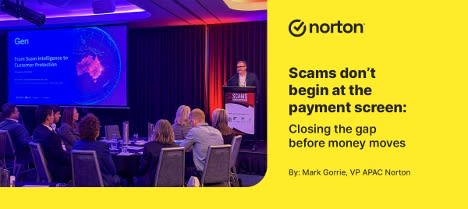
The Scams Prevention Framework Summit brought together people working across financial services and the wider scam-prevention ecosystem to confront a shared challenge: how to protect customers before a scam becomes a payment.
The panels, individual discussion groups and presentations from each speaker offered valuable insight into how we need to collaborate to ensure we keep the customer at the forefront of all controls and decisions. Understanding the differing perspectives from a banking organisation, through to the victims really showcased the broad and thoughtful lens that is needed to effectively manage expectations and adherance to the framework.
The preliminary delegate mix included leaders and practitioners from banking, insurance, superannuation, telecommunications, government, industry bodies, victim advocacy, academia and technology. That breadth matters. A scam can begin on a website, in an advertisement, text, email or phone call, then move across services before a customer transfers money. No single organisation sees the whole journey.
Across the day, the agenda put practical questions on the table: what “reasonable steps” look like under the Scams Prevention Framework (SPF), how to respond to the victim’s experience, and how organisations can work together when a scam crosses sectors. It was clear that organisations are keen to support their customers and ensure they don’t become scam victims. Social engineering tactics generally exploit people’s trust, so scammers will prey on a victim’s hopes, desires to buy a house, ensuring our superannuation is safe, and our basic humanity to ultimately gain our trust and ensure a payment is made.
The intervention window is earlier than the transaction
In my session, From Scam Intelligence to Customer Protection: Practical Signals for the SPF Era, I focused on the period between a customer first being targeted and making a payment. Scammers use familiar channels and trusted-looking interactions to build confidence, create urgency and guide people towards a transfer. By the time a bank sees the transaction, the customer may already have been persuaded. Accessing upstream consumer intelligence can improve the banks ability to disrupt scams by providing additional scam signals. Payment fraud signals become the last line of defence instead of the only defence.

Gen’s Threat Labs telemetry recorded 79.9 million attacks blocked in Australia from January to October 2026—an average of about 263,000 per day. Approximately 85% of these attacks are categorised as social engineering attacks which includes the scams we see every day. The figures underline the volume of activity that can occur across digital channels before it appears as a payment event.

Gen’s scam intelligence spans 150 countries and 500 million consumers across our cybersecurity brands, including Norton, Avast, Avira and AVG. That broader view can help identify emerging tactics and signals; the task is to interpret them in local context and put them to work in ways that help organisations prevent, detect and disrupt scams.
For financial institutions, the opportunity is to connect relevant early signals with the teams and partners best placed to act—while keeping customer trust, privacy and proportionate intervention in view. Payment monitoring remains important, but it is only one point in a much longer customer journey. A timely warning or disruption before payment can change that journey; action after funds move may come too late.
Turning shared responsibility into practical action
The SPF makes coordination central to scam prevention. The summit’s cross-sector format offered a place to compare perspectives from organisations that encounter different parts of the same scam, and to consider how intelligence can lead to timely, practical action. It is clear there is no line between customer education and organisational responsiblity, as it is a layered and ongoing approach to continuing information sharing, benchmarking with peers and constant communication within an organisation especially at the frontlines to ensure compliance to the framework, empathy to the scam victom and practical action for improved processes to mitigate risk.
It was encouraging to be among people committed to moving from discussion to action. The work ahead is to make that intent operational: recognise the signals earlier, get them to the right place, and help customers before the moment of payment.
To learn more about how Norton can support financial services organisations, or to book an initial call, visit norton.com/apac/finserv.