
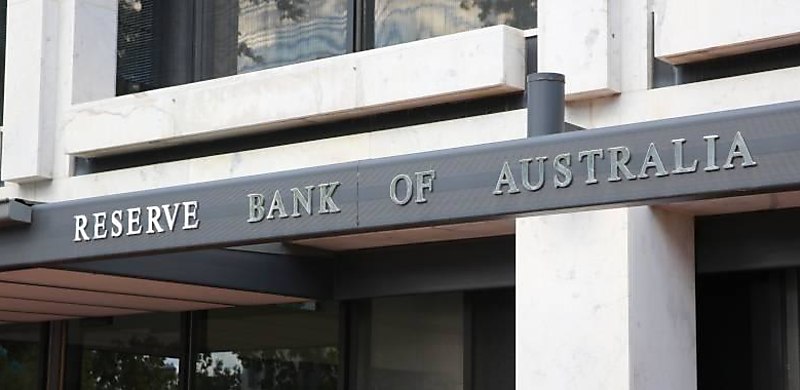
Major bank economists have cast fresh doubt on further interest rate increases after a surprise jump in unemployment.
Economists at three of Australia’s largest banks have cast fresh doubt on further interest rate increases after a surprise jump in unemployment revealed Australia’s labour market is weakening faster than the Reserve Bank of Australia (RBA) anticipated.
Australia’s unemployment rate climbed from 4.7 per cent to 4.9 per cent in October, its highest level since October 2021, according to Australian Bureau of Statistics (ABS) figures released on Thursday (19 November).
The deterioration caught economists off guard, with employment falling by 43,500 people against expectations of a 25,000 increase.
Markets had also anticipated unemployment would remain unchanged at 4.7 per cent.
The number of unemployed Australians rose by 17,800 to 753,700, while the employment-to-population ratio declined 0.3 percentage points to 63.3 per cent.
The decline was concentrated in part-time employment, which fell by 40,600, while the participation rate slipped to 66.6 per cent.
ABS head of labour statistics Sean Crick indicated that the weakness was not confined to new entrants to unemployment, with more Australians remaining out of work than would ordinarily be expected at this time of year.
“Similar to last month, we had a higher proportion of people remaining unemployed than we would usually see in October in the post-COVID-19 era,” Crick said.
Separate retrenchment figures revealed approximately 65,700 people were made redundant in September, contributing to a three-month run of job losses comparable with levels recorded during the COVID-19 pandemic.
The latest unemployment reading has already exceeded the RBA’s forecast of 4.7 per cent for the December quarter, raising questions about whether the economy is slowing more abruptly than policymakers had envisaged.
The central bank’s November Statement on Monetary Policy (SoMP) had projected unemployment would not reach 4.9 per cent on a quarterly average basis until late 2027.
Westpac and NAB strengthen calls on rate peak
Westpac said the unexpected deterioration would likely force the RBA to reconsider its assessment of labour market conditions, particularly given the extent to which unemployment has deviated from its forecasts.
“Today’s result will also likely come as a surprise to the RBA, as it did to us and the broader market, with an unemployment rate at 4.9 per cent tracking above its year-end forecast of 4.7 per cent,” Westpac said.
“The rate directly challenges the RBA’s characterisation of the labour market, which has emphasised ‘tightness’.”
The bank added that the result had strengthened its existing conviction that the November increase represented the final tightening of the current cycle.
“Today’s data reinforce our view that the RBA is done hiking. We already thought the November increase to 4.85 per cent was the peak in the cycle, and our conviction has strengthened since then,” it said.
“We expect the Board to pause in December, taking Governor [Michele] Bullock’s call to ‘take stock’ of the tightening to date as the signal. A February move cannot be ruled out but it looks increasingly unlikely.”
NAB similarly believes the RBA has finished raising interest rates, arguing that the latest employment figures expose a growing disconnect between the central bank’s assessment of labour market conditions and the speed at which they are deteriorating.
“The unemployment data shows a materially weaker outcome than the RBA was expecting. In the November SoMP, they assessed the labour market has been tighter than they earlier thought, but today’s data confirms it is also cooling noticeably more quickly than they had been expecting,” the bank said.
“We had already expected the labour market to weaken more than the RBA looking forward. We forecast a peak in the unemployment rate of 5.5 per cent, compared to the RBA’s 5.1 per cent.
“Today’s data flags the risk labour market conditions weaken faster still. NAB’s view remains that the RBA is done hiking and will begin to step away from restrictive policy settings next year. We are expecting the first cut in August.”
CBA warns inflation remains a formidable obstacle
While Westpac and NAB have become increasingly confident that interest rates have peaked, Commonwealth Bank of Australia (CBA) adopted a more cautious assessment, acknowledging the growing evidence of economic weakness while warning that persistent inflation could complicate the RBA’s response.
“The October labour force data was weaker than both we and the market expected for the second month in [a] row,” CBA said.
“The burning question in recent months has been if the labour market is loosening fast enough amid inflation that has been too high for too long for the RBA to remain on the sidelines. The scales were in inflation’s favour in recent months, leading to the November rate hike, but today’s data does tip the balance closer to even.”
CBA also warned that the acceleration in wages could indicate that underlying inflationary pressures remained entrenched.
“But inflation is still too high and is still forecast to take another year to come back to the top of the RBA’s target band. Yesterday’s Q3 26 Wage Price Index was also stronger than expected, indicating either the labour market was still too tight, or elevated inflation was creating wages pressure – a central banker’s nightmare as Deputy Governor [Andrew] Hauser has recently phrased it,” the bank said.
Nevertheless, CBA now considers a December hold effectively certain, while also acknowledging that further employment deterioration could strengthen the case for monetary easing.
“An on hold decision in December is locked in for the RBA. February now feels an age away and the economy could be weaker by then if the labour market continues this way,” CBA said.
“But there is no guarantee we will see easy wins on inflation from here despite the loosening in the labour market. The split on the Board could increase and become more vocal on risks to growth. Markets have already increased the pricing for cash rate cuts next year with 80 per cent chance of a rate cut in August and full cut in September now priced after today’s data.”
[Related: RBA board members concerned economy on precipice of ‘sharper’ downturn]
Want to see more stories from trusted news sources?
Make The Adviser a preferred news source on Google.
Click here to add The Adviser as a preferred news source.

