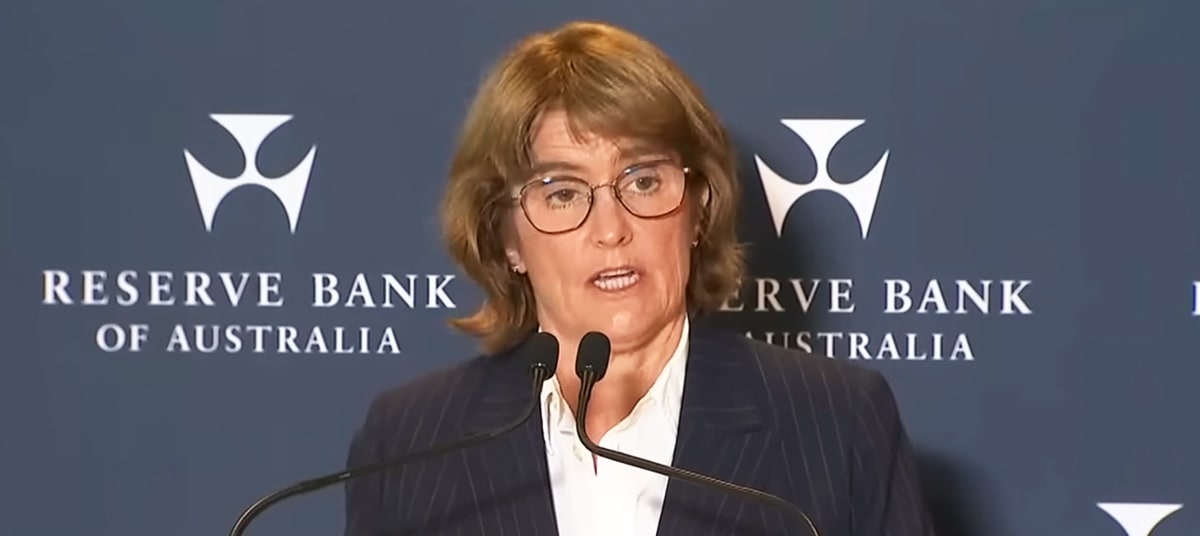
Following its decision to increase the cash rate, the RBA has outlined its updated forecast for the economy, revealing it now expects the target horizon to be met in mid-2028.
The Reserve Bank of Australia (RBA) has unveiled updated forecasts for the domestic economy, suggesting the economy will grow slowly over the coming year before coming back “into balance” in 2027, with spare capacity only emerging in the economy over the rest of the forecast period.
Indeed, the central bank expects Australia’s economy to track below its potential growth rate over the coming years while grappling with more persistent inflationary pressures than previously anticipated, according to the RBA’s latest Statement on Monetary Policy.
Released on Tuesday (3 November), the statement details the bank’s updated macroeconomic forecasts and the rationale behind the Monetary Policy Board’s decision to increase the cash rate target by 25 basis points to 4.85 per cent.
The RBA concluded that while domestic activity and consumption have slowed, underlying inflation remains elevated and domestic capacity constraints have proven tighter than staff had assessed just three months ago.
“The outlook for inflation has been revised materially higher and reflects a higher assumed path for energy prices amid the ongoing Middle East conflict and greater domestic capacity pressures,” the RBA statement said.
Both headline and trimmed mean inflation are now projected to remain above 3 per cent until late 2027, about three quarters later than forecast in the August statement, before reaching the 2.5 per cent midpoint of the target range in mid-2028.
The bank emphasised that “the risks to the inflation outlook are judged to remain skewed to the upside”. However, it said that inflation could fall faster than forecast. For example, capacity pressures could ease sooner if higher interest rates, conflict-related cost pressures and uncertainty, and falling housing prices combine to weigh more heavily than expected on spending and investment.
Why the change in forecast?
Staff highlighted two primary surprises since August that forced an upward revision to the inflation track.
Firstly, the central bank noted entrenched domestic capacity pressures – noting that trimmed mean inflation rose to 3.7 per cent in the September quarter.
The RBA noted that “the persistence of high inflation and cost pressures, despite the easing in GDP growth and the rise in unemployment, suggests that domestic capacity constraints have been tighter than previously assessed”.
As a result, staff raised their estimate of the non-accelerating inflation rate of unemployment (NAIRU) to around 4.75 per cent.
Secondly, the RBA flagged higher energy and commodity prices. The statement outlined that crude oil futures and refined fuel prices surged by 20 to 25 per cent following a re-escalation of the Middle East conflict, while the global AI boom added upstream cost pressures into technology supply chains.
In the labour market, the RBA observed another unexpected shift: the unemployment rate rose faster than forecast, averaging 4.6 per cent in the September quarter.
However, the bank noted this was accounted for by stronger-than-expected labour force participation, which climbed to 66.9 per cent as households sought work to manage cost-of-living pressures, rather than a drop in labour demand.
Restrictive conditions hit housing – with worse yet to come
While overall financial conditions are restrictive, the RBA’s statement acknowledges that the impact is concentrated heavily in the housing sector.
National established housing prices in September were almost 5 per cent below their March peak, with the downturn having recently been described by Cotality as one of the steepest over the past 40 years.
Housing market activity has softened broadly, as reflected in low auction clearance rates, longer days on market, and subdued turnover.
The statement noted that new housing loan commitments have dropped 27 per cent from their November 2025 peak. This decline is larger than seen in most tightening cycles since 1990, driven largely by a sharp pullback in investor borrowing for established dwellings.
The RBA attributed this retreat to the combined effect of higher mortgage rates and federal budget tax changes altering negative gearing and capital gains tax rules.
Total housing credit growth eased to an annualised rate of 6.3 per cent. But because loan commitments and credit growth typically lag house prices by up to three months due to settlement delays, the central bank expects housing credit growth to decline further in the period ahead.
Looking at residential construction, the RBA reported that while current activity has been supported by existing backlogs, leading indicators point to a sharper future downturn.
For example, new home sales have dropped, and homebuilders in the RBA’s liaison program reported declining buyer inquiries, weaker conversion rates, and higher cancellation rates. In the apartment sector, liaison contacts pointed to a significant gap between market prices and construction feasibility costs.
The impact of rising home loan rates
The RBA also reflected on the increasing rate environment on borrowers.
Variable mortgage rates rose by almost 75 bps between January and September, as lenders passed on the four rate hikes to variable rate borrowers.
Scheduled principal and interest mortgage repayments climbed to just over 10 per cent of household disposable income in the September quarter, matching their 2024 peak, with the RBA anticipating payments will rise further as recent cash rate increases flow through.
Nonetheless, total scheduled household debt payments (including estimated repayments on consumer credit) remain well below the 2008 peak, reflecting a long-run decline in consumer credit relative to household disposable income, the RBA said.
While extra mortgage repayments into offset and redraw facilities have moderated in 2026, the RBA noted that aggregate household balance sheets remain resilient.
According to central bank data, the median borrower in the lowest income quartile still holds enough savings in offset and redraw accounts to cover approximately one year of scheduled repayments.
In business lending, credit conditions showed a marked divergence. Total business debt growth expanded well above its post-GFC average, heavily supported by syndicated bank loans and bonds for data centre developers, who have raised at least $30 billion in debt this year.
Conversely, the RBA warned of tightening conditions among non-bank and private credit lenders, which supply 40 to 50 per cent of residential construction finance. Rising investor redemptions and tighter developer margins are limiting appetite in this sector, posing an additional headwind to dwelling supply.
What’s next?
Looking across the broader economy, the RBA expects domestic output growth to stay sluggish, restrained by restrictive monetary policy, falling house prices, and elevated oil costs.
Gross domestic product (GDP) is projected to expand by 1.6 per cent across 2026 before slowing further to 1.3 per cent in 2027 and recovering modestly to 1.5 per cent by late 2028.
While a pipeline of data centre projects and public infrastructure spending will support near-term activity, the bank noted that roughly 70 per cent of data centre capital expenditure (capex) is spent on imported equipment, limiting the direct boost to Australian GDP.
The bank forecasts that below-trend economic growth will eventually ease domestic capacity strains, shifting the economy from excess demand into balance next year before spare capacity emerges across 2027. Consequently, labour market conditions are projected to soften further.
The central bank forecasts the unemployment rate will rise gradually to 4.8 per cent by mid-2027 and reach 5.1 per cent by late 2028, reflecting both weaker hiring intentions outside AI infrastructure and continued high labour force participation.
Wage growth is expected to peak in the near term as the Fair Work Commission’s recent award increases and higher inflation expectations flow through enterprise agreements, with the Wage Price Index forecast to rise 3.4 per cent over the year to December 2026.
The RBA said: “Inflation remains elevated and data since the previous meeting have confirmed that underlying inflation remains broadly based.
“Capacity pressures appear a little tighter than previously estimated and there are indications that higher fuel prices are being passed through to prices of other goods and services. Inflation is now expected to remain above 3 per cent for the coming year and there is an increasing risk that higher inflation expectations will become embedded.
“Given the revised inflation outlook and the continuing upside risks, the Board judged that a further tightening in financial conditions is warranted to support the return of inflation to target.”
The Board stated that it “will continue to do what it considers necessary to bring inflation sustainably back to target”.
[Related: RBA tightens the reins on cash rate]
Want to see more stories from trusted news sources?
Make The Adviser a preferred news source on Google.
Click here to add The Adviser as a preferred news source.