The federal Coalition has targeted shared-equity assistance for abolition, with the opposition pledging to scrap the Help to Buy scheme if elected.
The federal opposition has pledged to abolish the Help to Buy shared-equity scheme if elected in a $31 billion budget package intended to finance income tax reform.
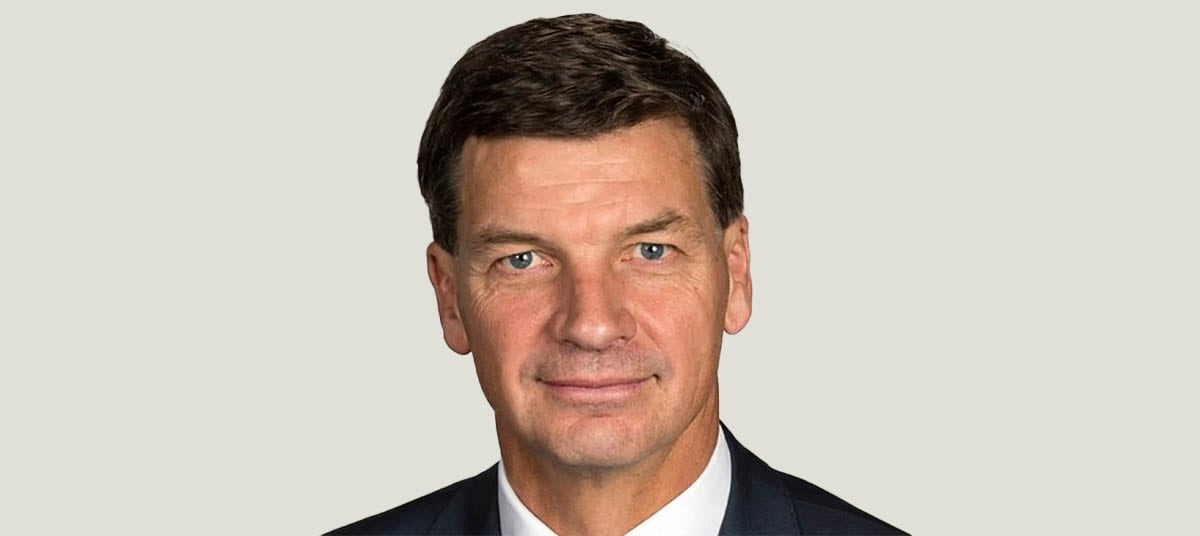
Opposition Leader Angus Taylor outlined the plan in Canberra on Monday (26 October), with shadow treasurer Tim Wilson identifying $4.7 billion in proposed savings across housing measures.
That housing package encompasses the Help to Buy scheme, the Housing Australia Future Fund, the New Homes Bonus and Build to Rent incentives.
The proposal would dismantle a pathway offering eligible purchasers government equity contributions towards their homes, just as participating lenders broaden access and applications build.
The announcement did not detail transition arrangements for existing participants, approved applicants, or purchasers awaiting settlement.
Housing cuts underpin broader tax pledge
The Coalition labelled the federal government’s housing agenda as a “failed housing bureaucracy” and argued that its broader budget package would “more than fund” indexing income tax brackets to inflation.
Taylor blamed government spending for deteriorating household circumstances, describing the result as “the biggest collapse in living standards of any developed country”.
“All Anthony Albanese and Jim Chalmers have to offer is more taxes and more spending. This just means higher inflation, higher interest rates, more debt, and more deficits,” Taylor said.
Taylor also presented spending restraint as the means to increase the income retained by households and businesses.
“The Coalition has cleaned up Labor’s economic mess before, and we’ll do it again. We will get spending under control, cut Labor’s waste, and let Australian families and small businesses keep more of what they earn,” he said.
Beyond housing, the Coalition identified $9.4 billion from measures targeting what it called Labor’s “climate bureaucracy”.
This includes abolishing the Net Zero Economy Agency, reforming the Australian Renewable Energy Agency, and scrapping electric vehicle tax concessions.
Labor’s home batteries program and Scope 3 reporting requirements would also go.
Another $7.3 billion would come from axing green hydrogen and aluminium production incentives, critical minerals tax credits and the National Reconstruction Fund.
The package also claimed a $7.9 billion budget improvement from lowering the tobacco excise to encourage legal cigarette purchases, alongside $2 billion from welfare and NDIS eligibility changes.
The Coalition’s Tax Back Guarantee would also replace the WATO, with benefits increasing to $500, $750, $1,000 and beyond.
“Over 10 years, a typical taxpayer would pay around $14,000 less in tax compared to Labor’s plan,” Taylor said.
The tax policy would commence in 2028–29, following the next federal election, due by May 2028.
The abolition pledge follows Taylor’s April speech to the Menzies Research Centre, where he announced that the Coalition would prevent non-citizens from accessing the 5 per cent Deposit Scheme.
Shared-equity demand builds as access expands
The Help to Buy scheme opened on 5 December 2025, following Labor’s 2022 policy commitment and parliamentary passage in November 2024. Tasmania joined in June, extending availability nationwide.
The program offers 10,000 places annually, with the Commonwealth contributing up to 40 per cent of a new home’s purchase price or 30 per cent for an existing dwelling.
Purchasers need a deposit of at least 2 per cent, while Housing Australia holds the Commonwealth’s equity interest.
Applicants must be Australian citizens, occupy the home as their principal residence, meet property ownership restrictions and purchase within location-specific price caps.
Income ceilings also increased on 1 July to $103,000 for individuals and $165,000 for joint applicants and single parents, replacing the original $100,000 and $160,000 limits.
An independent capability assessment of Housing Australia, released in late August, recorded 7,261 active applications during the scheme’s first seven months to June, including 4,808 approved applications and 3,636 settlements.
Extrapolating that activity across 12 months produced 12,447 active applications, above the annual allocation.
Housing Australia’s participant profile showed approximately 86 per cent were first home buyers and nearly 70 per cent were single applicants, including a reported 12 per cent single-parent share.
Among female participants, 42 per cent were aged at least 40, while the median deposit was approximately $30,000.
Lender participation, meanwhile, has been gradually building, with Queensland Country Bank joining on 6 October through retail and broker channels.
The mutual became the fourth participating lender, alongside the Commonwealth Bank of Australia (CBA), Bank Australia and Teachers Mutual Bank Limited.
Bank Australia also distributes through the broker channel, while Teachers Mutual opened access to its first trained broker cohort in early October. CBA does not offer Help to Buy through its broker channel.
The expansion comes amid broker concerns that restricted lender choice, uneven distribution access and tight price caps in some markets could constrain participation.
[Related: Coalition pledges major ‘attitudinal reset’ for ASIC and APRA]
Want to see more stories from trusted news sources?
Make The Adviser a preferred news source on Google.
Click here to add The Adviser as a preferred news source.