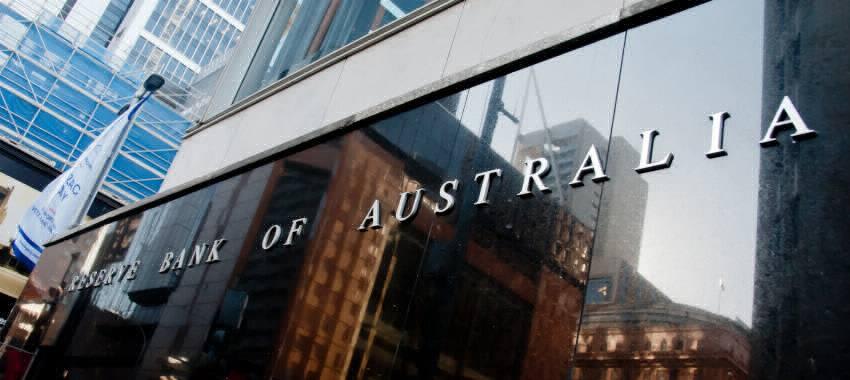
The central bank’s latest review has found that most households and businesses appear to be well placed to manage more challenging conditions.
The Reserve Bank of Australia (RBA) has run its ruler over the nation’s financial system, finding that most households and businesses appear resilient enough to manage a period of declining house prices or slowing economic growth.
In its October 2026 Financial Stability Review, released last Thursday (1 October), the RBA said that under “adverse-but-plausible” scenarios involving continued declining house prices, most household borrowers would still have equity buffers in their properties, reflecting the “preceding run-up in prices and prudent lending standards”.
These factors would give borrowers experiencing acute financial stress the option to sell their property and fully repay their loan, although the RBA acknowledged that such a decision would be “difficult and disruptive”.
The review, released after the RBA hiked rates to their highest level in 15 years, also found the share of mortgagors experiencing severe financial stress remained below its 2024 peak.
Arrears also remained historically low, according to the RBA, despite a recent pick-up.
“Recent tax changes affecting housing, as well as the higher level of the cash rate, have contributed to lower demand for housing credit in recent months and a decline in housing prices following a number of years of strong housing price growth,” the RBA said.
“Most household borrowers are expected to remain resilient in this context, including under a range of adverse scenarios.
“Even in a scenario where housing prices were to decline by a further 20 per cent, most borrowers would still have positive equity buffers given the earlier run-up in housing prices and prudent lending standards.”
Business pressures
The RBA also said most businesses appear well placed to manage cost pressures, having entered the year with “strong balance sheets and a good degree of resilience”, although ongoing geopolitical pressures have weighed on the profitability of some firms.
Above-average cash buffers have helped businesses manage higher costs and an uncertain trading environment, according to the RBA, while lenders’ continued willingness to provide credit has also supported firms through the challenging period.
RBA liaison data suggests most lenders have not materially changed their appetite for business lending this year, although some have reduced their appetite for new lending to the transport sector, given its exposure to higher energy prices.
Meanwhile, heightened competition for business loans and factors such as automated loan approval processes have improved access to credit over the past couple of years, including for smaller businesses.
“Most businesses are also expected to remain resilient in the period ahead, although smaller businesses and those in more energy-intensive or cyclical industries with fewer buffers, such as transport, hospitality, and construction, are more vulnerable to cost pressures,” the RBA said.
“This is particularly the case if a significant weakening in aggregate demand were to make it harder for them to raise prices to cover their higher costs.
“In short, while there are pockets of stress in the household and business sectors, both sectors display a good level of resilience overall, as reflected in low loan arrears.”
Lenders and private credit
The RBA also took time to assess the health of Australia’s lenders, saying that “large capital buffers” and prudent lending standards are helping them weather a material deterioration in housing and broader economic conditions.
Meanwhile, the central bank flagged the rapid growth of private credit but warned that risks around credit quality are currently more about “investor protection than financial stability”.
“Relative to the US private credit industry, Australian private credit funds are less exposed to companies disrupted by AI, though are more exposed to real estate, including construction and development,” the RBA said.
“While investors in Australian private credit funds may face heightened risks of lower-than-expected (or negative) returns in a downturn, and this could affect the supply of new financing to real estate construction in particular, the implications for the broader stability of the financial system would be limited.”
Future outlook
The latest review appears consistent with recent comments from RBA governor Michele Bullock, who, speaking to the press after the cash rate decision, acknowledged the possibility of further rate rises.
Bullock said the latest rate increase would be difficult for households with mortgages and businesses carrying debt, but argued that allowing elevated inflation to persist would impose a wider cost.
“Every household has seen how the price of everything has gone up in recent years. Pay packets don’t go as fast as they used to, and that’s why we need to stop this high inflation,” she said.
During the press conference, Bullock declined to comment on financial-market expectations for two further rate rises to 5.10 per cent, saying the RBA needed time to assess the delayed effects of the tightening already delivered.
“It hasn’t been a very long time for the rate rises to work their way through the economy; our research shows it can take up to 12 to 24 months to make its full impacts,” she said.
The RBA will meet on 2–3 November 2026 to deliver its next cash rate decision.
[Related: RBA announces latest cash rate call]
Want to see more stories from trusted news sources?
Make The Adviser a preferred news source on Google.
Click here to add The Adviser as a preferred news source.