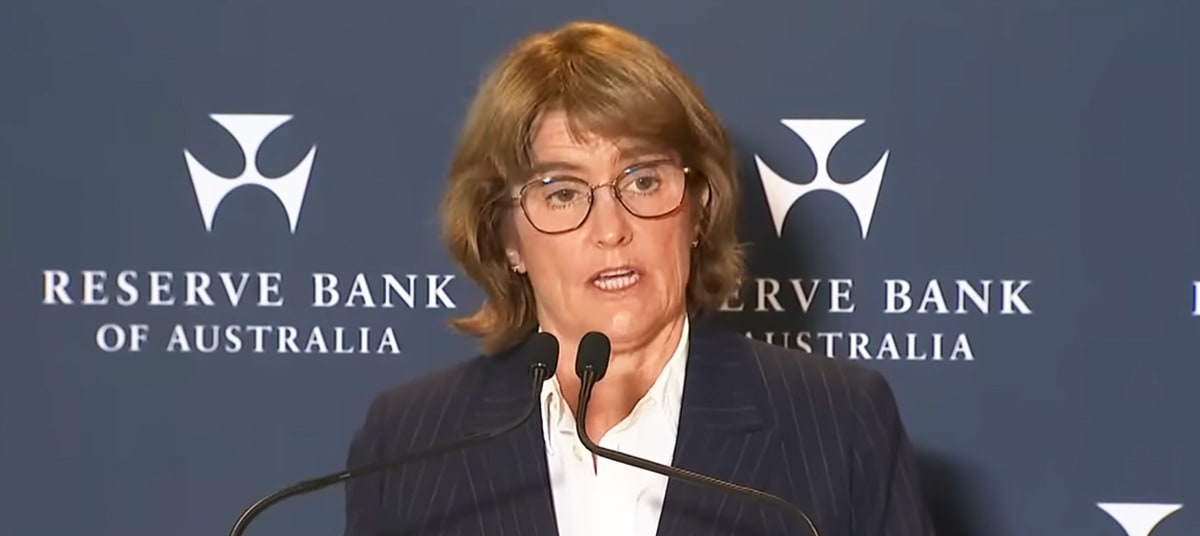
The central bank’s governor has commented on the government scheme and the prospect of borrowers dipping into negative equity in a recent Senate appearance.
Reserve Bank of Australia (RBA) governor Michele Bullock has said the central bank is not currently concerned that the federal government’s expanded 5 per cent Deposit Scheme will drive up house prices or increase prudential risks during an appearance before the Senate economics legislation committee on Thursday (4 June).
Responding to questions from Senator Andrew Bragg, Bullock commented on the scheme, which allows eligible buyers to purchase a property with a deposit of as little as 5 per cent.
“We have observed that there has been an increase in first home buyer interest,” she said.
“I think we’ve seen a lift in that and in credit issued to first home buyers.
“And we’ve also seen an increase in the loan-to-value ratios reflecting that, but we don’t have any concerns that that’s in any way threatening financial stability.”
Bullock was also questioned about the prospect of borrowers who purchase with a 5 per cent deposit falling into negative equity if house prices decline.
While acknowledging that negative equity is an issue monitored by the RBA’s financial stability team, she said that, at present, “practically no one” is in negative equity.
“Negative equity matters if people get into trouble with their loans and then they have to sell their homes to meet that,” she said.
“That’s why a strong employment market at the moment is really important.”
She also reiterated that borrowers in negative equity currently only reflect a small segment.
“At the moment, if you look at negative equity, it’s absolutely miniscule,” she added.
“It’s not big at all.”
Inflation the issue
In her opening address, Bullock also commented on international and domestic economic conditions, as well as the broader economic outlook for Australia.
The governor reiterated the board’s view that inflation was already too high before the conflict in the Middle East, noting that any resulting increase in fuel prices could have implications for both inflation and economic activity.
“As you know, the Monetary Policy Board has increased the cash rate by 75 basis points in total this year. These increases have been necessary to tighten financial conditions and slow growth in demand in the economy to ensure we get on top of inflation,” she said.
“We’ve already seen some signs that this tightening is starting to work, though it will take around one to two years for the effects to fully flow through the economy.
“One of the channels through which monetary policy can often start to have an impact quite quickly is the housing market. Conditions in the housing market have eased in recent months and that partly reflects tighter monetary policy.
“Having said that, the recent increases in interest rates will have no impact on the increase in inflation already in train following increases in the prices of oil and related commodities. What these increases in the cash rate do, however, is to help to contain the domestic inflationary pressures and second round effects from higher oil and commodity prices.”
While acknowledging the pressures facing mortgage holders, Bullock reiterated the board’s view that the top priority was to bring inflation back under control.
“If high inflation persists, it risks becoming embedded in price and wage-setting behaviour, particularly given the prolonged period over which underlying inflation has been above 3 per cent since the pandemic. That would result in more persistent inflation and would require even higher interest rates, and for longer, to return inflation to target,” she added.
“High inflation hurts everyone. It reduces the purchasing power of all Australians and disproportionately affects those on lower incomes and the more vulnerable people in the community.”
Immediate outlook
Bullock also reiterated the RBA’s forecasts shared in its May Statement on Monetary Policy, stating that the central bank expects inflation to tick up in the near term.
“Headline inflation is expected to peak at over 4½ per cent in the June quarter, while underlying inflation remains above the target range until mid-2027,” she said.
However, she reiterated that adverse scenarios could lead to further increases in commodity prices, which could in turn result in higher inflation and weaker economic growth than currently anticipated.
“The Monetary Policy Board will continue to assess the incoming data and developments here and abroad. Having raised the cash rate three times, monetary policy is well placed to respond to developments,” she said.
“Inflation is too high, and the Board will do what it considers necessary to achieve our mandate to deliver price stability and full employment.”
[Related: Inflation outlook ‘concerning’, warns RBA board member]
Want to see more stories from trusted news sources?
Make The Adviser a preferred news source on Google.
Click here to add The Adviser as a preferred news source.