With oil shocks piling onto already-heated domestic pressures, an outgoing RBA board member has said keeping inflation in check may demand tougher action for longer.
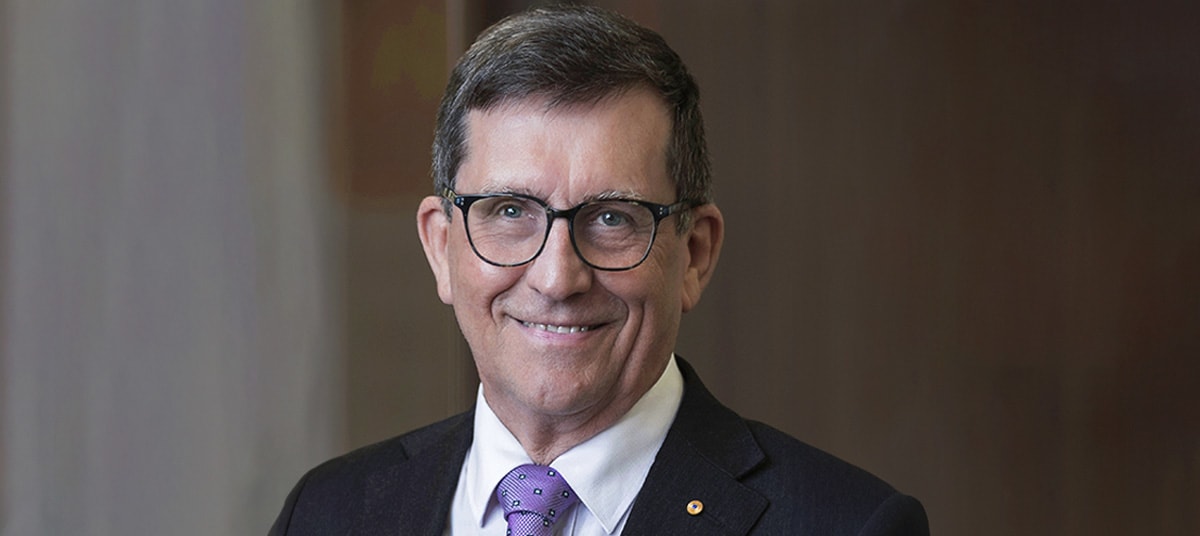
Outgoing Reserve Bank of Australia (RBA) Monetary Policy Board member Ian Harper AO has warned that inflation is likely to remain above target for several years and that “strong action” may be needed if long‑term expectations drift.
In a speech given at an event at the University of Melbourne hosted by CEDA, Harper began by stressing that the recent run‑up in prices could not simply be blamed on events in the Middle East.
“Inflation took off again back in the other direction, and all of that was before the Middle Eastern conflict, so we’re beginning to deal with a turnaround in inflation even before the Middle Eastern conflict,” Harper outlined.
“We’re talking about the output gap, aggregate demand and aggregate supply, so one or both of them changed. As it turns out, both of them changed. So aggregate demand starts to grow again, and on the supply side we see the re-emergence of domestic capacity constraints.”
Oil shock amplifies price and growth risks
Turning to the Middle East conflict and the resulting spike in global oil prices, Harper explained that the shock was now layering on top of those pre‑existing pressures.
“Then comes the Middle Eastern conflict. Well, what does that do for inflation? Well, the direct effect of fuel price increases is fairly clear, since fuel comprises three and a half per cent of the CPI basket, so you know what that’s going to do to the headline,” he said.
The RBA monetary policy board member, who will conclude his tenure following his final RBA meeting in August, then focused on the broader, second‑round effects, which he said were more worrying.
“As these things work, the indirect effect, of course, shows inflation reverberating as the higher fuel prices then feed into a whole range of other activities,” Harper explained.
“It’s clear the higher fuel prices reduce household real incomes, and that’ll reduce consumption. Consumption is about 60 per cent of output, so you would expect that to start to slow, then the economy will start to slow in response to that as well.”
He also emphasised that softer spending and weaker investment would inevitably show up in the labour market.
“You slow output, of course, you’ll also slow labour demand, and so we expect as the economy slows, there will be a slowing of the labour market,” he noted.
‘Concerning’ signals from expectations
A large part of Harper’s message centred on inflation expectations, particularly market‑based measures over the next few years.
“But long-term inflation, for the first time in a long while, looks like it is now expected to be higher than it has been. In particular, the three-year market measure looks like it’s saying, well, over that period we expect to be outside the bank’s target range,” he said.
“So, inflation expectations are important, and the RBA pays very close attention to inflation expectations, and these results are concerning.”
Harper linked these expectations directly to the RBA’s published projections, which already imply a protracted return to the 2–3 per cent target band.
“You can see from the bank’s forecasts that we’re not expecting the underlying rate of inflation to be back into the target band until 2027 and not back to the midpoint until 2028,” he highlighted.
“We expect inflation to be with us for a while.”
He then spelt out what this meant for future decisions, making clear that any sign of expectations slipping would demand a rapid response.
“If there is a risk that long-term inflation expectations are becoming unanchored, then that requires strong action. The decision is made under uncertainty,” Harper said.
Harper then underlined both the limits and the responsibilities of monetary policy in this environment, drawing a line between what the board can and cannot control.
“Monetary policy can’t prevent the fuel price shock to inflation. There’s nothing we can do about that, but the Monetary Policy Board is charged with ensuring that those effects do not become embedded in the Australian economy,” he outlined.
[Related: RBA flags ageing, highly geared pockets in investor ranks]
Want to see more stories from trusted news sources?
Make The Adviser a preferred news source on Google.
Click here to add The Adviser as a preferred news source.