Broking businesses are being hit with unprecedented increases in compensation levies, with one reporting an $800,000-plus bill.
Credit licensees are facing a significant escalation in regulatory costs after the Australian Securities and Investments Commission (ASIC) revealed that the 2026–27 Compensation Scheme of Last Resort (CSLR) special levy rate had risen by 2,641 per cent year on year for credit representatives.
The regulator’s published rate has jumped from $5.72 to $156.81 per credit representative, with credit intermediaries collectively required to shoulder $7.79 million of the $170.26 million special levy.
The more than 27-fold increase has prompted renewed criticism from the broking industry’s two peak associations, with both questioning why businesses should absorb the financial consequences of misconduct elsewhere in the financial services industry.
The Mortgage and Finance Association of Australia (MFAA) told The Adviser that one business had reported receiving a bill exceeding $800,000.
The same business informed the association that it had never had a claim made against its professional indemnity insurance, with the MFAA advocating for available recovery avenues, including insurance, to be pursued to contain the costs borne by other industry participants.
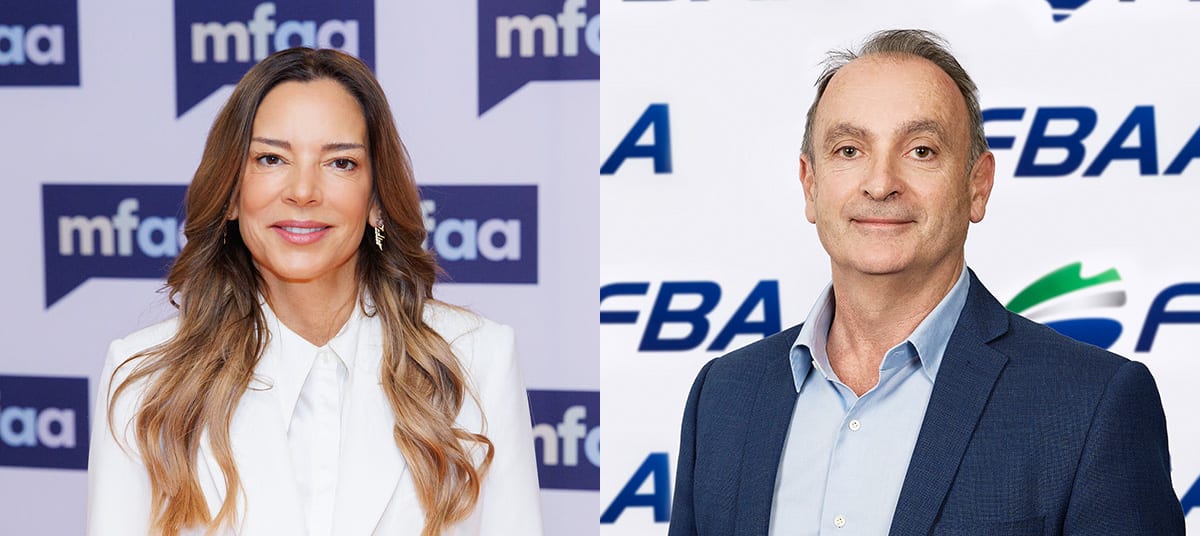
MFAA chief executive Anja Pannek questioned the justification for imposing such considerable financial obligations on a subsector that had not been substantively linked to the compensation shortfall.
“We are disappointed that mortgage and finance broking businesses are facing substantial bills under the Compensation Scheme of Last Resort (CSLR) when Treasury identified no substantive connection between the credit intermediary sector and the underlying losses,” Pannek said.
The $7.79 million impost is separate from the ordinary annual CSLR levy, with the scheme operator’s revised estimate placing credit intermediation’s regular funding obligations at approximately $2.1 million.
Pannek warned that the additional expense had arrived at a particularly challenging juncture for smaller operators.
“Most mortgage and finance broking businesses are small businesses. This levy adds to the cost pressures they are managing as they respond to policy and regulatory changes and help clients navigate higher interest rates,” she said.
How credit intermediaries inherited part of the shortfall
Having commenced operations in April 2024 following recommendations arising from the Hayne royal commission and Ramsay review, the CSLR compensates eligible consumers up to $150,000 when awards made by the Australian Financial Complaints Authority (AFCA) remain unpaid.
However, the financial fallout from failed investment schemes, including the Shield and First Guardian master funds, has placed considerable strain on the industry-funded compensation mechanism.
In July, the CSLR operator revised its funding estimate for 2026–27 to $198.1 million, with personal financial advice accounting for $190.3 million.
The subsector’s statutory annual levy ceiling of $20 million consequently left a funding gap of approximately $170.3 million.
Financial Services Minister Daniel Mulino unveiled a three-tiered waterfall funding arrangement in August, with Treasury commencing targeted consultation on its application on 21 September, before the minister determined the final allocations on 12 October.
Under the framework, the subsector generating the shortfall can face an additional charge of up to $20 million at Tier 1, while subsectors deemed sufficiently connected to the losses can each be required to contribute up to $40 million at Tier 2.
Despite this, the additional contribution from financial advice was set at $10 million, with responsible entities of managed investment schemes allocated $40 million.
The outstanding $120.26 million was distributed among 21 subsectors under Tier 3, with credit intermediaries accounting for 4.6 per cent of the entire special levy.
In its October representations to Treasury, the MFAA advocated exhausting the financial advice subsector’s additional $20 million capacity, reconsidering superannuation trustees’ connection to the Shield and First Guardian collapses, and disclosing more information about the basis for Tier 3 contributions.
“We raised concerns with Treasury about fairness, transparency and the impact on small businesses. Businesses should be able to see how their levy was calculated and understand why they are being asked to contribute,” Pannek said.
FBAA calls for fundamental overhaul of scheme funding
Finance Brokers Association of Australasia (FBAA) CEO Leo Gagic told The Adviser that the association had repeatedly petitioned the government over shortcomings in the scheme’s architecture and the prospect of compensation liabilities spilling into other subsectors.
“The FBAA has made three written submissions to Treasury in 2026 alone, consistently raising concerns about the structural flaws in the Compensation Scheme of Last Resort (CSLR), the lack of transparency in its funding model and the risk of unrelated financial services sectors being forced to fund shortfalls,” Gagic said.
“Despite these submissions, and our longstanding warnings, we remain deeply concerned about the direction the government is taking with the CSLR and the apparent lack of consideration given to alternative funding options.
“But consumer protection does not make it fair to continually shift the cost of failures in other parts of financial services onto mortgage and finance brokers.”
Gagic also cautioned against establishing a precedent whereby smaller broking operations could regularly find themselves exposed to mounting compensation expenses stemming from activity beyond their control.
“Any increase in the special levy is significant, particularly for small broking businesses. Brokers should not become the financial backstop for misconduct or regulatory failures they did not cause,” he said.
Gagic also challenged the premise that the benefits of maintaining consumer trust in financial services constituted sufficient grounds for allocating compensation costs across otherwise unrelated businesses.
“Our concern is with both the size of the increase and the methodology used to allocate it. The government’s rationale for spreading the special levy across consumer-facing financial services sectors is that they suggest those sectors collectively benefit from confidence in the financial system,” Gagic said.
“We do not believe that is, by itself, a sufficiently fair basis for determining who pays. The levy should more closely reflect where the losses and risks actually arise.”
Against this backdrop, Gagic advocated revisiting the scheme’s financing arrangements, including examining its administrative expenditure and the circumstances under which taxpayers, rather than industry alone, might contribute.
“The government should now fundamentally review the CSLR funding model. That means greater accountability for the sectors responsible for losses, stronger action against the bad actors creating claims, scrutiny of scheme and AFCA administration costs, and an appropriate government contribution where systemic or regulatory failures have contributed to the loss,” he said.
“The FBAA’s position is simple: protect consumers, pursue those responsible, and ensure those creating the risk bear the appropriate cost. Do not treat compliant brokers as a bottomless source of funding for failures elsewhere in financial services.”
[Related: MFAA demands Treasury explain broker CSLR levy surge]
Want to see more stories from trusted news sources?
Make The Adviser a preferred news source on Google.
Click here to add The Adviser as a preferred news source.