Overseas brokers are reaching well beyond mortgages, exposing a contrast with Australia’s more specialised model, new research has revealed.
Australian mortgage brokers offer a narrower range of services than advisers in several overseas markets, according to the Mortgage and Finance Association of Australia’s (MFAA) new Global Insights Report 2026, which examined international broking models.
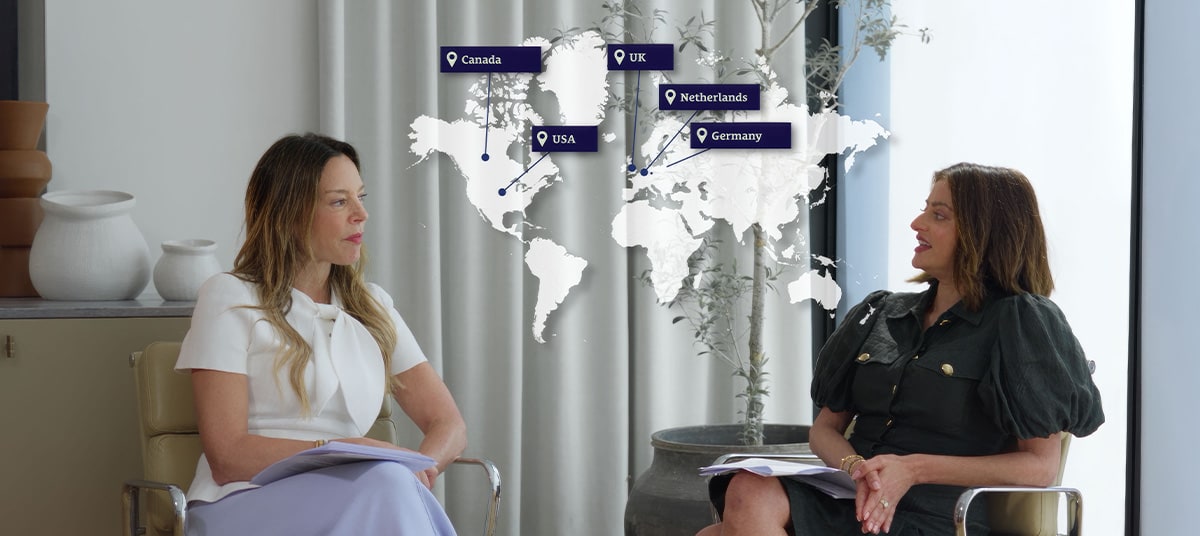
The association’s first international research exercise examined the United States, Canada, the United Kingdom, the Netherlands and Germany, selected for their established or developing broker markets.
The research drew on more than 30 stakeholders across 15 organisations, including regulators in the US, UK and the Netherlands.
Overseas advice reaches beyond the mortgage
The MFAA found that overseas brokers often operated under regulatory frameworks that positioned them as mortgage advisers rather than providers of credit assistance.
“Perhaps the most significant observation from the research was the extent to which mortgage brokers in overseas markets are regulated and operate as mortgage advisers rather than providing the equivalent of credit assistance in Australia,” the association said.
It outlined that in the UK and the Netherlands, for example, regulation and customer expectations supported an advisory role encompassing financial needs well beyond the loan.
“In the United Kingdom and Netherlands in particular, the language of ‘mortgage advice’ is deeply embedded within both regulatory frameworks and consumer expectations,” the report said.
“Mortgage advisers frequently provide guidance extending beyond the mortgage transaction itself, including insurance, protection products, retirement planning and broader financial considerations.”
The report further outlined that brokers in Canada and Germany work within businesses offering broader financial services, contrasting with Australia’s more limited professional boundaries.
“Similar trends are evident in Canada and Germany, where many mortgage advisers operate within broader financial services businesses,” the MFAA said.
“Australia remains somewhat unique in maintaining a relatively specialised mortgage broking model, with a stronger distinction between mortgage advice and broader financial advice.”
The association added that overseas trends could inform Australia’s direction as consumers increasingly seek help interpreting their options, rather than simply accessing finance.
“While Australia’s regulatory environment differs from many overseas markets, the underlying trend is relevant. Consumers increasingly seek guidance, interpretation and support rather than simple access to products,” it said.
“This suggests the long-term value proposition for Australian mortgage brokers could be linked to broader advice, in conjunction with client advocacy and trusted relationships rather than transaction execution alone.”
Different reforms shaped different markets
Those differences sit against contrasting regulatory histories, with the research finding that authorities generally introduced major changes following financial upheaval or consumer harm.
“While each jurisdiction has adopted a different regulatory framework, a common theme emerged throughout the research: major regulatory reforms have almost always been triggered by periods of market disruption, financial crisis or consumer harm,” the MFAA said.
The report identified the global financial crisis (GFC) as the principal international catalyst, particularly in the US and the UK, while in the Netherlands, concerns about commission-led distribution and consumer detriment prompted sweeping remuneration and advice reforms.
Against those interventions, the MFAA described Australia’s regulatory development as more gradual and less reactive.
“Australia’s reforms have been more evolutionary, with responsible lending obligations, remuneration reforms and the best interests duty progressively strengthening the regulatory framework,” it said.
Sophisticated fraud tests traditional controls
Separately, stakeholders reported complex fraud mortgage methods, with income manipulation and falsified documents persisting alongside increasingly sophisticated methods involving synthetic identities, organised criminal networks and digitally altered records.
Concerns also extended beyond individual applications to coordinated activity across property transactions, prompting greater emphasis on shared data and intelligence as established detection methods come under pressure.
“Several jurisdictions reported concerns regarding coordinated fraud involving multiple participants across the property transaction process,” the report said.
“Importantly, many stakeholders noted that fraud is becoming harder to detect through traditional controls alone. As a result, greater emphasis is being placed on data sharing, behavioural analytics and collaborative intelligence frameworks.”
[Related: Australia’s broking trail commissions ‘unusual’ by global standards]
Want to see more stories from trusted news sources?
Make The Adviser a preferred news source on Google.
Click here to add The Adviser as a preferred news source.