The federal government has substantially revised its proposed minimum-tax regime for discretionary trusts, unveiling a raft of changes and concessions.
The Albanese government has significantly modified its proposed minimum-tax policy for discretionary trusts, offering existing family businesses an election to retain their trust structure through fixed distributions rather than undertake a potentially costly restructure.
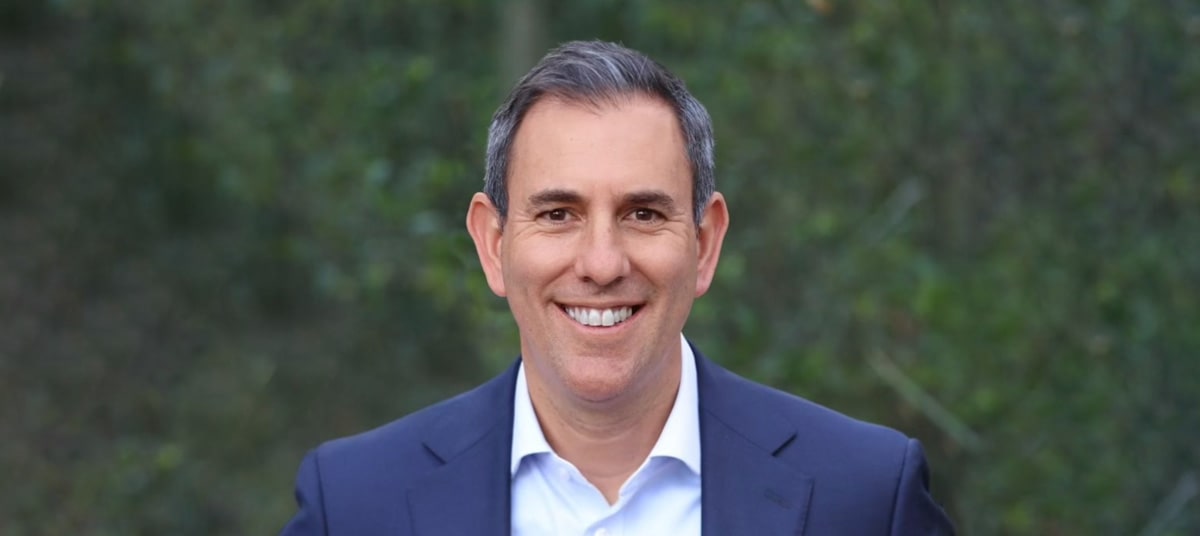
The exposure draft legislation, released by Treasurer Jim Chalmers on Thursday (3 September), responds to widespread concern from small-business groups and broker bodies that the initial plan would force hundreds of thousands of businesses operating through discretionary trusts to reorganise their affairs and potentially incur state stamp duty.
Under the revised proposal, discretionary trusts in existence on 1 July 2028 would be able to elect into a new tax arrangement that allows distributions to be made at fixed percentages to prenominated beneficiaries.
Those beneficiaries could include individuals, companies, and eligible trusts.
Income distributed under the election would be taxed in the hands of the recipient at the applicable individual marginal tax rate or company tax rate, rather than attracting the proposed minimum 30 per cent treatment.
“As an alternative to restructuring, discretionary trusts that exist as at July 1, 2028, will be able to elect into a new regime for tax purposes,” the draft papers said.
“These trusts will be able to choose to make fixed distributions to pre-nominated beneficiaries, and not have the minimum tax apply as a result.”
The original proposal had drawn backlash from the Mortgage & Finance Association of Australia (MFAA) and the Commercial & Asset Finance Brokers Association (CAFBA), which warned small and medium broker businesses operating through trusts could face complex and expensive restructures.
The associations said that a restructure could involve transfer-duty exposure at a state or territory level, alongside hefty legal, accounting, valuation, and administrative costs.
They added that it could also require broker businesses to revisit ownership arrangements, asset security, and existing lending documentation.
The Commonwealth has also proposed three years of rollover relief for certain capital gains tax and income-tax consequences of a restructure.
Fixed beneficiaries, fixed trade-off
Chalmers said that the election was designed to offer certainty without requiring trusts to transfer assets or change legal ownership, with the draft exposure papers noting that trustees would be able to nominate a broad group of eligible recipients at the outset.
“Trustees will be able to nominate individuals and entities that are capable of benefiting under the trust at 1 July 2028, including eligible companies and trusts, with no limit on the number of beneficiaries that can be nominated,” the draft papers said.
“The election would not require a restructure and is not expected to result in state and territory stamp duties.”
The proposed rules would permit nominated beneficiaries to be added or changed only in limited circumstances, including the death of a beneficiary or a family breakdown.
A trustee could revoke the election, while an election would also be automatically revoked if a trust made distributions “inconsistent with the election”.
If an election is revoked or breached, the trust’s taxable income for that year would be subject to the top marginal tax rate plus the Medicare levy.
COSBOA welcomes shift, flags penalty
The Council of Small Business Organisations Australia (COSBOA) said the exposure draft was an improvement on the government’s original proposal, although it maintained that the wider policy design remained problematic.
“For businesses that can maintain fixed distributions, this provides a pathway to continue operating through their existing trust structure without being subject to the minimum 30 per cent tax treatment,” COSBOA CEO Skye Cappuccio said.
“For a mum-and-dad business, that could mean avoiding a higher tax burden without having to restructure an established trust arrangement they have used to operate their business for many years.”
Yet COSBOA warned that the fixed-distribution election could limit succession planning and a family business’s ability to respond to changing circumstances.
“But there is still a trade-off. Businesses choosing this pathway may retain their existing structure and tax treatment, but they will give up some of the flexibility over distributions that is an important feature of discretionary trusts. That flexibility is particularly important to succession planning in family trusts,” Cappuccio said.
“We are also concerned that, under the draft legislation, if a trust revokes its election, its taxable income for that year would be taxed at the highest marginal rate plus the Medicare levy, rather than immediately returning to the minimum 30 per cent tax treatment.
“This is unnecessarily punitive and does not reflect the realities of family businesses, which can change and evolve over time. We call on the Government to amend this approach before the legislation goes ahead.”
Consultation on the exposure draft legislation is open until 18 September.
[Related: Associations warn trust changes will significantly impact brokers]
Want to see more stories from trusted news sources?
Make The Adviser a preferred news source on Google.
Click here to add The Adviser as a preferred news source.