Major banks are split on the cash-rate outlook moving forward as inflation risks reshape expectations.
Westpac has joined Australia and New Zealand Banking Group (ANZ) in forecasting that the Reserve Bank of Australia (RBA) will lift the cash rate again in November, as renewed inflation concerns and a unanimous September decision raise the prospect of a fifth rate increase this year.
The major bank’s revised call came after the RBA Monetary Policy Board lifted the cash rate by 25 basis points to 4.60 per cent on Tuesday (29 September), extending the tightening cycle that began in February and taking the benchmark rate to its highest level since November 2011.
RBA governor Michele Bullock described the 4.60 per cent cash rate as “restrictive” following the decision, but said further increases remained possible.
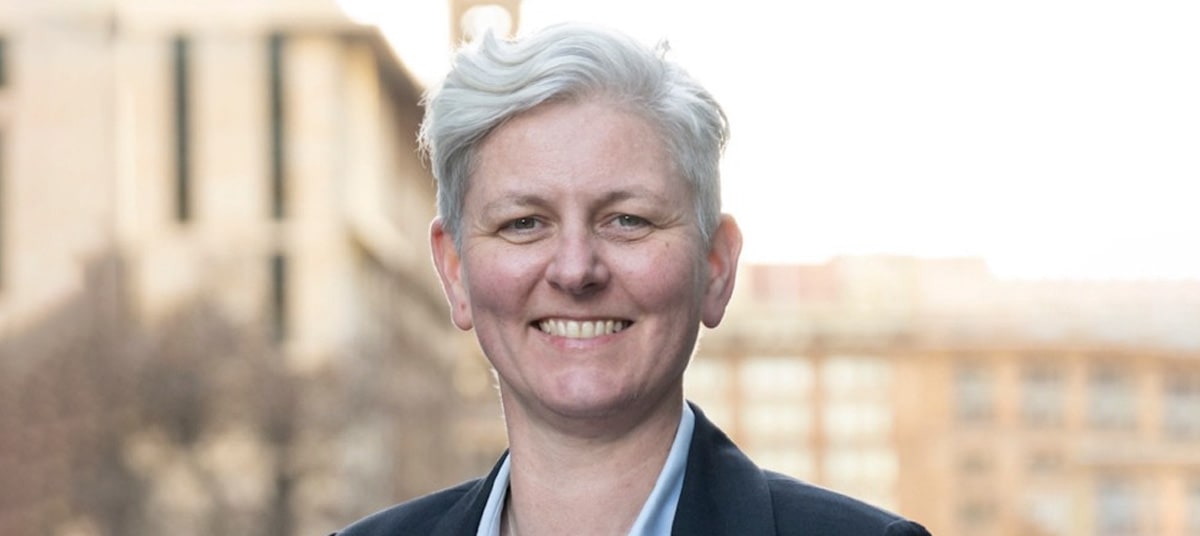
Westpac chief economist Luci Ellis said the board’s language and the unanimous vote had lowered the hurdle for another move at the November meeting.
“The bar for a follow-up hike in November is low. Indeed, judging by today’s rhetoric, a November hike is now the base case, absent a lasting resolution of the Middle East conflict beforehand, or some other event that significantly lowers the outlook for energy-related costs in Australia,” Ellis said.
“The bar for hikes beyond that is much higher, given the cumulative rise in interest rates, and noting that the labour market is easing, and the housing market will likely weaken further.”
Ellis also said that the unanimity of Tuesday’s decision provided a further clue as to how seriously the board viewed the inflation threat.
“The decision was unanimous, suggesting that any qualms external MPB members might have had about the RBA’s downbeat view of supply capacity were overruled by resurgent oil prices and the stronger than forecast CPI and GDP data,” she explained.
Westpac’s forecast brings it into line with ANZ, which already expected the RBA to deliver a further 25-basis-point increase in November.
Inflation keeps pressure on RBA
The latest inflation figures have added urgency to the debate over whether policy is already restrictive enough to return inflation to target.
Australian Bureau of Statistics data released on Wednesday showed that headline CPI inflation had increased to 4 per cent in the 12 months to August, up from 3.5 per cent in the year to July.
However, underlying inflation remained more stable, with annual trimmed mean inflation, the measure most closely watched by the RBA, holding at 3.6 per cent for the third consecutive month.
ANZ said the August result appeared marginally softer at face value, but added that the components of the release and expected September outcomes still pointed to a stronger-than-forecast quarterly underlying inflation outcome.
“Trimmed mean inflation came in slightly lower than expected in August, printing at 0.2 per cent m/m (0.24 per cent to two decimal places). However, when we examine the detail of the release and the likely outcomes for September, the August CPI is consistent with our existing forecast for Q3 trimmed mean inflation to come in at 1 per cent q/q,” ANZ said.
The bank said such a result would be materially stronger than the RBA had anticipated in its August Statement on Monetary Policy and would increase the chance of another rise.
“We’d view such a quarterly number as being a material upside surprise relative to the forecasts in the RBA’s August Statement on Monetary Policy. And so we still think another rate hike at the November meeting, taking the cash rate to 4.85%, is more likely than not,” the bank said.
CBA and NAB retain conditional calls
Meanwhile, the Commonwealth Bank of Australia (CBA) and National Australia Bank (NAB) are yet to shift their formal peak-rate forecasts to 4.85 per cent, although both acknowledge that the balance of risks has become more hawkish.
“We expect rates to stay on hold in the near term, but with risks tilting towards a November hike,” CBA said.
The bank added that the RBA appeared willing to assess the effect of the increases already delivered.
“The RBA’s posture on Tuesday reaffirms our expectation that rates will remain on hold until mid-2027. The Board appears open to seeing how the economy responds to rate hikes, but will have little tolerance for further upside surprises,” CBA said.
“We have previously highlighted that a large upside surprise to inflation could trigger a follow-up rate hike.”
NAB, meanwhile, continues to forecast that the cash rate will peak at 4.60 per cent, but said the central issue was whether the RBA had moved away from its incremental, data-dependent approach.
“Effectively, putting additional hikes in the forecast is a call on whether the RBA’s reaction function has changed. Commentary from the Governor in the press conference suggests that the strategy of fine-tuning has been retained for now, assuming inflation expectations remain well-behaved,” NAB said.
“As such, it is possible that with financial conditions now tighter, officials will be content to watch for a while and only react if more bad news is received on the inflation front.”
NAB said the increasingly restrictive policy setting meant the board would face a higher threshold for every subsequent rate decision.
“It is important to note that with policy now considered restrictive (or close to) by the Monetary Policy Board, each decision to hike from here is, by definition, a tougher call,” NAB said.
“Moreover, our forecasts as they stand today – cash rate peaking at 4.6 per cent, core inflation in the target band by end 2027 – will see the real cash rate at ~1% or higher for the next 12–18 months.”
[Related: Rate hikes erase price-fall borrowing gains]
Want to see more stories from trusted news sources?
Make The Adviser a preferred news source on Google.
Click here to add The Adviser as a preferred news source.