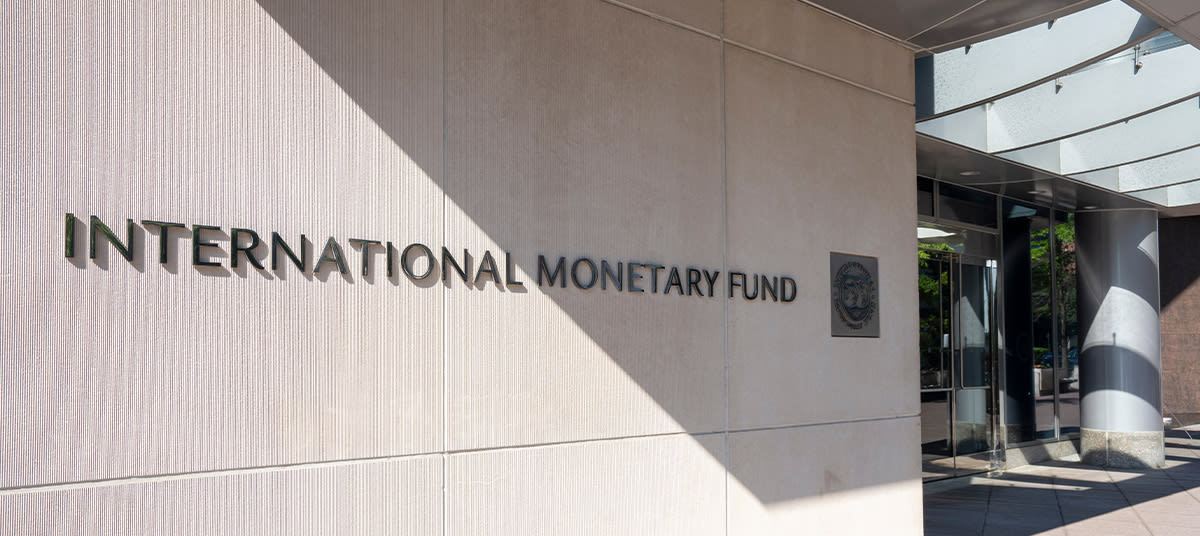
The IMF has urged the RBA to remain prepared to lift interest rates while backing further housing tax and supply reforms.
The International Monetary Fund (IMF) has urged the Reserve Bank of Australia (RBA) to remain prepared to lift interest rates if inflation pressures persist, while backing further tax and supply reforms to tackle persistent housing affordability constraints.
In its preliminary assessment of the Australian economy released on Thursday (17 September), the Washington-based lender said inflation remained the immediate policy challenge.
The IMF noted that the RBA should not ease monetary policy until there was convincing evidence that underlying inflation was on a sustained downward path.
“Inflation remains a central challenge, while weak productivity growth is weighing on the economy’s potential,” it said.
“There is a risk that further large increases in global energy prices lead to stronger second-round effects and lift inflation expectations, warranting further tightening.”
It added that any eventual shift towards lower rates should depend on the durability of progress in the inflation fight, rather than on a short-term improvement in headline price measures.
“Any future cuts must be contingent on sustained progress in reducing underlying inflation,” the report said.
The assessment adds weight to expectations that the central bank may need to keep monetary conditions restrictive for longer.
Markets are pricing in a 76 per cent chance of the cash rate reaching 4.6 per cent at the RBA’s September board meeting, a 15-year high, while all four major banks anticipate at least one further increase before year end.
The report arrived after the US Federal Reserve unanimously lifted its benchmark rate by 25 basis points to a 3.75–4 per cent range, citing “elevated” inflation and adding that the move would support a “timelier return” to its 2 per cent target.
Tax reform and supply challenge
The IMF also used its review to weigh in on the federal government’s housing tax changes, saying reforms affecting capital gains tax and negative gearing could reduce market distortions.
Yet it added that the policy needed to be implemented carefully to avoid excessive costs and unintended pressure on investment.
“Recent changes to capital gains taxation and negative gearing can reduce housing-related distortions, but continued efforts to minimise compliance costs and impact on investment are needed during implementation,” the IMF said.
“While housing market weakness has broadened across regions and price segments, the correction follows a period of strong price growth and has not materially eased affordability pressures, as supply remains constrained.”
It welcomed planning and zoning reforms underway in several states, yet said governments would need to co-ordinate more closely across planning and construction to convert policy changes into completed homes.
“A more ambitious and co-ordinated supply agenda is needed. Recent planning and zoning reforms across several states, including measures to support higher-density development, and improvements in approvals are encouraging,” the report said.
“Further efforts are needed to advance infrastructure provision, improve productivity in the construction sector, and strengthen co-ordination with state and local governments to accelerate housing delivery.”
Broader reform call
Beyond the May budget measures affecting capital gains, negative gearing, and discretionary trusts, the IMF renewed its call for a modernised tax system.
“Further reforms to modernise and simplify the tax system would help support economic growth, equity, and fiscal sustainability,” the IMF said.
Its options included replacing stamp duties with recurrent property taxes, broadening the consumption-tax base, and reducing dependence on income taxes.
[Related: RBA concerned rising oil prices could fuel inflation surge]
Want to see more stories from trusted news sources?
Make The Adviser a preferred news source on Google.
Click here to add The Adviser as a preferred news source.