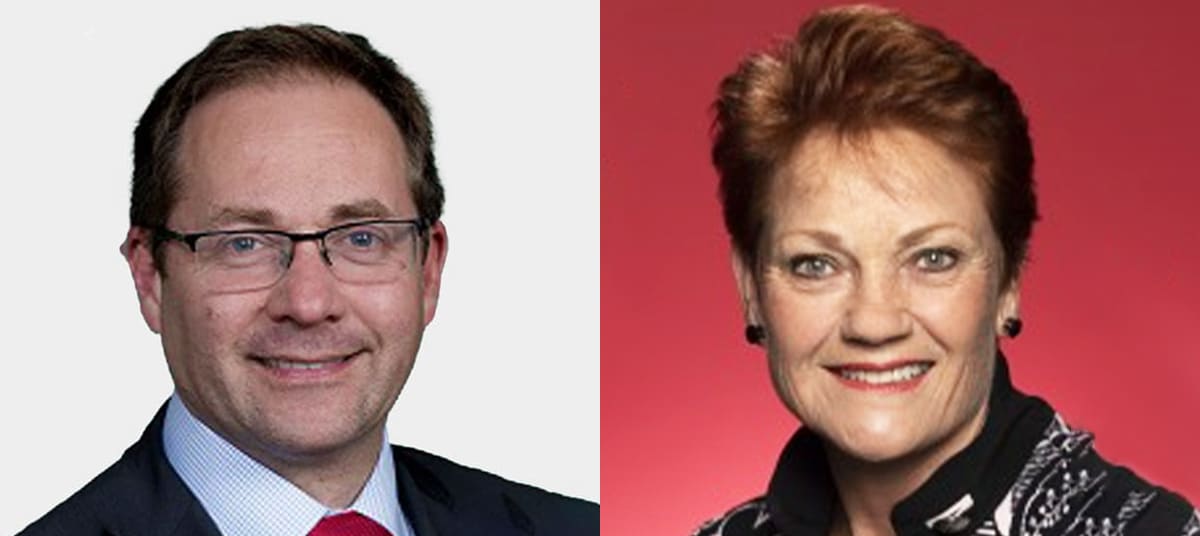
Critics have warned that the minor party’s policy to allow mortgagors to directly receive superannuation payments could sacrifice retirement savings while adding fresh pressure to household inflation.
One Nation’s plan to allow eligible occupier mortgage holders and renters to redirect part of their compulsory superannuation into take-home pay has been slammed, with critics warning that it could leave Australians worse off in retirement and fuel inflation.
The minor party has proposed allowing Australians who rent or are paying down a mortgage on their principal residence to divert 3 percentage points of their 12 per cent superannuation guarantee contributions into a nominated bank account for up to three years.
Under the opt-in policy, a participating worker would retain 9 per cent of their salary contribution in super, while the remaining 3 per cent would be paid by their super fund as tax-advantaged cash.
The proposal would not permit access to existing super balances and would exclude investment-property owners.
One Nation said a husband, wife, or partner who genuinely contributed to a household’s rent or mortgage would be eligible even if they were not named on the tenancy agreement or home loan.
Super funds would be charged with checking the member’s housing eligibility, paying the funds into their bank account, and recording use of the maximum 36-month entitlement.
The policy would carry no restriction on the eventual use of the money.
For a full-time worker earning around $90,500, One Nation leader Pauline Hanson said the measure would deliver about $2,300 extra in annual after-tax income, equivalent to approximately $44 a week.
For a working couple on a combined income of $168,000, Hanson said the policy would return about $4,300 a year after tax, or around $82 a week.
Inflation concerns emerge as minister warns of retirement hit
Judo Bank’s chief economist Warren Hogan said the policy could provide short-term household relief, but noted that directing additional funds into consumer bank accounts would work against efforts to lower inflation.
“There is no example in recorded history of us effectively getting our cost-of-living issues under control with more spending,” he said.
“It ultimately makes the problem worse. We need to bring demand in the economy down to take pressure off the supply side in our economy to allow price pressures to ease.”
Meanwhile, Financial Services Minister Daniel Mulino said One Nation’s proposal would reverse decades of policy designed to build adequate retirement savings.
“This is a serious unwinding of our super system, which is one of the best retirement income systems in the world,” he said.
“We took decades to get to 12 per cent and what One Nation is proposing here is to unwind that in a serious way. They’re going to take us back decades in terms of how superannuation provides for security and dignity in retirement.”
He pointed to Super Members Council modelling that found that a 30-year-old on the median income could have $25,000 less at retirement, while a couple could be $50,000 worse off.
“It’s very clear that One Nation hasn’t modelled the impact that it will have on people’s ultimate balances,” Mulino said.
Super sector rebukes proposal
Association of Superannuation Funds of Australia (ASFA) CEO Mary Delahunty meanwhile described the proposal as a flawed response to structural housing and cost-of-living problems.
“One Nation’s policy to allow people to access their super to help with their living costs would be economically disastrous,” she said.
“This policy would push up inflation and make people poorer in retirement. It’s as simple as that.”
The ASFA chief said workers should not be asked to use their own retirement savings to compensate for policy failures in housing supply and living costs.
“It is unfair to ask everyday working Australians to sacrifice their retirement savings to fix policy problems they didn’t cause, like inflation and the housing crisis,” Delahunty said.
“These problems need real policy solutions that build more houses and lower the cost of living, not unimaginative ones that make everything more expensive and force Australians to be more dependent on Centrelink in retirement.”
Coalition considers other models
The announcement has reignited debate about whether super can play a larger role in supporting home ownership, with shadow housing minister Andrew Bragg stating that the Coalition was examining several possible models.
“Mortgage offsets, collateral arrangements, cashout measures. These are all things that have been looked at in the past by the Senate,” he said.
“There are plusses and minuses on all of these models. But I think it’s a good debate to have because we want to be giving Australians the best chance that we can to live in a house that they own.”
Bragg confirmed those ideas were being considered by the Coalition, noting that “these policies are under review by the party”.
Mulino said the debate should instead focus on structural reform to housing supply and tax settings.
“Andrew Bragg and the opposition and One Nation are the defenders of the status quo when it comes to the housing system, and not changing tax settings which have created huge distortions,” he said.
“We’ve seen house prices double relative to incomes over the last 20 years, we’re doing something about that, and the opposition are defending the status quo.”
[Related: Help to Buy demand set to outstrip annual places]
Want to see more stories from trusted news sources?
Make The Adviser a preferred news source on Google.
Click here to add The Adviser as a preferred news source.