Australia’s regional housing markets are losing momentum as the broader downturn in prices reaches beyond the capitals.
Cotality has found that dwelling values across regional Australia slipped 0.1 per cent in the three months to July, signalling that the national housing downturn is increasingly reaching markets that had continued to outperform the capitals.
The quarterly result remained substantially stronger than the 2.5 per cent decline recorded across the combined capitals, but Cotality noted that the slowdown was widespread.
Of Australia’s 50 largest regional Significant Urban Areas, 47 recorded slower value growth than in the previous quarter, while 22 saw dwelling values fall.
Cotality Australia head of research Gerard Burg said the figures showed that regional areas were becoming increasingly exposed to the same softer conditions affecting the national market.
“Regional markets have consistently outperformed the capital cities since housing conditions began to soften in late 2025, but even the regional markets are now being impacted by the broader market slowdown,” Burg said.
“Relative affordability continues to attract buyers to many regional markets and support internal migration from the capitals. However, softer buyer demand is becoming more evident across the country, with fewer markets recording the strong growth seen earlier this year.”
WA and SA retain growth lead
Regional Western Australia and South Australia were the strongest-performing state markets over the quarter, with dwelling values rising 2.1 per cent in each area.
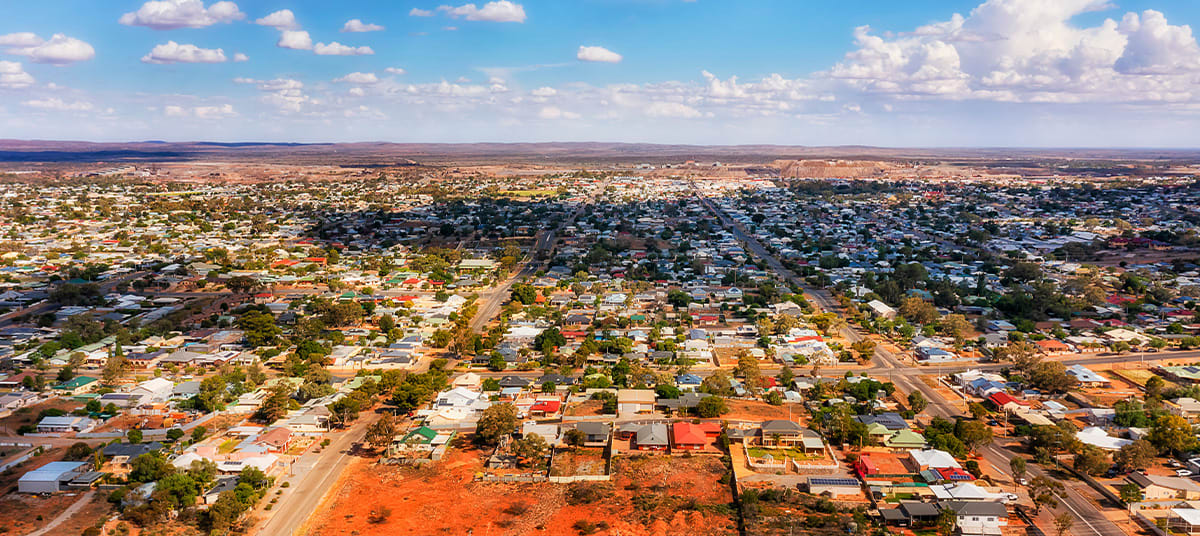
Port Pirie posted the largest quarterly gain in South Australia, up 6.7 per cent, while Kalgoorlie–Boulder rose 6.4 per cent, and Geraldton increased 3.8 per cent in Western Australia.
Burg said Western Australia’s growth profile was shifting away from areas that had led the earlier upswing and added that buyers were responding strongly to the combination of local economic activity and lower price points.
“Growth across Western Australia remains the strongest in the country as markets with buoyant local economies and relatively affordable housing markets are proving more resilient as buyer demand becomes increasingly selective,” he said.
“We’re no longer seeing growth concentrated in the lifestyle markets that benefited most from spillover demand we saw during the market’s prolonged upswing. Instead, buyers are gravitating towards regional centres where their dollar stretches further and local demand is supporting housing values.”
Qld’s split market emerges
Regional Queensland was flat over the three months to July, with declines across the state’s south-east markets recorded for the first time since early 2023.
The Gold Coast fell 0.8 per cent, Sunshine Coast values declined 0.5 per cent, and Cairns dropped 0.6 per cent.
Those results outweighed gains in Maryborough, up 2 per cent; Gladstone, which rose 1.6 per cent; and Townsville, up 1.2 per cent over the quarter.
Burg said Queensland’s results showed that the state’s formerly broad regional strength was giving way to a more selective market.
“Queensland has been one of Australia’s standout regional performers over the past few years, but we’re starting to see a more selective market emerge. As higher-value markets lose momentum and buyers become more cautious, we’re seeing demand swing to more relatively affordable regional centres,” Burg said.
“Higher interest rates have reduced borrowing capacity and buyers are more price sensitive so they’re looking for value areas, which has supported demand in regional centres such as Maryborough, Gladstone and Townsville.”
NSW and Victoria weakest
Regional NSW and Victoria recorded the weakest conditions nationally, reflecting softer housing-market conditions in Sydney and Melbourne.
In NSW, Coffs Harbour fell 3.3 per cent over the quarter; followed by Goulburn, down 3.2 per cent; and Nelson Bay, down 3 per cent.
In Victoria, Warragul–Drouin declined 1.5 per cent, and Geelong fell 1.2 per cent.
However, some inland centres continued to record growth, with Dubbo rising 3.9 per cent, Tamworth increasing by 2.2 per cent, and Albury–Wodonga gaining 2 per cent.
The regional results follow Cotality’s July Home Value Index, which showed that national dwelling values fell 0.7 per cent over the month – the largest monthly decline since December 2022.
Sydney recorded the sharpest July fall, down 1.4 per cent; followed by Melbourne, down 1.2 per cent; while Brisbane fell 0.6 per cent; and Adelaide declined 0.2 per cent.
[Related: Number of FHBs with 5% deposit loans in negative equity revealed]
Want to see more stories from trusted news sources?
Make The Adviser a preferred news source on Google.
Click here to add The Adviser as a preferred news source.