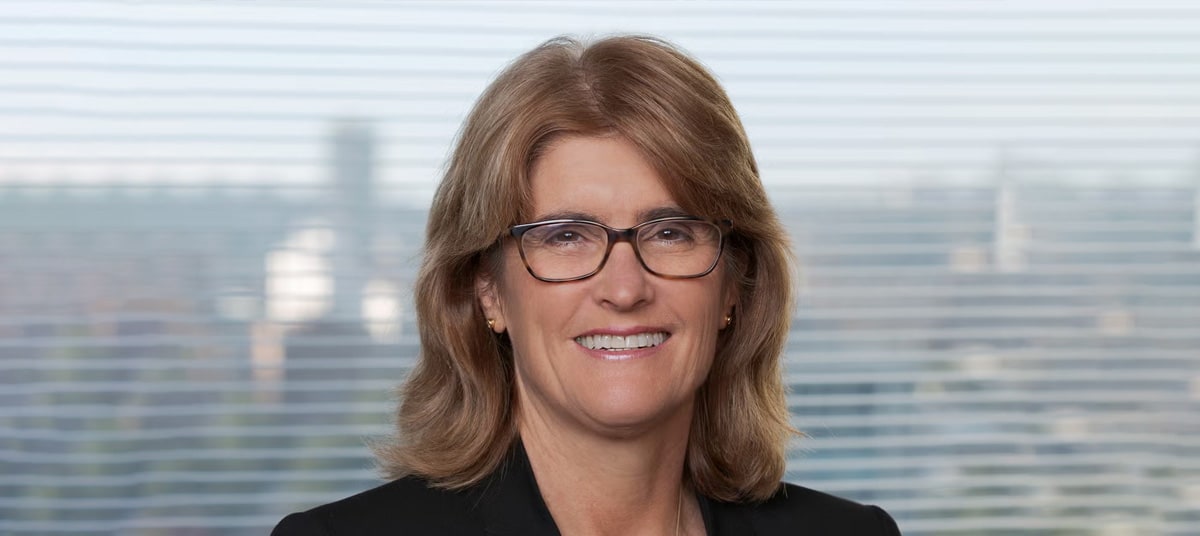
The RBA’s unanimous decision to hold the cash rate steady has not removed the prospect of further tightening, the governor has signalled.
Reserve Bank of Australia (RBA) governor Michele Bullock has warned that she personally believes another interest rate increase remains “quite possible”, despite the Monetary Policy Board unanimously holding the cash rate at 4.35 per cent at its August meeting on Tuesday (11 August).
The central bank left rates unchanged after considering only two options: another increase or a hold, with Bullock making clear that a cut was not on the table.
Speaking at a press conference in Sydney after the decision, Bullock said the economic adjustment needed to restore price stability would not be painless.
“We expect that a period of subdued growth in the economy will be required to bring inflation down sustainably,” she said.
“I think personally, it’s quite possible we might need to go, we think the risks are skewed to the upside.
“We’ve decided to wait for more information, but it’s still front of mind,” Bullock said and referred to the prospect of further rate rises.
Hike remains a live option
Bullock stressed that the board would act if it judged that inflation was likely to remain above target for longer than its current forecasts suggest.
“The board will raise interest rates further if that is what is required to bring inflation down in a timely way. The board will be closely watching for evidence of upside risks to inflation materialising,” she said.
The board’s updated forecasts see inflation returning to around the middle of the 2–3 per cent target range by the end of 2027.
“The forecasts do see inflation coming back down to around about the middle of the band by the end of 2027. But the forecasts are uncertain,” Bullock said.
The RBA’s latest hold follows three rate increases earlier this year, with Bullock indicating that their full effects were yet to filter through to households, businesses, and the economy.
“The three interest rate rises at the beginning of the year: there’s still more to go on those, so we think we are seeing some signs of slowing,” she said.
Bullock said that the current official cash rate of 4.35 per cent was constraining activity, albeit alongside other forces affecting the economy.
“We certainly do think it’s restrictive, a bit restrictive,” she said.
No cut considered
The governor also sought to shut down any suggestion that the board had begun considering a reversal in policy, confirming that members did not discuss lowering the cash rate.
“Before anyone asks, no, the board did not discuss an interest rate cut at this meeting. It only discussed a raise and a stay,” she said.
She revealed that the case for further tightening centred on inflation risks rather than a deterioration in the domestic growth outlook.
“The arguments in favour of a hike really are the fact that inflation is still too elevated and we have got upside risks potentially if this conflict continues to go on in the Middle East,” she said.
“The longer it goes on [the Middle East conflict], the more likely businesses are to embed cost increases into their prices, put the prices up.”
She added that the board believed inflationary pressures stemming from the conflict were yet to flow through the economy.
“We have seen a bit of flow through, but we actually think there’s a risk that there’s more to come,” she said.
Housing downturn not ‘the main game’, says Bullock
While higher rates are closely watched across the property market, Bullock said a housing downturn was not the central factor determining the bank’s policy decisions.
“The main game here for us is excess capacity, tight labour market, particularly in some areas like construction, the Middle East conflict, the AI boom – these are all the things that are front of mind in terms of risks, the inflation outlook,” she said.
She said the board was monitoring housing conditions and potential spillovers into the broader economy, but made clear that policy would be set by its inflation mandate.
On private credit, Bullock struck a more measured tone, with the governor noting that the issue was not a major immediate concern for the RBA, but added that limited visibility over leverage and exposures created uncertainty.
“I don’t think there is a massive worry about it. I think the concern is that there’s very little data on it. People don’t know where the leverage is, they don’t know who is exposed, any time there’s a bit of unknown, that just makes people worried,” she said.
Bullock added that Australia’s financial system remained heavily intermediated, and private credit was still small relative to the formal financial sector, while noting that ASIC was examining the area.
[Related: RBA reveals latest cash rate decision]
Want to see more stories from trusted news sources?
Make The Adviser a preferred news source on Google.
Click here to add The Adviser as a preferred news source.