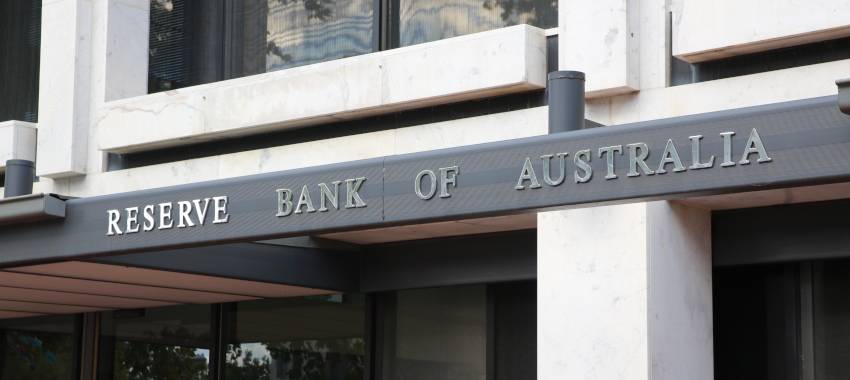
Softer inflation figures have shifted the outlook ahead of the Reserve Bank’s closely watched August policy meeting.
Australia’s four major banks expect the Reserve Bank of Australia (RBA) to leave the cash rate on hold at 4.35 per cent at its August meeting, with softer-than-expected June inflation figures prompting Westpac to replace its prediction of two further increases this year with an extended hold position.
Westpac was previously forecasting 25-basis-point rises in August and September, while Australia and New Zealand Banking Group (ANZ), the Commonwealth Bank of Australia (CBA), and National Australia Bank (NAB) were already anticipating an extended pause – meaning the big four are now aligned in forecasting no further moves in 2026.
The shift followed June’s monthly consumer price index, which showed annual headline inflation easing to 3.8 per cent from 4 per cent in May.
The outcome was below both market expectations and the RBA’s forecast, while the monthly CPI measure declined 0.1 per cent in original and seasonally adjusted terms.
Westpac chief economist Luci Ellis said the inflation outcome had been less concerning than both the bank and the RBA had initially anticipated, removing the case for further near-term tightening.
“We no longer expect rate hikes by the RBA this year. Inflation has been more benign than we feared and the RBA forecast,” Ellis said.
“The substantial pass-through of higher energy costs seen in the early phase of the Middle East conflict has not been followed up in recent months.
“This is welcome – we took no pleasure in our prior hawkish view on pass-through, and so monetary policy.”
CBA also said the June result suggested higher input costs were not translating broadly into consumer prices.
“The inflation data supports our view that the RBA will remain on hold through the rest of 2026,” CBA said.
“Today’s softer result provides some reassurance that higher input costs are not passing through broadly and that inflation may be improving slightly faster than our forecasts.”
Financial markets are similarly confident of an August pause: as at 6 August, the ASX 30-Day Interbank Cash Rate Futures contract for August was trading at 95.65, implying a 100 per cent probability that the RBA would keep rates unchanged.
Core inflation remains elevated, and jobs data complicates outlook
Despite the moderation in headline CPI, the RBA’s preferred trimmed mean measure remained at 3.6 per cent over the year to June, unchanged from May and still above the bank’s 2–3 per cent target range.
Further, employment data released on 23 July showed employment increased by a stronger-than-expected 76,000 in June to 14.74 million people in seasonally adjusted terms.
While the big four did not alter their cash-rate forecasts after the employment release, the figures point to continued resilience in the labour market at a time when the RBA is assessing whether demand is slowing sufficiently to return inflation to target.
ANZ said the combined inflation and labour-market picture supported a hold, but cautioned that the Monetary Policy Board was likely to preserve its option to raise rates again.
“We expect the RBA to leave the cash rate at 4.35 per cent at its August meeting and for there to be no more rate hikes this year,” the bank said.
“Relative to the RBA’s May forecasts, inflation has been a little weaker than expected while the unemployment rate has been a little higher. Those developments support an on-hold decision, although we expect the Board to retain a hawkish bias and keep open the possibility of further tightening.”
NAB said the June-quarter CPI data did not capture more recent developments, with fresh cost pressures emerging even as indicators of domestic capacity constraints have softened.
“The Q2 data feels a bit more dated than usual. Cost pressures have re-emerged over recent weeks, but at the same time, indicators of domestic capacity pressures have eased a little,” NAB said.
NAB also identified the Middle East conflict as an ongoing threat to the inflation and rate outlook.
“Ongoing conflict in the Middle East remains a threat to inflation, inflation expectations and hence the policy rate outlook,” the bank said.
Bullock keeps tightening option open
However, when speaking at the Anika Foundation in Sydney on 28 July, RBA governor Michele Bullock made clear that the board remained prepared to act if inflation failed to continue moderating.
“The board is prepared to act as required to achieve its mandate, including by increasing the cash rate further if needed,” Bullock said.
She said renewed evidence that inflation was failing to decline would confront the board with difficult choices.
“If it looks like that inflation is not coming down, then I think the board have some difficult decisions to make in terms of raising interest rates,” she said.
The RBA will reveal its cash rate decision on Tuesday (11 August).
[Related: Westpac scraps double hike call as CPI drops]
Want to see more stories from trusted news sources?
Make The Adviser a preferred news source on Google.
Click here to add The Adviser as a preferred news source.