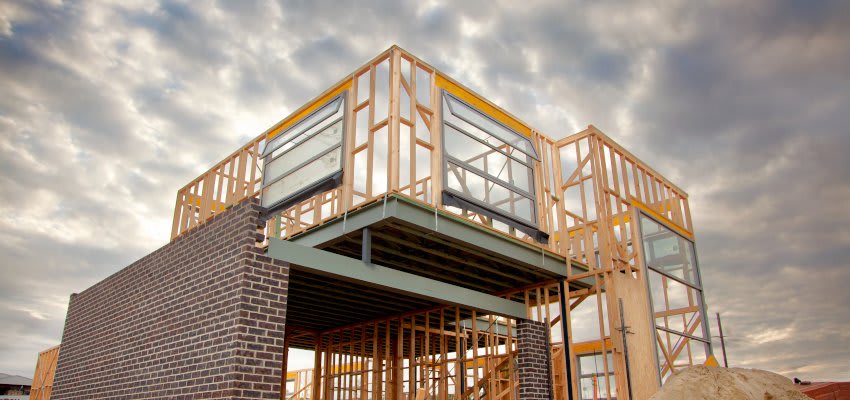
Fresh figures have shown resilient house approvals but a sharp drop in apartments, prompting fresh warnings on the federal government’s housing targets.
Australia approved fewer new dwellings in May, with data from the Australian Bureau of Statistics (ABS) pointing to a modest fall in total approvals, a rise in private houses, and a steep decline in apartments.
Seasonally adjusted total dwelling approvals slipped 1.1 per cent in May to 17,019, following a 0.2 per cent fall in April, yet approvals are still 5.3 per cent higher than a year earlier.
Within that, private sector houses rose 2.8 per cent to 10,537 and are up 13.2 per cent year on year, while private sector dwellings excluding houses fell 10.4 per cent to 6,034 and are 8.6 per cent lower than a year ago.
ABS head of construction statistics, Daniel Rossi, highlighted how strong the run of detached approvals had been.
“Private sector house approvals rose 2.8 per cent, to the highest level since September 2021. This is the fourth consecutive month with over 10,000 private sector houses approved,” he said.
Approvals for all dwellings fell in Queensland (-8.8 per cent), Victoria (-3.0 per cent), and Western Australia (-1.3 per cent), while South Australia (10.9 per cent), Tasmania (4.8 per cent), and NSW (2.2 per cent) recorded gains.
For private sector houses, Western Australia (9.9 per cent), NSW (7.8 per cent), and Victoria (2.2 per cent) saw approvals rise, but Queensland (-3.6 per cent) and South Australia (-1.0 per cent) went backwards.
Rossi singled out Western Australia and NSW as standouts for detached housing.
“Western Australia continued strong growth in detached housing approvals, rising 9.9 per cent, to be up 24.5 per cent compared to May 2025,” Rossi said.
On NSW, Rossi further emphasised the sustained strength in new houses.
“NSW rose 7.8 per cent in May, returning a fourth straight month with more than 2,000 approved private houses. The result is 24.1 per cent higher than one year ago,” he said.
Apartments fall sharply, widening the density gap
Yet the picture diverges significantly for apartments and other multi-unit projects, with apartment approvals falling 30 per cent in May to 2,877 dwellings, almost one‑third below the previous month and 29.3 per cent under the average of the prior 12 months (4,070).
The drop reinforces a pattern seen through much of the past year of higher‑density projects being the most sensitive to feasibility, funding, and risk despite the federal government’s push to inject more medium and high‑density supply into the housing market.
For the year to May, 202,621 dwellings were approved nationally, according to analysis by Commonwealth Bank of Australia (CBA) associate economist Lucinda Jerogin.
“While this remains well short of the Housing Accord target of 240,000 per year, it marks a solid recovery from the mid‑2024 low of ~165,000,” she said.
Yet Jerogin framed the monthly trend as having cooled and said that multiple economic hurdles could further reduce approvals.
“Headwinds to building are mounting under the weight of higher interest rates and higher construction costs linked to the conflict in the Middle East,” she said.
She said that the strength in non‑residential approvals since mid‑2024 was heavily driven by data centres classified as “other commercial buildings”, with the value of approvals in that category jumping 282.3 per cent in the year to May, compared with a 13.6 per cent rise in all other non‑residential approvals.
Banks see resilience and rising risks
Australia and New Zealand Banking Group (ANZ) drew attention to the mounting headwinds, saying that cost and financing pressures were likely to reduce approvals moving forward.
“We expect building approvals to move lower from here, as feasibility issues (linked to higher material costs, labour availability, and financing costs) flow through to the pipeline,” the bank said.
Westpac economist Luka Belobrajdic was more optimistic on detached approvals.
“The annual pace for private detached dwelling approvals strengthened to their strongest outcome since September 2024, suggesting detached housing approvals have remained relatively resilient despite higher interest rates,” he said.
Yet he also said that the overall approvals pulse had eased from earlier peaks.
“Approvals continue to ease from the elevated levels reached in February, although detached dwellings continue to support the headline result,” he said.
Belobrajdic flagged several risks that could weaken the pipeline in the months ahead.
“Downside risks remain, with further possible RBA cash rate increases and elevated construction costs posing headwinds, while tax changes add uncertainty to the outlook,” he said.
[Related: Approvals soften as warning lights flash on housing targets]
Want to see more stories from trusted news sources?
Make The Adviser a preferred news source on Google.
Click here to add The Adviser as a preferred news source.