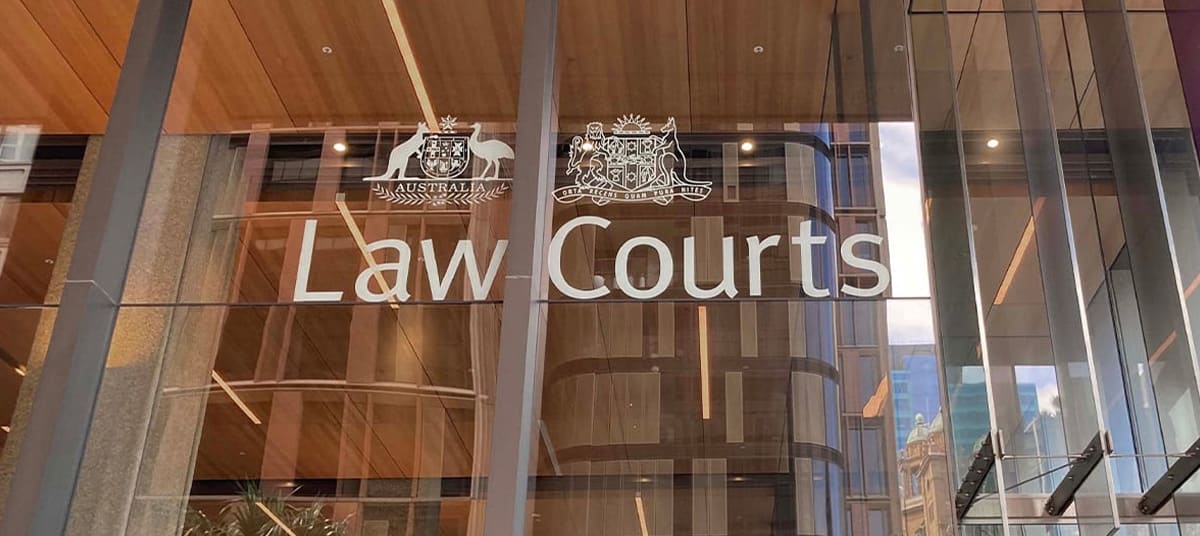
A confidential settlement has ended Hai Money’s court fight with Finsure over its termination of the sub-aggregation agreement.
Hai Money and major aggregator Finsure have confirmed that they have resolved their Supreme Court dispute and mutually agreed to end their sub‑aggregation agreement after months of legal proceedings.
In a joint statement sent to The Adviser on Thursday (28 May), the two businesses announced that the litigation between them had been brought to an end.
“Ezfunds Holdings Pty Ltd, trading as Hai Money (Hai Money), and Finsure Finance & Insurance Pty Limited (Finsure) have reached a resolution of proceedings commenced in the Supreme Court of New South Wales,” the statement read.
“The proceedings arose from Finsure’s purported termination of the Sub‑Aggregator Agreement between the parties.”
To clarify what the resolution involved, the parties jointly recorded that the contractual relationship would now end by agreement rather than unilateral termination.
“In connection with the resolution of those proceedings, Hai Money and Finsure jointly acknowledge and confirm that they have mutually agreed to terminate the sub-aggregator agreement between them,” they said.
“In doing so, the parties acknowledge that this is not based on any assertion of wrongdoing by Hai Money or Finsure.”
The statement stressed that all issues had been settled and that both sides were now looking ahead, while keeping the commercial specifics private.
“Both parties have agreed to resolve all matters in dispute and are committed to moving forward constructively. The terms of the resolution remain confidential,” the statement read.
The settlement brings to a close one of the most closely watched aggregation disputes of the year, which has played out against the backdrop of alleged mortgage fraud linked to the so‑called Penthouse Syndicate.
Hai Money, the now‑collapsed sub‑aggregator, had gone to the NSW Supreme Court seeking to reverse Finsure’s termination of its sub‑aggregation agreement, saying that the contract had been unlawfully torn up.
Evidence before the court showed that between June and September 2025, Finsure informed Hai Money that National Australia Bank had suspended 15 brokers associated with the group, including Andrew Hu, a former NAB and CBA banker who later operated under Hai Money’s credit licence and has since been charged with 89 offences connected to the alleged Penthouse Syndicate fraud scheme.
The situation intensified on 23 December 2025 when Finsure advised that NAB had suspended accreditation for Hai Money’s entire broker network.
In an affidavit, Finsure CEO Simon Bednar told Hai Money director Bruce Li that the suspensions were related to fraud.
The Commonwealth Bank of Australia (CBA) suspended all Hai Money brokers pending investigation, while Macquarie Bank, ANZ, and Suncorp had each terminated significant numbers of Hai Money brokers.
Despite that, a PwC review commissioned by Finsure was summarised by Hai Money’s lawyers as making “no allegations Hai Money was involved in what appeared to be acts of wrongdoing with some of the brokers.”
Finsure’s risk case challenged in court
Finsure’s counsel framed the termination as a necessary response to serious risk and reputational pressure.
In submissions to the court, they said it would only be necessary “to prove that one broker had engaged in wrongdoing” to justify ending the agreement.
They said there were “systemic failures within Hai Money” and “a failure to have systems in place to make sure this sort of thing doesn’t happen,” relying heavily on lender suspensions and media coverage.
When Justice Williams pressed for the evidentiary basis for those claims, Finsure’s lawyer acknowledged that the case largely rested on “evidence of media reports, relating to particular brokers engaging in fraud” and the fact that some lenders had acted on those reports.
Counsel said Finsure had to respond to avoid the risk of “having the business shut down,” pointing to emails from CBA referring to media articles about suspected fraud involving Hai Money‑linked brokers and setting out compliance steps it expected Finsure to take.
Judge finds ‘strong case’ for Hai Money
Justice Williams ultimately granted Hai Money an interim injunction, keeping the sub‑aggregation agreement on foot while the dispute progressed.
In weighing the competing risks, she concluded that Hai Money would suffer greater prejudice if its contractual rights were effectively destroyed before the case could be tested.
The judge was unconvinced that Finsure’s reputation would be fatally damaged simply by continuing its relationship with Hai Money during the proceedings.
She also noted that Finsure’s own conduct cut against its narrative of unavoidable reputational harm, highlighting that the aggregator had hired a broker whose Macquarie accreditation had been terminated as a BDM and was in the process of onboarding seven ex‑Hai Money brokers in late April.
Justice Williams described the evidence as speculative, noting that while there were media reports of alleged fraud and lender suspensions affecting certain brokers, “there is no evidence of any findings made by those lenders (if any) in respect of any particular brokers”.
On the material available, she concluded that “on the basis of the evidence presently before the Court, Hai Money has a strong case”.
In closing, she said the injunction was required “to prevent the practical destruction of the right that Hai Money seeks to vindicate in its claims for final relief pending the determination of those claims at trial”.
[Related: Revealed: Finsure–Hai Money break-up laid bare]
Want to see more stories from trusted news sources?
Make The Adviser a preferred news source on Google.
Click here to add The Adviser as a preferred news source.