



By:


Natasha Murray
General manager of broker & partnerships AuNZ Latitude Financial Services
From sudden valuation shortfalls and unexpected stamp duty costs to build cost overruns, mortgage brokers are regularly forced to scramble at the eleventh hour to rescue deals threatened by missing funds.
In a recent Elite Broker roundtable hosted by The Adviser in partnership with Latitude, five top-performing brokers gathered to discuss the real-world scenarios causing funding gaps – and how a purpose-built solution is changing the game.
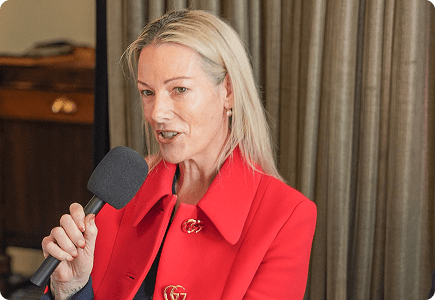
Led by Natasha Murray, general manager of broker & partnerships AuNZ at Latitude, the discussion explored how consumer lending products can be integrated seamlessly into a broker’s toolkit to solve complex home loan problems.
Unexpected shortfalls stem from a range of factors: changing loan-to-value ratio (LVR) parameters, conservative valuations, construction cost blowouts, or simple client oversight regarding costs, such as stamp duty. The recent changes with negative gearing have also resulted in more borrower pre-approvals falling over.
Speaking at the roundtable, Chris Hill, broker at Viridian Lending, recalled a more unusual situation one of his clients faced a few years ago where his client had a long settlement. And between conditional approval and exchange, his client invested some of their deposit in bitcoin, only to have the price of bitcoin plummet. This created a shortfall before settlement of around $50,000.
Others, such as Chris Raymond, principal at Unconditional Finance, highlighted how quickly external factors can create a deficit: “We had one recently under the First Home Guarantee scheme… the client was pre-approved with one of the major banks on the panel and he signed a contract. But then the location was reclassified; it actually went from a metropolitan location into a regional location. So all of a sudden he didn’t qualify for that amount under the First Home Guarantee scheme.
“Valuations are another big one… valuers are being a lot more conservative on the full valuation front.”
For construction loans, cost overruns are an even bigger risk. Borrowers with progressive drawdowns frequently face an issue when they reach their fourth or fifth drawdown and – as has been seen recently with ongoing tariff changes – the cost of materials suddenly increases.
Viridian’s Hill reflected on a dramatic example from a cost-plus build where the price of materials and labour escalated radically: “There was a very large cost overrun about two-thirds of the way through the build: $200,000 on a $2 million build. That’s a 35 per cent cost overrun. Realistically, there’s not much as a borrower you can do at that point when you’re two-thirds of the way through.”
“There’s always going to be shortfalls all the time,” Troy Phillips, founder of First Point Mortgage Brokers, said and acknowledged that every broker will have experienced a situation where the borrower has spent their deposit before settlement day, or a valuation has come under expectations.
But it is finding a solution quickly that sets apart exceptional brokers from the rest, Phillips said.
Phillips said: “Everybody gets blamed; the solicitor, the borrower, the borrower’s partner, the broker. But it always comes down to the broker to fix it quickly. And that’s where a good broker is invaluable.
“As a broker you see it all the time – and for the borrower, it might be panic stations. But when you’ve seen hundreds of hundreds of shortfalls over time, you seem to be able to manage it.”
Historically, brokers have relied on frantically redoing work, seeing if their client can access Bank-of-Mum-and-Dad contributions, pushing clients into higher-LVR territory with LMI.
But as Fabio De Castro, director at Simplify Finance, said, alternative bridging options often carry excessive fees for minor gaps: “Sometimes you put someone on a bridge and the fees add up, but if you have a small gap that lenders can fill, it would be cheaper for the client.”
Resolving these shortfalls takes an enormous toll on broker time and energy. “It’s close to a day’s work,” De Castro said. “And it’s just the stress, right? You care about every client… you lie awake thinking, ‘How do I fix this problem?’”

Phillips said: “Everybody gets blamed; the solicitor, the borrower, the borrower’s partner, the broker. But it always comes down to the broker to fix it quickly. And that’s where a good broker is invaluable.
“As a broker you see it all the time – and for the borrower, it might be panic stations. But when you’ve seen hundreds of hundreds of shortfalls over time, you seem to be able to manage it.”
Historically, brokers have relied on frantically redoing work, seeing if their client can access Bank-of-Mum-and-Dad contributions, pushing clients into higher-LVR territory with LMI.
But as Fabio De Castro, director at Simplify Finance, said, alternative bridging options often carry excessive fees for minor gaps: “Sometimes you put someone on a bridge and the fees add up, but if you have a small gap that lenders can fill, it would be cheaper for the client.”
Resolving these shortfalls takes an enormous toll on broker time and energy. “It’s close to a day’s work,” De Castro said. “And it’s just the stress, right? You care about every client… you lie awake thinking, ‘How do I fix this problem?’”
“It’s close to a day’s work… And it’s just the stress, right? You care about every client… you sit there thinking, ‘How do I fix this problem?’”
— Fabio De Castro, Simplify Finance
Justin Picker, principal at Picker Financial, said that broker guidance is essential when navigating high-pressure funding gaps: “Prevention’s the best measure for us now, education around it. But you’re scrambling for solutions at the time… we’ve done personal loans where they had good serviceability, and it didn’t really affect servicing because there were still good buffers.”
“We’ve done personal loans where they had good serviceability, and it didn’t really affect servicing because there were still good buffers.”
— Justin Picker, Picker Financial

To give brokers a reliable, fast-turnaround tool, Latitude recently launched its Funds to Complete offering (see boxout below) – an unsecured personal loan of up to $200,000 available exclusively through accredited mortgage brokers.
Unlike traditional home loans, the product focuses entirely on borrower capacity rather than property security.
“It is an unsecured personal loan. Because it’s unsecured, we do not care what the customer is buying,” Murray said.
“Our personal loans start at $5,000 and go all the way up to $200,000 over a loan term of one to seven years. If you put that in in the morning, chances are the customer has got funds in their bank account the next day.”
“Because it’s unsecured, we do not care what the customer is buying… Our personal loans start at $5,000 and go all the way up to $200,000 over a loan term of one to seven years.”
— Natasha Murray, Latitude
Because the loan is unsecured, it unlocks solutions for niche properties that traditional lenders reject – such as tiny homes, kit homes, owner-builder projects, or unserviced rural land.
“One of my very favourite scenarios was a block of land down in rural Victoria with no services,” Murray said. “The customers needed $160,000 to settle… the broker couldn’t find a home lender that would do it. They came to us, we lent the $160,000 so they could go and settle, and obviously they’ll put services on and move it across to a mortgage later.”
Murray outlined that Latitude’s deep history and scale in the consumer market, coupled with its close relationship with brokers, had led it to launch the new product.
Murray said: “Latitude’s been around for over 100 years… and 54 per cent of what we write through consumer lending comes from our brokers… And that’s where the Funds to Complete product was born from. We were asking: ‘Where’s an opportunity to help out our mortgage brokers and get our mortgage brokers working more with us? This was a natural product that helped brokers and their customers find the solution they needed.’”
Murray confirmed that brokers can also use the product to streamline debt before applying for a mortgage: “If I consolidate those two credit cards and their car loan into one bigger loan, that’s going to fix a serviceability issue for them and lift all that… it can be multi-purpose.”
The Latitude personal loan, Funds to Complete, aims to close the gap on funds needed to settle a home loan, including shortfalls in valuation or costs to complete a build. Typical use cases include:
The loan can enable brokers to work with clients to reduce their loan-to-value ratio (LVR) and potentially unlock a better home loan rate and reduce or avoid lenders mortgage insurance (LMI).
Murray said: “Investment opportunities shouldn’t always require putting the family home on the line.
“One investor had identified a great property opportunity and already had substantial equity in their owner-occupied home along with cash in the bank.
“Traditionally, many borrowers would have been encouraged to cross-collateralise their existing property to complete the purchase.
“But they wanted to keep their lending structures separate and maintain flexibility.”
With a purchase price of $905,000, the broker used a Latitude Funds to Complete personal loan of $102,895 alongside a $765,000 investment home loan.
The strategy helped the customer avoid LMI while preserving the independence of their existing home loan arrangements.
“Latitude helped provide a cleaner, more flexible path to property investment – demonstrating that personal loans can be a strategic tool, not simply a source of consumer debt,” Murray said.
“For this investor, the solution wasn’t just about buying another property. It was about doing it in a way that aligned with their long-term financial goals.”
You can find out more details about Funds to Complete and how brokers can utilise it in the In Focus podcast, sponsored by Latitude, here.
Q: When you need to access funds quickly for a client, what do you look for most in a lender partner?
Chris Hill (Viridian Lending):
“Flexibility, good communication, clear products, and pricing. Flexibility with policy and being open to workshopping scenarios with us is really important. If it is about speed for a short settlement, it’s got to be a lender that’s going to deliver quickly.”

Chris Hill
Viridian Lending
Chris Raymond (Unconditional Finance):
“Speed to market and consistency in price. I hate pricing approvals and going back and forth. Having BDMs who are actually commercially minded and take a deal to Credit to get it approved makes a massive difference. Speed makes us look good to our clients.”

Chris Raymond
Unconditional Finance
Justin Picker (Picker Financial):
“Trust and execution. Whatever we say to our client, we need our lenders to back that up. Having BDM support, easy access to the product, and clear policy parameters so you’re not having the rug pulled from underneath you is super important.”

Justin Picker
Picker Financial
Troy Phillips (First Point Mortgage Brokers):
“It comes down to credit and risk understanding. We need a lender with strong relationship support where someone will pick up the phone – not just a fintech with a great marketing team that can’t assess a real-world scenario. If the deal makes sense, we need common-sense credit decisions.”

Troy Philipps
First Point Mortgage Brokers
Fabio De Castro (Simplify Finance):
“Consistency and a commercial approach. I value a relationship business where lenders can look outside the rigid box and move the goalposts when a scenario makes commercial sense. It should be a people business first.”

Fabio De Castro
Simplify Finance
Natasha Murray
General manager of broker & partnerships AuNZ Latitude Financial Services




 3 min read