



Like much of the commercial lending market, asset finance continues to be shaped by headwinds both domestically and abroad.
Businesses of all sizes are feeling the squeeze, with rising input costs and persistent inflation weighing on investment decisions for the months ahead.
That’s before factoring in ongoing fuel price volatility stemming from geopolitical tensions in the Middle East, with many businesses already feeling the impact.
As a result, brokers with the expertise to structure asset finance solutions – whether for earthmoving equipment, a fleet of electric vehicles, or something as simple as a much-needed new coffee machine for the local café – are becoming increasingly important in helping businesses navigate a more constrained operating environment.
Green transition?
Adopting greener assets to manage costs is an emerging theme, with electric vehicles (EVs) offering a clear example of this shift, particularly in sectors most exposed to fuel price pressures such as agriculture.
Diesel remains a dominant input cost for farmers, accounting for more than 80 per cent of agricultural energy use, according to data from the NSW Department of Primary Industries.
This is prompting some businesses to explore greener alternatives as part of their longer-term cost management strategies – a trend also reflected in major bank data.
For instance, the Commonwealth Bank of Australia (CBA) reported a 161.5 per cent rise in the average number of weekly loans for new electric vehicles (EVs) in March compared with February.
National Australia Bank (NAB) noted a similar trend over the same period, with a 100 per cent increase in EV loans and an 88 per cent rise in business-related EV inquiries.
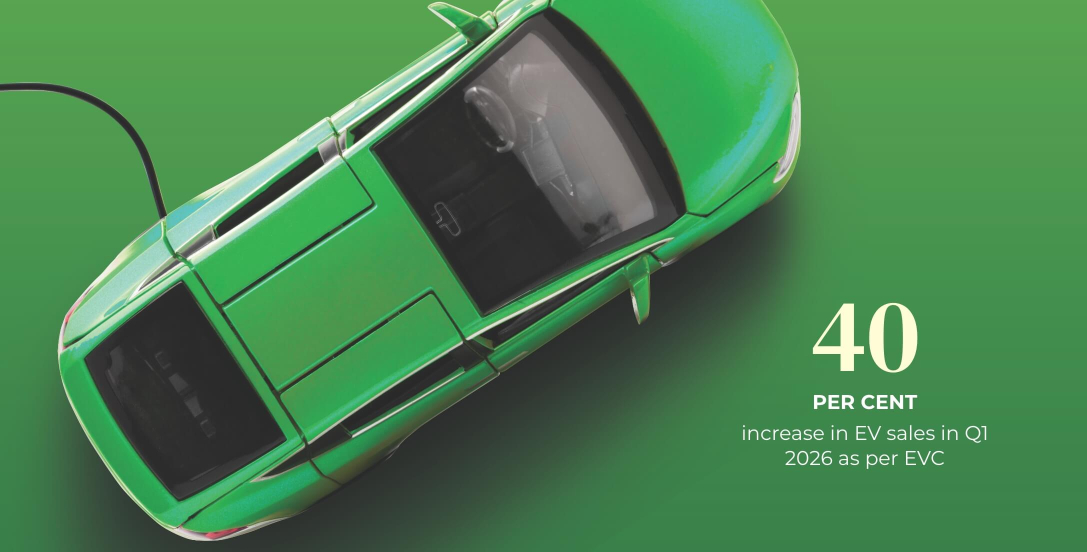
These figures come alongside broader market momentum, with Electric Vehicle Council (EVC) data showing EV sales rose 40 per cent in the first quarter of 2026.
Commenting on this trend, NAB executive for business banking, Shane Ditcham, said EVs were one option Australian businesses were exploring as a way to manage costs.
We’ve seen it time and time again – Australian business owners are practical. When conditions shift, they pivot
– Shane Ditcham, executive for business banking, NAB
“We’re seeing more SMEs and larger operators explore EVs and electrification as a way to manage running costs and future-proof their operations, particularly in a period of ongoing fuel price volatility.”
Broker view
But how is this playing out at the coalface?
Speaking to Broker Daily, The Adviser sister brand, in March, OurCar Finance Brokers’ Will Frazer offered a contrary view, saying he had not yet observed a significant surge.
“For a lot of businesses, they’re just not turning over or holding as much money,” he said.
“Credit profiles aren’t as strong and, for industries such as construction, overheads have really gone up. I think if people are not worried about the cost of petrol, they’re just not going to buy a car at all.”
Frazer also noted the diminishing incentives – such as the fringe benefits tax (FBT) exemption – for plug-in hybrid vehicles that was phased out from April 2025.
“You used to get a green asset rate, but those rates aren’t as good anymore,” he said.
“Now, when lenders are offering electric rates, there are others that will offer lower rates for a combustion car anyway.
“On top of that, there are some lenders that are no longer interested in funding, regardless of what car you have.”
However, Trelos Finance’s Nick Lissikatos says he expects demand for greener vehicles to rise, with the shift to be driven by practicality as much as anything.
“The next phase of demand will be driven by value, charging access, resale confidence, and whether the total ownership cost stacks up against petrol or hybrid alternatives,” Lissikatos says.
“Over time, EV lending will become more mainstream, but the brokers who stand out will be the ones who can explain both the finance side and the real-world ownership side clearly.”
Evolving space
Asset finance continues to evolve, with a range of forces at play.
The segment remains one where demand is heavily influenced by government policy, delays, shifting economic conditions, and broader forces outside clients’ control.
In February, for example, the Council of Small Business Organisations of Australia (COSBOA) renewed calls on the government to make the instant asset write-off scheme permanent and substantially expand its funding scope, setting out its key priorities for the upcoming 2026–27 federal budget – a move supported by the Commercial and Asset Finance Brokers Association of Australia (CAFBA).
For brokers navigating this space, the important thing will remain client relationships, as Shift head of broker sales, Andrew Wagg, noted in an appearance on The Adviser’s In Focus podcast.
“It’s being that trusted adviser – understanding your customer,” he said.
“Even if they don’t have an asset purchase ready to go in the next six to 12 weeks, it’s around understanding what they have coming up and what else you can do to help out.
“It’s not just putting an asset in place and not speaking to that customer for five years – that doesn’t happen anymore.
“Successful brokers understand the long-term needs of their customers.”