



AUSTRAC urges tougher checks as mortgage fraud probe widens
The Australian Transaction Reports and Analysis Centre (AUSTRAC) has revealed how it is working with major banks, law enforcement, and other regulators to map the extent of increasingly complex loan scams throughout the sector.
AUSTRAC CEO Brendan Thomas told The Adviser that the watchdog was assessing how widespread mortgage fraud had become, after revelations that a sophisticated syndicate may have duped Commonwealth Bank of Australia (CBA), booking up to $1 billion of home loans using falsified documents and other intricate structures.
Thomas stressed that the starting point for shutting down mortgagebased money laundering schemes was tougher scrutiny at every step of the origination chain.
“When every professional involved in a transaction is required to know who they are dealing with and question the source of funds, it becomes significantly harder for false documents, synthetic identities or illicit money to move undetected,” he said.
As part of that effort, AUSTRAC confirmed that it was drawing together information from banks and government agencies to build a consolidated view of the threats.
AUSTRAC also noted that its review was zeroing in on the way falsified income documents, synthetic identities, and professional facilitators had allegedly been used to wash criminal proceeds through residential property.
“We are working closely with our partners to bring together relevant intelligence,” Thomas added.

PM announces no interest loans for fuel-reliant sectors
Prime Minister Anthony Albanese used a National Press Club address to announce that the federal government would offer up to $1 billion in interestfree loans to “critical” businesses whose operations hinge on reliable fuel supply, including heavy transport operators and fertiliser producers.
The loans will be financed from the government’s existing economic resilience allocation within the National Reconstruction Fund.
Albanese framed the interestfree loans as a way to keep essential supply chains functioning as the Iran war disrupted global fuel supplies, pushing up prices and raising concerns about availability.
He stressed that the targeted sectors – which include transport, freight, fuel, and fertiliser companies – were not just casualties of the shock but also central to Australia’s ability to ride it out.
“These firms are not just being affected by this crisis, they are essential to Australia getting through this crisis,” Albanese said.
“So our government will extend their credit to help them, and the farmers and producers who rely on these supply chains, to weather the storm.”
The Prime Minister cast the new support as a preemptive move rather than a belated rescue plan and said the government was determined to strike early as fuel disruptions intensified.
“This is just another way we are acting to get ahead of issues,” he added.

Ratings agency warns 5% Deposit Scheme risks backfiring
S&P Global Ratings has cautioned that Australia’s expanded support for first home buyers (FHB) via the 5 per cent Deposit Scheme is pushing up entrylevel house prices, diluting banks’ protection against losses and transferring more mortgage risk to the Commonwealth.
In a new report, titled Australia’s Expanded Support For Homebuyers Could Backfire, S&P said the scheme was fuelling intense demand among FHB and lifting prices at the bottom of the market.
The ratings house noted that roughly 40 per cent of FHBs used the scheme in 2025 and said it expected that share to rise to around 50 per cent in 2026 after October’s expansion removed income caps and raised property price thresholds.
It said that the extra demand was eroding the very affordability gains the program was designed to deliver.
“An expanded scheme in Australia fuelling demand among first home buyers will make house prices unaffordable for many of them. Further, such aid could price out the first home buyers it aims to help,” it read.
The agency said higher price caps meant more dwellings now qualified, concentrating competition in the lowerpriced segments that sat under those thresholds.
S&P said it expected entrylevel values to keep climbing before hitting a ceiling, as borrowing capacity eventually slowed, and the initial wave of demand from the expanded eligibility washed through.
“Property prices at the lower end of the market may rise and plateau because of borrower capacity constraints,” the report noted.
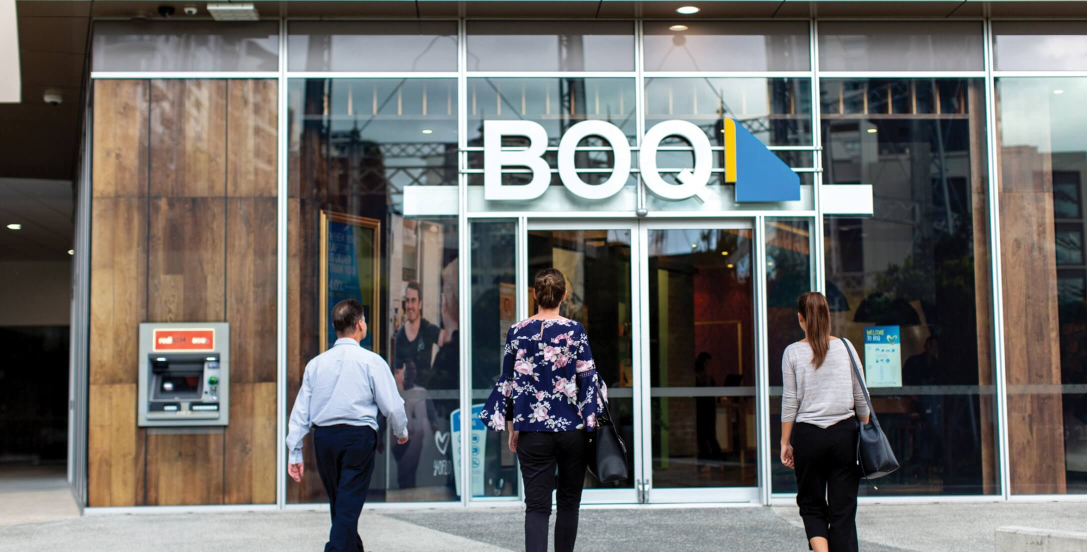
BOQ enters whole-of-loan sale with Challenger
Bank of Queensland Limited (BOQ) has announced a strategic capital partnership with investment management firm Challenger Limited for its equipment finance loans (part of BOQ’s commercial equipment finance business), as it continues its transformation to a “simpler, specialist bank”.
The deal involves a whole-of-loan sale of its equipment finance assets and a forward flow arrangement for an initial 12-month term (with the option to extend), whereby BOQ will service and manage the asset finance facilities, while the underlying direct credit risk exposure will be held by Challenger.
Challenger has agreed to pay $3.7 billion for the whole-of-loan sale (the final amount being dependent on whether new originations are sold under the whole-of-loan sale or the forward flow arrangement), net of a $25 million collective provision release ($18 million post-tax).
BOQ estimated that the partnership will reduce debt funding by around $3.4 billion and optimise its balance sheet while providing a return to shareholders of approximately $300 million post-sale.
The transaction is expected to complete by the end of May 2026, and the banking group has said that there will be no impact on existing customers.
Announcing the deal, BOQ said the off-balance sheet capital partnership would enable it to scale its equipment finance business – which supports business customers with equipment purchases, including trucks, cars, buses, trailers, lifting & handling, and agricultural equipment – and help it support more customers.