


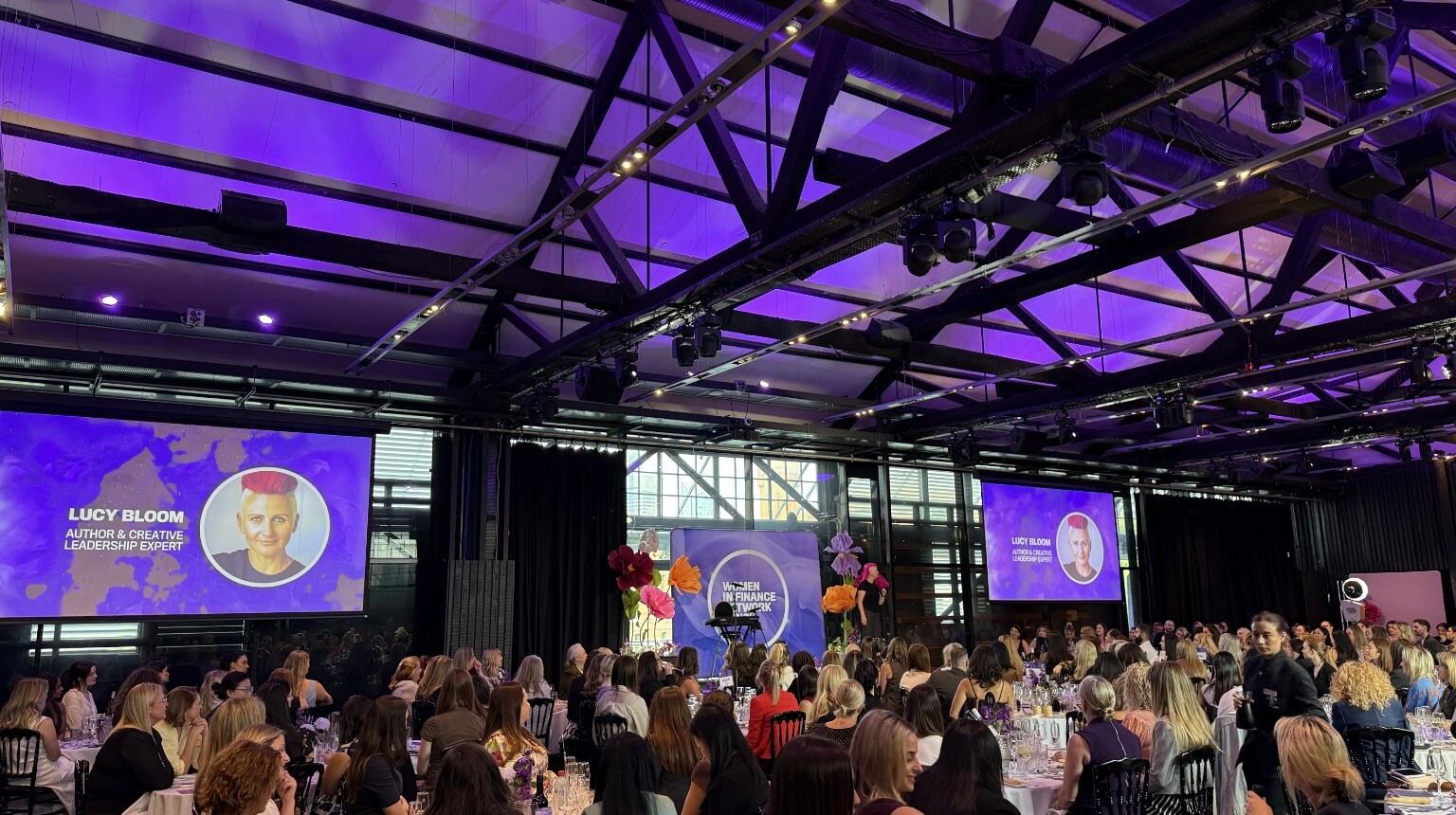
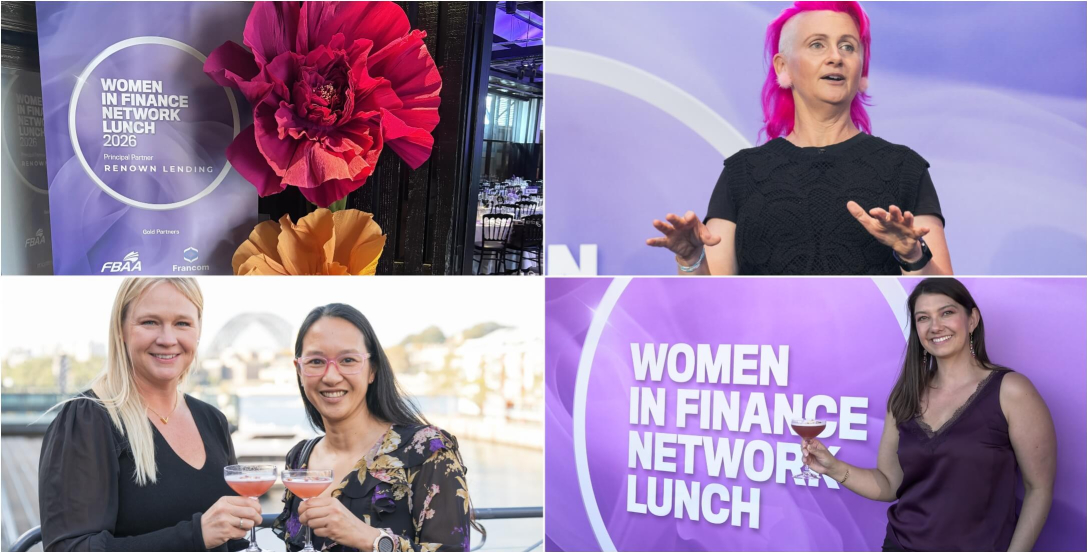
There is something truly electric about a room filled with 230 ambitious women in finance. Throw in an awe-inspiring speaker with an impressive bright pink mohawk, a killer waterfront backdrop of Sydney Harbour at Doltone House, Jones Bay Wharf, and a few French martinis, and you truly feel like you could do anything. As such, there was a feeling of invincibility and inspiration at the annual Women in Finance Network Lunch 2026, held in Sydney in May. The event brought together female business owners and professionals from across the financial services sector.
Run with the vital support of principal partner Renown Lending and expertly managed by Captivate Events & Communications, this year’s event shifted its focus toward the backbone of the sector: bringing together female business owners in finance – who currently represent about a quarter of all financial services businesses – for deliberate networking, peer-to-peer learning, and forming invaluable new referral partnerships.
Turning connection into opportunity
The afternoon was a relaxed, welcoming, and high-energy setting designed to make it easy to start conversations and turn casual introductions into meaningful business relationships. Emceed by The Adviser managing editor Annie Kane, attendees stepped into a room built entirely for intentional connection.
The carefully curated audience of forward-thinking business owners gathered to share ideas, navigate the unique challenges of running a financial services business – whether financial planning, mortgage broking, accounting, or advisory services – and explicitly look for ways to support each other’s commercial growth. By moving beyond standard industry small talk, the luncheon successfully opened doors for peer-to-peer collaboration and the establishment of new client referral pipelines.
The lunch was made possible through a powerful cohort of industry backers: principal partner Renown Lending; gold partners the Finance Brokers Association of Australia (FBAA), Pepper Money, Rate Money, and Francom; event partners Liberty, Quickli, and Remara Money; and research partner Agile Market Intelligence.
Sponsors aligned on a singular message: giving female business owners a dedicated, distinct space to build strong peer-to-peer networks is directly linked to the long-term economic resilience of the financial channel.

‘Connection, shared perspective, and genuine support’
Reflecting on the event, Lisa Hogan, network sales manager (NSW) at Liberty Financial, said: “The Women in Finance Lunch was an incredibly energising reminder of the depth of talent and leadership within our industry … bringing women in finance together creates a safe and empowering space. It opens the door to connection, shared perspective, and genuine support – something that’s essential in an industry that can still feel complex to navigate.”
The structural necessity for supporting women in finance remains stark. While the industry presents wonderful pathways for female entrepreneurship, recent data highlights that female representation is still low. According to the Finance Brokers Association of Australasia’s (FBAA) Broker Density Report 2025, compiled by research house CoreData, around 30 per cent of Australian mortgage brokers are female. Meanwhile, around 23 per cent of financial planners are women, according to the Financial Advice Association Australia (FAAA).
Joanna James, chief development officer at the FBAA, said that the ultimate goal of these gatherings is ensuring business owners have the tools and structural support to thrive, providing the opportunity to “normalise discussions around our experiences and challenges”.
“Events like this are invaluable given that … women still only represent around 30 per cent of brokers, meaning many are working in very male-dominated environments,” James said. “We know that figure is rising, albeit slowly, and we also know that our industry presents wonderful opportunities for women.”
James said that while the FBAA’s annual awards nights consistently show that women are among the top achievers and that more women are choosing this industry as a career, it was imperative to also support women already working in this space to ensure they remain.
“While we strive to attract more women we must equally continue to provide opportunities to those already a part of our industry to thrive, build resilience and gain regular inspiration,” she said and noted that the FBAA will continue to prioritise gender equity “not for the sake of it, but because it will benefit our sector as a whole”.
Gabrielle Aoun, head of sales and distribution at Rate Money, discussed how valuable it is for independent business operators to find a community of true peers: “Attending the event was a great reminder of how powerful collaboration and shared experiences can be within the finance industry.”
She said that a major takeaway was the power of bringing together women passionate about driving the sector forward.
“These events are incredibly important because they create an environment where women feel understood, supported and encouraged by others who genuinely relate to the same experiences and challenges,” Aoun said.
“So often, women in finance are balancing high-performing careers alongside significant personal responsibilities… hearing other women openly share their journeys, challenges and successes is incredibly powerful because so many of those experiences are relatable.
“Being surrounded by like-minded women creates a strong sense of encouragement and perspective, while also building confidence and meaningful industry connections. These conversations are important because they empower women to continue backing themselves and one another.”
Highlighting the long-term value of establishing reliable industry connections, Kelly Eldridge, chief of staff at fintech Quickli said: “Events like this matter, not just for the stories we hear, but for the connections we make and the momentum they build across the industry.
“The mortgage and finance sectors still have significant work to do around gender equity. Women comprise only 30 per cent of mortgage brokers, compared to near 50/50 representation in industries like law. That gap reflects real systemic barriers, including risk aversion, capital access, and caregiving responsibilities, which make broker entrepreneurship particularly challenging for women.”
However, Eldridge said that progress happens when spaces are created for honest conversations, visible role models, and genuine peer support.
“The Women in Finance Lunch does exactly that,” Eldridge said. “It brings together women at different career stages, from those just entering the industry to seasoned leaders, and creates pathways for mentorship, advocacy, and connection. Building a stronger, more inclusive finance industry isn’t just the right thing to do, but it’s essential for our sector’s long-term success. When we support women entering and staying in the industry, we strengthen the entire channel.”
A masterclass in resilience
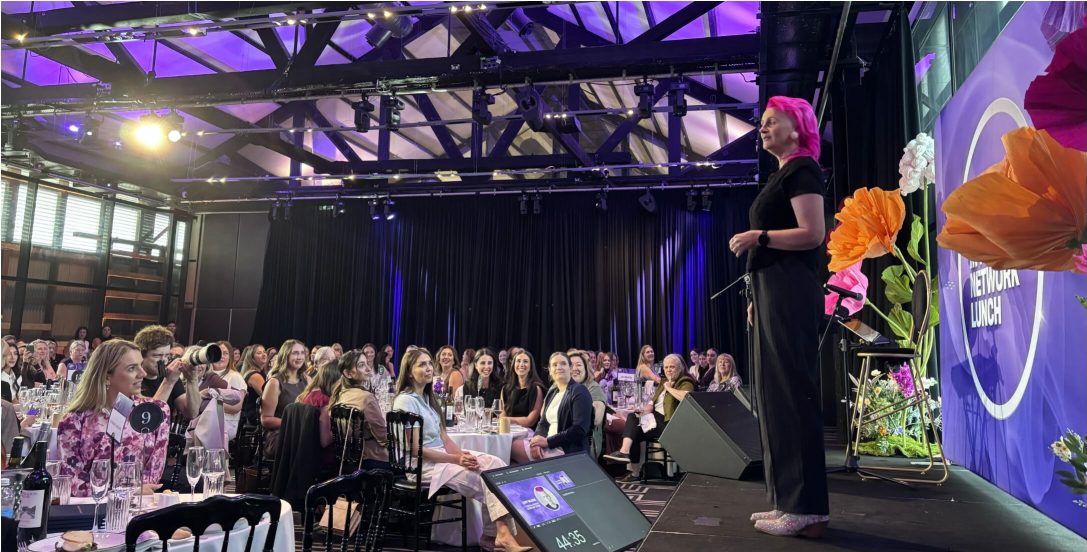
To ignite the room’s strategic vision, attendees were treated to an unforgettable keynote address by author Lucy Bloom – trailblazer, rule breaker, and philanthropy powerhouse.
After running a boutique advertising agency for two decades, Bloom transitioned her corporate acumen into world-changing philanthropy, leading a women’s health charity to raise over $7 million for hospitals in Ethiopia, and later transforming a Cambodian children’s charity into a thriving, community-first organisation. Today, she acts as a creative strategist for start-ups, NFPs, and major corporations, bringing a trademark boldness, grit, and humour to the stage.
Her presentation was a masterclass in resilience and bold leadership, offering practical insights on influence, courage, and building serious business impact without burning out. Challenging the finance sector’s default risk-averse mindset, Bloom encouraged the business owners in the room to stop catastrophising and start deliberately “fantasising” about what their enterprises could achieve if they balanced problem spotting with absolute optimism.
Liberty’s Hogan said that the openness of the discussions was a major highlight for her. “The willingness to share real experiences, challenges, and lessons learned – not just the wins – was fantastic,” Hogan said. “Lucy Bloom’s keynote was especially impactful. Her combination of humour, candour, and healthy challenge sparked conversations that stayed with me well beyond the event.”
Siobhan Williams, head of mortgages at Pepper Money, was equally struck by Bloom’s message of stepping outside traditional corporate boxes to foster business growth.
“I left the Women in Finance Network Lunch 2026 inspired by the energy in the room,” Williams said. “One standout moment for me was Lucy Bloom’s story. It was incredibly inspiring, particularly her advice to ‘chase squirrels’, which felt completely at odds with the more conservative, risk-averse guidance I was given growing up.
“Hearing that from someone who has deliberately stepped outside traditional career paths, moving from corporate leadership into global philanthropy and reinvention, just made it feel even more powerful. It was thought-provoking in the best way and has genuinely had me reflecting on what ‘squirrels’ might exist in my own future.
“Beyond that, there were some strong reminders about understanding your strengths and intentionally surrounding yourself with people who bring different perspectives and capabilities to the table. When women are supported to thrive, the entire industry rises with them.”
Quickli’s Eldridge highlighted how the keynote specifically resonated with the daily realities of managing a financial services practice, particularly the challenge to balance risk management with vision.
“This year’s message about replacing catastrophising with fantasising has stuck with me, and I say that as someone who’s highly trained in spotting problems before they emerge,” Eldridge said. “In our industry, we’re conditioned to anticipate risk, prepare for what might go wrong, and build contingency plans. Of course, this is important work. But how often do we deliberately apply that same mental energy to imagining what could go exceptionally right?
“Lucy Bloom’s keynote challenged that default mindset in a way that felt both practical and transformative. It wasn’t about ignoring risk, it was about balancing our problem-spotting instincts with deliberate optimism about what we’re building.”
Eldridge, who spoke to Bloom one-on-one following the keynote, recalled how struck she was by Bloom’s authenticity across her varied career phases. “The conversations I had during the event reminded me why representation matters, why mentorship is non-negotiable, and why we need to keep creating opportunities for women to not just enter finance, but to thrive, lead, and shape the industry’s future,” Eldridge said.
“More fantasising, less catastrophising. That’s a reminder worth keeping.”